




‘Two Nations, One Board’: Urafiki Gambit brings international chess to Dar
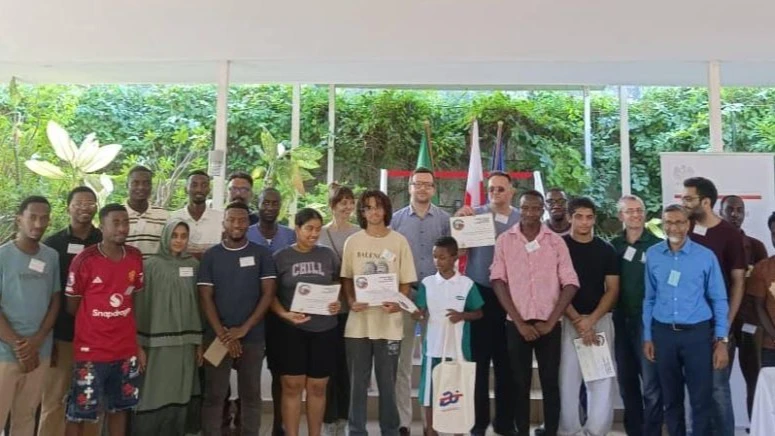
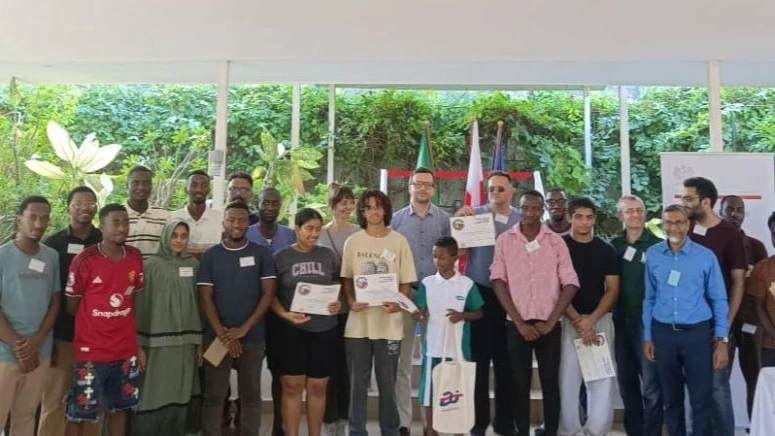
ON February 7–8 2026, the First Urafiki Gambit – Tanzania–Poland Friendship Chess Tournament was held in Dar es Salaam. The event was launched by the Polish Embassy in cooperation with Jordan Chess Club of Morogoro and attracted 33 players from seven countries: Tanzania, Poland, India, Uganda, Malawi, Nigeria and Germany.
The tournament featured a strong international field, including four Tanzanians ranked among the national Top 6: Emmanuel Mwaisumbe, Shedrack Lusako, Parsa Naser and Candidate Master (CM) Veer Gandhi. Several participants — Bertha Samson, Zahabiyah Ebrahim, Shedrack Lusako, CM Veer Gandhi and Henry Marwa Michael — have previously represented Tanzania at Chess Olympiads in Batumi (2018), Chennai (2022) and Budapest (2024).
Among the players were also Charge d’Affaires of the Polish Embassy Sergiusz Wolski and Vice-Chairman of the Tanzanian Chess Association (TACA) Rashid Mansour Sharif, underlining the friendly and inclusive spirit of the competition.
Opening ceremony and cultural exchange
The tournament opened with the national anthems of Poland (“Jeszcze Polska nie zgineła”) and Tanzania (“Mungu ibariki Afrika”). The Tournament Director, Dr Konrad Czernichowski of Jordan Chess Club — also a lecturer at Jordan University College in Morogoro — welcomed the guests and delivered a short address on the history of chess in Poland.
He emphasized that chess connects cultures, generations and nations, which inspired the tournament motto: “Two nations. One board.” While discussing chess openings named after famous Polish players such as Akiba Rubinstein, Ksawery Tartakower and Miguel Najdorf, Emmanuel Mwaisumbe highlighted the Najdorf Variation of the Sicilian Defence, one of the most popular openings in world chess, famously used by Bobby Fischer, Garry Kasparov and today’s top grandmasters.
Diplomacy, history and chess
Wolski then addressed the audience, noting that diplomacy is largely about facilitating direct encounters between people of different nations. He expressed satisfaction that the smbassy could contribute through sport.
He recalled that diplomatic relations between Tanzania and Poland were established in 1962, but that historical ties go back earlier, when families of Polish soldiers found refuge in East Africa, with the largest settlement located in Tengeru. He also noted that many renowned Polish chess players mentioned earlier were Polish Jews, whose ancestors had settled in Poland from the 10th century onwards and were granted protection by Prince Bolesław the Pious in the 13th century and King Kazimierz III the Great in the 14th century.
Speaking on behalf of TACA, Mansour Sharif thanked the Polish Embassy and Jordan Chess Club for organizing the tournament and supporting the development of chess in Tanzania.
Competition and results
FIDE Arbiter Mustafa Ebrahim reminded players of the basic rules and explained that the tournament would be played over five rounds — three on Saturday and two on Sunday — with a time control of 60 minutes per player plus a 30-second increment per move.
After Saturday’s rounds, only two players had a perfect score: top seed Jordan Boksinski (Germany) and CM Veer Gandhi. Shedrack Lusako, winner of the 5th Jordan Open two weeks earlier, scored 2.5 points after drawing with Henry Marwa Michael in Round 3.
Sunday’s Round 4 featured the much-anticipated clash between Boksinski and Gandhi, which ended in victory for Boksinski. In the final round, Boksinski faced Henry Marwa Michael (half-Tanzanian, half-Polish), who trailed him by just half a point. A win would have secured Michael the title, but the game ended in a draw.
As a result, Jordan Boksinski won the 1st Urafiki Gambit, with Henry Marwa Michael finishing second and Parsa Naser taking third place with 3.5 points. Both Michael and Naser are only 17 years old and are considered among Tanzania’s brightest hopes for the future of chess. Shedrack Lusako finished fourth.
A standout performance came from 11-year-old Chael Nouidui, who claimed an impressive fifth place. He defeated Samuel George (1665), Yohana Laiser (1598) and John Robin, drew with Emmanuel Mwaisumbe (1812), and lost only to Henry Marwa Michael (1646). Nouidui received a special souvenir from the Polish Embassy as Best Junior.
“I would like to thank everyone for this well-organized event. Polish people are truly friendly and accommodating — the reception was unique and reflected strong values and traditions,” said his father and coach, Thierry Nouidui.
Prisha Chheda (1673) was awarded Best Lady. Seven players — Naser, Lusako, Nouidui, Gandhi, Ugochukwu Celestin Wisdom Anyalebechi (Nigeria), Chheda and Samuel George — all finished on 3.5 points, with final standings determined by the Buchholz tie-break system.
Ratings, prizes and feedback
Several players are expected to receive their first FIDE international ratings on 1 March due to strong performances, including Chael Nouidui, Ugochukwu Anyalebechi, Samwel Lema and Joseph Mgeri Nanai. Henry Marwa Michael is projected to gain an impressive 53 ELO points.
The Polish Embassy sponsored souvenirs for the winners, as well as awards for Best Junior and Best Lady, and provided refreshments throughout the event. Jordan Chess Club allocated 200,000 Tanzanian shillings from the entrance fees to fund the cash prizes.
Player feedback was overwhelmingly positive. Comments included:
“It was my first tournament and I didn’t expect it to be so amazing,”
“Excellent organisation and coordination,” and
“The constant serving of coffee, tea and food was something new for tournaments in Tanzania.”
Wolski confirmed that the Urafiki Gambit will continue in the future, strengthening friendship between Tanzania and Poland through chess.
Top Headlines
Trending Stories













© 2026 IPPMEDIA.COM. ALL RIGHTS RESERVED