




IOE, ATE launch AI Xcelerate training programme in Tanzania
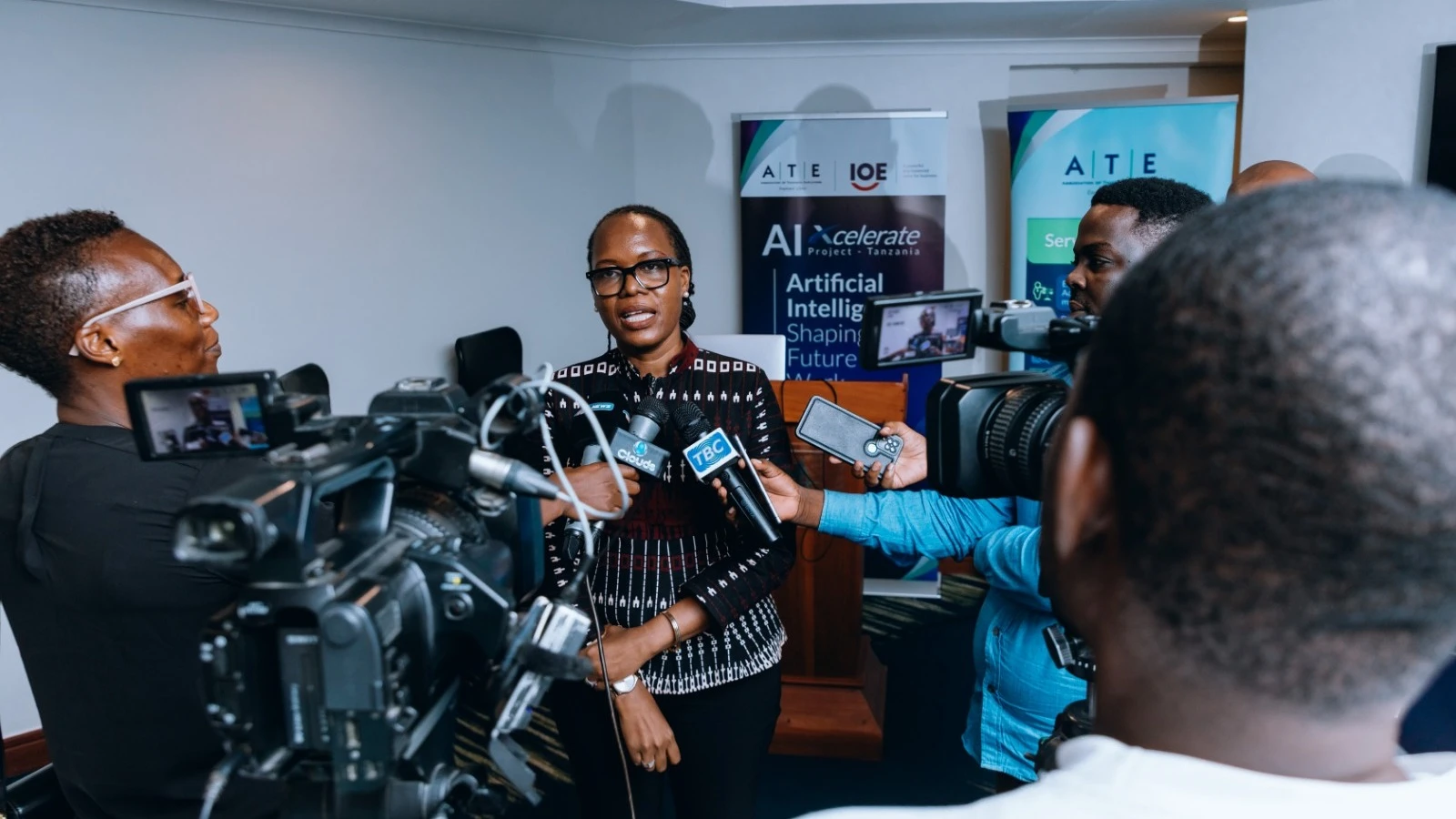
The International Organisation of Employers (IOE), in partnership with the Association of Tanzania Employers (ATE), has officially launched the AI Xcelerate Training Programme in Tanzania, a strategic initiative aimed at equipping enterprises with practical skills to adopt artificial intelligence (AI) for productivity, growth and resilience.
Speaking during the launch, the IOE commended ATE, under the leadership of Ms Suzanne Ndomba, for its strong commitment and leadership in introducing the programme at a time of rapid technological and economic transformation.
The IOE noted that in recent years it has been actively supporting employers’ organisations through capacity-building initiatives and practical cooperation designed to strengthen institutional effectiveness and business ecosystems. One such initiative is the Tech@Work programme, launched four years ago in collaboration with Microsoft, which focuses on enhancing digital skills, youth employability and enterprise competitiveness.
Through Tech@Work, more than 20,000 young people have been trained across Senegal, Lesotho, Côte d’Ivoire, the Democratic Republic of Congo and Uganda. The programme was implemented in close collaboration with national employers’ organisations and aligned with real private-sector needs. According to the IOE, one clear lesson from this experience is that technology creates economic value only when anchored in skills, productivity and enterprise viability.
The AI Xcelerate Tanzania programme follows the same practical approach. It is not intended to discuss artificial intelligence in abstract or speculative terms, but rather to provide structured training and capacity-building that enables enterprises to understand AI, develop managerial capability and apply concrete tools to improve performance, growth and resilience.
Globally, artificial intelligence has evolved from experimental use to becoming a central component of modern business models. Annual global investments in AI now reach hundreds of billions of dollars, with projections showing that AI could contribute trillions of dollars to global economic output over the next decade. Companies across sectors such as finance, telecommunications, logistics, manufacturing and services are already recording gains in efficiency, decision-making, risk management and customer engagement through strategic AI adoption.
For Tanzania, the key issue is not whether AI will influence future competitiveness, but how quickly and effectively enterprises can adopt it in economically meaningful ways. The country’s private sector is largely composed of MSMEs, family-owned businesses, manufacturing firms and a rapidly expanding services and digital ecosystem. While this structure offers major opportunities, it also presents challenges related to skills availability, data access, investment capacity and managerial readiness.
In this context, employers’ organisations play a crucial role. ATE is strategically positioned to bridge policy ambitions with enterprise realities. Through AI Xcelerate, the programme seeks to translate national digital aspirations into practical support for businesses, particularly small and medium-sized enterprises that face the greatest barriers to AI adoption.
The AI Xcelerate Tanzania programme is built around three core objectives. First, it aims to demystify AI for employers by focusing on concrete use cases that directly impact productivity, cost control, risk management and market expansion. Second, it seeks to strengthen managerial and technical capacity, recognising that AI adoption is both a strategic and organisational challenge, not merely a technical one. Third, it promotes structured dialogue among enterprises, policymakers, academia and technology providers to ensure regulatory and institutional frameworks align with business needs and investment incentives.
The initiative emphasises that AI adoption is not about replacing jobs or importing unsuitable models, but about empowering Tanzanian enterprises to compete effectively, move up value chains and optimise the use of data and digital tools. When applied in this manner, AI becomes a driver of enterprise sustainability, competitiveness and economic diversification rather than a source of disruption.
Discussions following the launch are expected to further explore these issues, including a keynote address on AI as a catalyst for enterprise competitiveness in Tanzania and a panel discussion featuring insights from Tanzanian firms, financial institutions, technology providers and academia.
In conclusion, the IOE stressed that the success of AI Xcelerate Tanzania will be measured not by the number of discussions held, but by the number of enterprises better equipped to invest, innovate and grow. The organisation once again commended ATE for its commitment to transforming the initiative into a tangible opportunity for Tanzanian businesses.
The IOE further underscored the importance of broad participation across sectors and enterprise sizes to ensure the benefits of AI adoption extend beyond early adopters and contribute meaningfully to national productivity and competitiveness.
The organisation reaffirmed its commitment to working closely with ATE, government partners and the private sector to ensure the programme delivers tangible and scalable results for Tanzanian enterprises.




Top Headlines
Trending Stories


















© 2026 IPPMEDIA.COM. ALL RIGHTS RESERVED