




Africa faces energy transition’s delivery gaps while more policy challenges persist
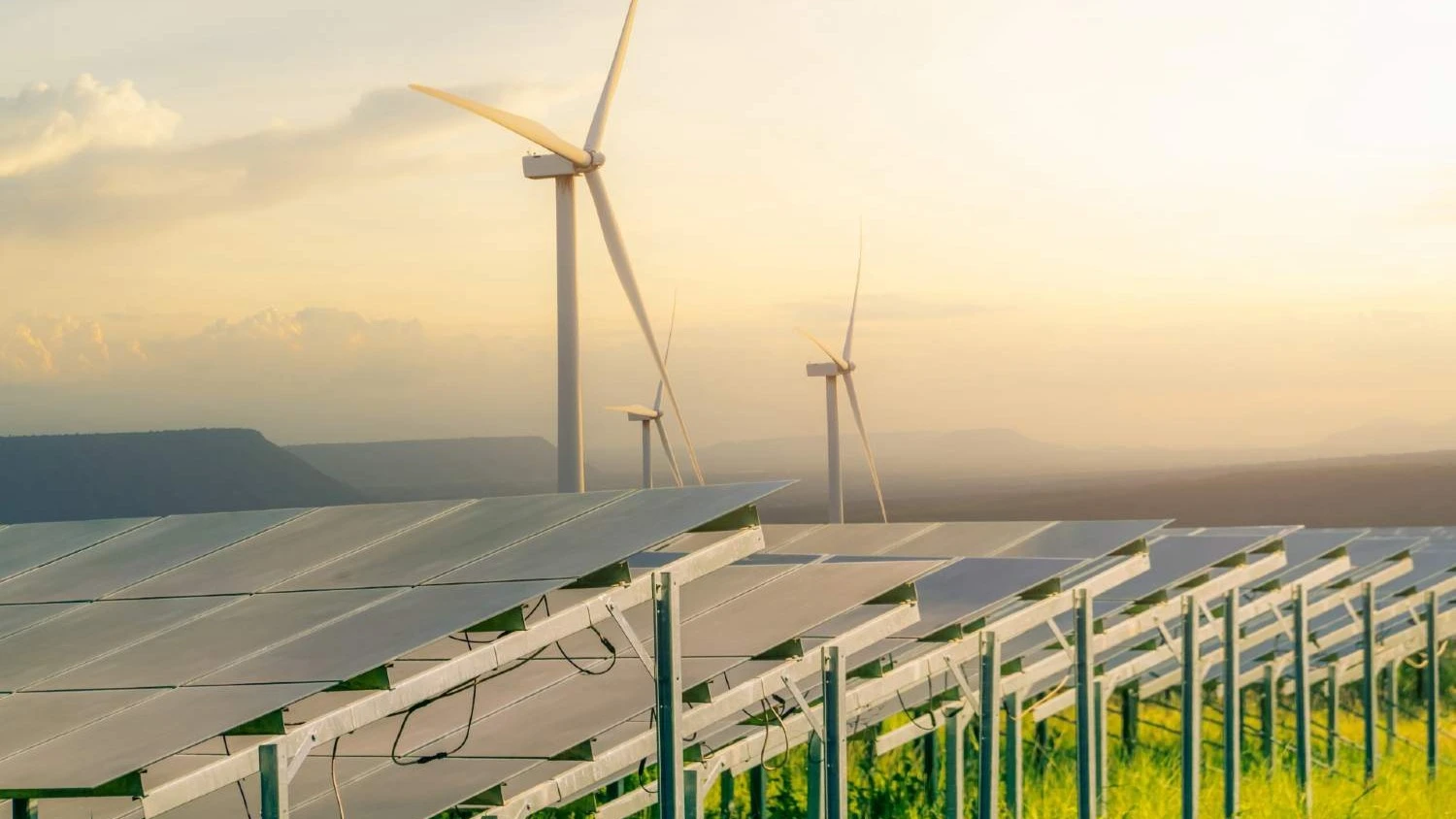
Africa captured US $13.84 billion in disclosed investment for power and energy transition projects in 2025, according to the Africa’s Power and Energy Transition Investment Report 2025 published by research firm Electron Intelligence.
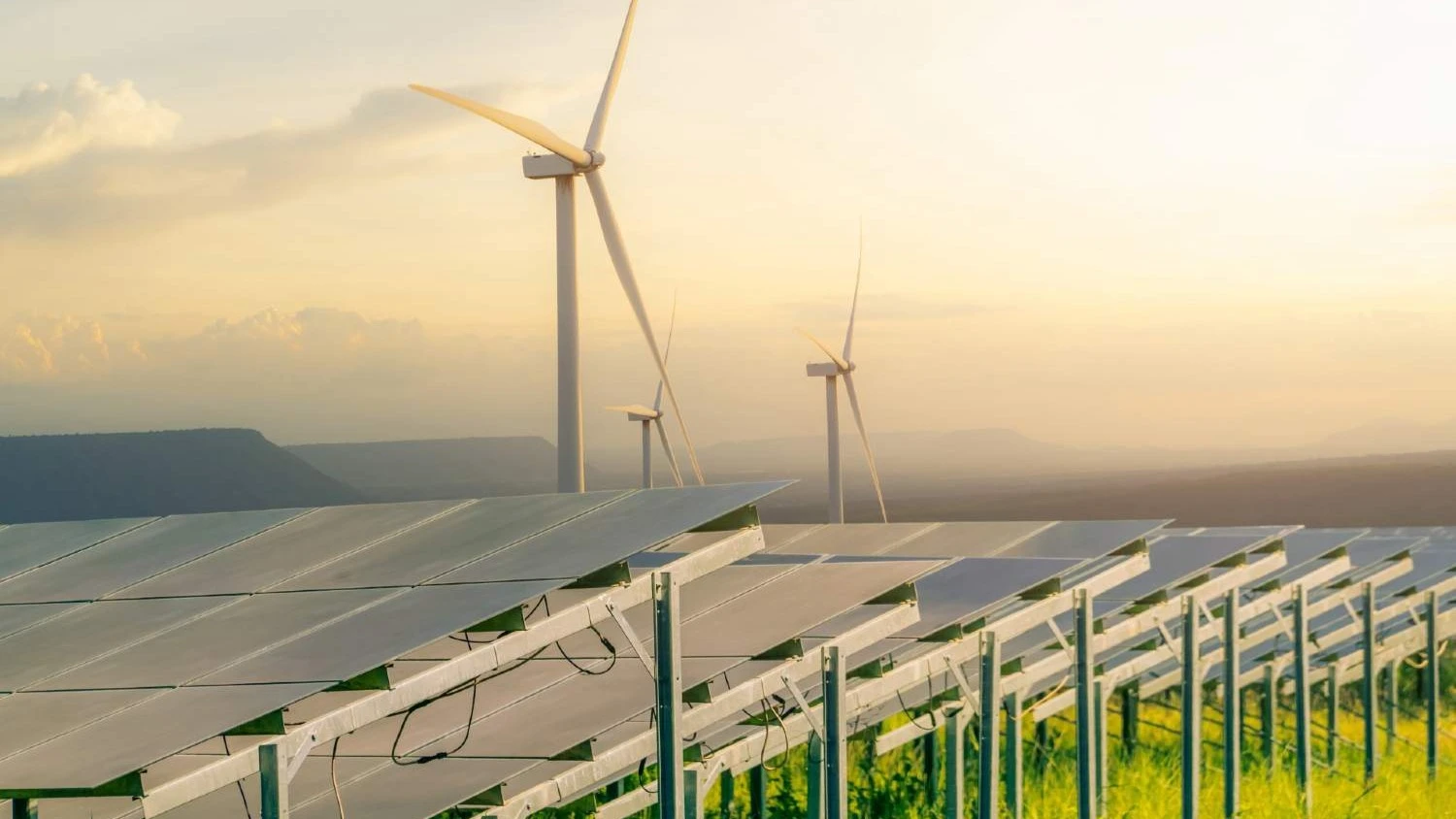
Renewable energy project in Angola.Photo: Energy Capital & PowerThe annual report shows that while capital inflows are rising and clean energy continues to dominate investor interest, critical challenges remain in translating announced pipelines into operational capacity and in mobilising investment at the scale required to meet the continent’s growing energy needs.
Investment activity covered 306 deals across 43 countries, involving 142 distinct investors. A striking 98.3 percent of total investment — about US $13.61 billion — was directed towards clean energy and energy transition technologies, underscoring a strong tilt towards renewables and supporting infrastructure rather than fossil fuel projects.
Within this clean energy tranche, generation assets led the way, while grid infrastructure, sector reforms and enabling platforms also drew significant capital as developers and financiers focus on bankable, execution-ready deals.
Despite this surge in financial activity, the report highlights a persistent gap between announced capacity and delivered capacity. While total announced capacity in the pipeline amounted to 74,461 MW, only 14,589 MW was actually installed by the end of 2025.
This gulf reflects structural constraints, including policy uncertainty, execution risks, financing bottlenecks and grid access limitations that often slow project realisation.
A deeper look at investment structures reveals that debt financing dominated, with approximately US $9.05 billion deployed through loans and credit instruments. Equity investments accounted for around US $2.48 billion, with the remainder consisting of grants, guarantees and blended finance.
Fifteen mergers and acquisitions across the continent representing approximately US $1.4 billion also signaled ongoing consolidation and strategic repositioning among developers and utility players.
Among the most active institutional investors were the African Development Bank Group, which committed US $1.77 billion; the World Bank Group, with US $1.04 billion; and South Africa’s Standard Bank, with US $922 million. These development finance institutions and commercial partners accounted for more than half of the total invested capital, emphasizing the continued role of blended public-private funding in Africa’s energy transition.
Geographically, investment was concentrated in a handful of markets that facilitate large structured deals. Ten countries captured US $9.88 billion — about 73 percent of total investment — with South Africa, Egypt, Nigeria and Morocco among the top recipients.
Sub‑regional breakdowns showed West Africa leading with US $3.91 billion, followed by North Africa at US $3.75 billion. East and Central Africa trailed with smaller shares, pointing to persistent regional imbalances in deal flow and financing attractiveness.
The dominance of renewables and energy transition technologies in investment flows aligns with broader global trends. Africa’s solar market, for example, has been identified as the fastest‑growing in the world, with installed capacity expanding by 17 percent last year amid rising imports of affordable solar panels and battery systems.
Countries such as Nigeria, Algeria, Zambia and Botswana have set records for solar imports, reflecting rising demand for decentralized and grid‑tied solar solutions.
But despite this momentum, the continent still receives only a fraction of global energy investment relative to its share of the world’s population.
The International Energy Agency’s World Energy Investment 2025 report shows that Africa, home to roughly 20 percent of the global population, attracts just about 2 percent of global clean energy investment. This disparity underscores the scale of the financing gap needed to not only respond to demand but also to achieve universal energy access by 2030.
Indeed, current access gaps are stark. Approximately 600 million Africans lack electricity, and nearly 1 billion lack access to clean cooking fuels — a dependency that constrains economic productivity and public health, particularly for women and children in rural areas.
The human development dimension remains a core driver of the energy transition narrative, even as capital markets focus on bankable mid‑ to large‑scale projects.
Investors and industry insiders contend that tangible progress hinges on improved policy frameworks and risk mitigation instruments. Projects with credible power purchase agreements, clear risk allocation and firm grid access arrangements attracted the most capital in 2025.
Policymakers across Africa have been urged to streamline permitting, strengthen regulatory consistency, improve currency convertibility and develop long‑term, predictable roadmaps that align energy policy with climate and economic goals.
In response, some countries are making targeted reforms. For instance, Kenya recently awarded a $311 million high‑voltage transmission project under a public‑private partnership, augmenting grid capacity and attracting Indian infrastructure firms eyeing long‑term opportunities in East Africa. Such developments are viewed as positive signals that governments are attuned to the need for enabling environments to attract private capital.
Still, structural challenges remain pronounced. The International Energy Agency has warned that, at current investment levels, Africa’s energy infrastructure will struggle to keep pace with rapidly growing demand.
The IEA projects that meeting future needs will require not just greater investment but also expansion of generation capacity, grid modernisation and enhanced storage solutions to support reliability and resilience.
Market dynamics also suggest that some traditional sources of financing are changing. Chinese development finance, once a key player in infrastructure spending on the continent, has pulled back significantly over the past decade, prompting greater reliance on private capital and multilateral partners.
This shift has reshaped how energy projects are structured and financed, particularly in countries where credit and political risks are seen as higher.
Industry analysts project a continued uptick in energy investment across Africa. The African Energy Chamber’s outlook anticipates a possible doubling of annual power investments to US $30 billion by 2050 to support surging electricity demand driven by industrialisation, urbanisation and digitalisation.
Top Headlines
Trending Stories





© 2026 IPPMEDIA.COM. ALL RIGHTS RESERVED