




Solar subsidy drive targets 120 islands in 8bn/- energy rollout
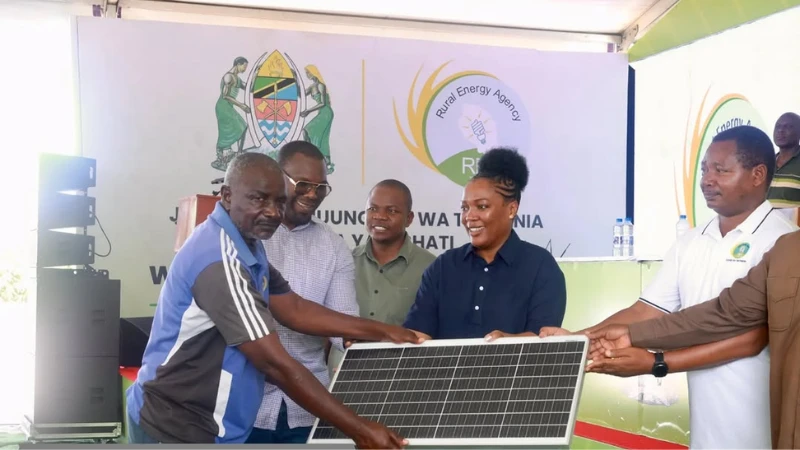
THE government has launched an 8bn/- solar electrification programme targeting 120 islands across eight regions, offering subsidies of up to 75 per cent to accelerate access to power in some of the country’s hardest-to-reach communities.
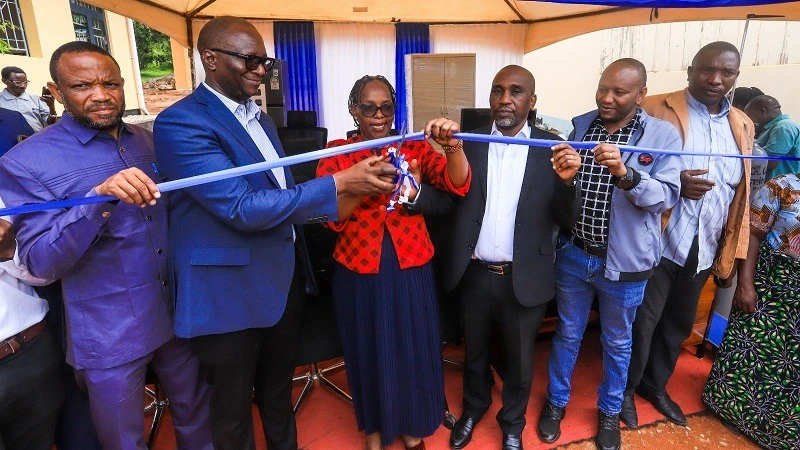
Salome Makamba, the Energy deputy minister, unveiled the project on Bezi Island in Ilemela District, Mwanza Region, for installing 20,000 subsidised solar home systems over the next two years.
She said here over the weekend that the initiative is specifically designed to address the unique geographical and logistical challenges facing island and delta communities, including distance from the national grid.
Other factors are, high transport costs for equipment and scattered settlements that make conventional grid extension prohibitively expensive, she stated, noting that island and delta areas face distinct challenges, but those challenges do not deny citizens their right to electricity.
“That is why the government has introduced this tailored solar and mini-grid solution to ensure island and peripheral communities are not left behind,” she stated, elaborating that under the scheme, the government will cover up to three-quarters of the connection costs.
This will make clean energy significantly more affordable for low-income households and small businesses, with the subsidy facilitating fast-tracking universal energy access while reducing dependence on diesel generators and other unsustainable sources, the deputy minister explained.
Beyond household lighting, the project is strategically aligned with the government’s blue economy agenda as a national priority in coastal and island regions, she said.
Access to reliable solar power will enable fishermen to preserve and add value to fish and sardines before reaching markets, thereby increasing incomes for households and local authorities and the nation at large. It is also expected to strengthen aquaculture, seaweed farming and island tourism, key spheres of the maritime economy, she said.
She saluted President Samia Suluhu Hassan for spirited financial backing of energy sector projects, pledging that the ministry would closely supervise implementation to ensure quality, transparency and accountability at every stage.
The rural energy agency and the Tanzania Electric Supply Co. (TANESCO) need to prioritise electrification of essential service institutions that remain unconnected, including health centres, schools and police posts in island communities, she instructed.
REA also needs to promote clean cooking solutions in markets, bus terminals and auction centres, while on Bezi Island she pointed at the need for an assessment of cooking energy use at the fish market.
Installing clean cooking infrastructure will protect vendors and customers from harmful smoke produced by firewood and charcoal, a major public health and environmental concern, she stated.
Edson Ngabo, an executive with the electricity and renewable energy division, urged residents to use electricity productively to transform livelihoods, not just for domestic consumption.
Grid-connected and off-grid renewable energy projects are playing an increasing role in national power supply, he said, citing the recently launched subsidised island solar programme and the 150-megawatt Kishapu solar project as examples of Tanzania’s expanding renewable portfolio.
The government is working with the private sector to raise national generation capacity to 8,000 megawatts by 2030, he stated, while acting REA director general Jones Olotu said the island solar rollout forms part of the government’s energy compact global commitments meant to push for universal electricity access by 2030, connecting up to 8m new households and business units.
The current project will be implemented in Mwanza, Geita, Kagera, Mara, Rukwa, Lindi, Mtwara and Coast over a two-year period, where in Mwanza Region 65 islands will benefit at a cost of 4.8bn/-
Of that amount, the government has already provided 3.3bn/- while 1.5bn/- will be covered by beneficiaries under the subsidy arrangement, he added.
Top Headlines
Trending Stories





© 2026 IPPMEDIA.COM. ALL RIGHTS RESERVED