




Scientists back wide seaweed farming, working on emissions absorption data
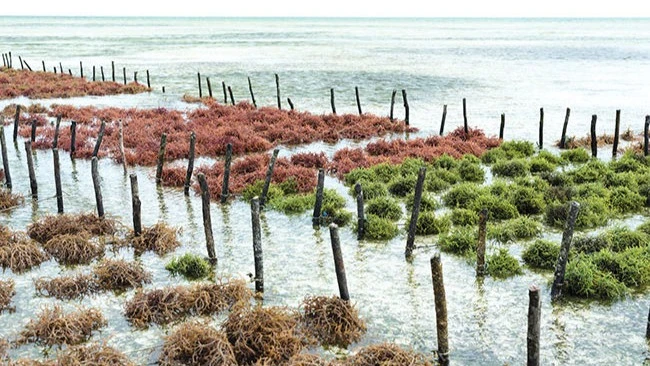
GLOBALLY, with approximately 3.5m hectares currently under seaweed cultivation, total carbon dioxide removal (CDR) potential ranges from 0.35m to 7.0m tonnes per year, a new study has indicated.
A study published in Communications Sustainability-a global nature portfolio, has asserted that if seaweed farming is expanded to nearly 68m hectares by 2050, the projected removal capacity could reach 57.6m tonnes of carbon dioxide (CO₂) annually.
While the figures remain model-based estimates, they underscore the significant role seaweed aquaculture could play in climate mitigation strategies, the authors stated, affirming that beyond carbon capture, seaweed farming supports coastal economies by creating alternative income streams, particularly in regions affected by declining fisheries.
Harvested seaweed can be processed into high-value products including food, pharmaceuticals, bioplastics and biofertilisers, it said, highlighting the crop’s role in combating ocean acidification — a growing threat to marine ecosystems — and reducing harmful algal blooms through nutrient uptake.
Integrating seaweed farming into carbon credit frameworks could attract greater investment and accelerate expansion but further empirical research is required to validate sequestration rates and assess broader ecological impacts, they stated.
An overall impression is that seaweed farming could emerge as a powerful nature-based solution in the global fight against climate change, as new research suggests that it has the potential to remove millions of tonnes of carbon dioxide (CO₂) annually while delivering significant ecological and economic benefits.
Seaweed aquaculture enhances carbon sequestration by increasing alkalinity production in marine sediments, strengthening the ocean’s capacity to store carbon over the long term.
Seaweed farming, also known as algae aquaculture, involves cultivating marine algae in coastal waters. Seaweeds grow rapidly and absorb CO₂ through photosynthesis, converting it into organic biomass. Unlike many land-based carbon capture strategies, seaweed cultivation requires no freshwater and minimal land, making it an efficient and scalable approach.
As seaweed accumulates biomass, a portion of the captured carbon sinks into marine sediments through decomposition and particulate export, enabling carbon to be stored for extended periods. Importantly, seaweed farms also enhance sedimentary alkalinity, a chemical process that increases the ocean’s buffering capacity against acidification and enables additional carbon storage in dissolved inorganic forms, the study explains
Beyond climate mitigation, seaweed farms improve water quality by absorbing excess nutrients such as nitrogen and phosphorus from coastal runoff. They also create habitats that support marine biodiversity, positioning seaweed aquaculture as a multi-benefit strategy for climate resilience.
The researchers used a sediment diagenetic model to simulate complex interactions between organic matter, minerals, sulphur and iron cycles beneath seaweed farms. To account for environmental variability, they ran 1,000 stochastic simulations, incorporating uncertainties such as oxygen concentration, sedimentation rates and organic matter flux, it says.
When seaweed-derived organic matter settles into sediments, it stimulates microbial processes including aerobic respiration and sulphate reduction, reactions generating alkalinity, hence increasing the ocean’s ability to store carbon in stable inorganic forms.
Model results indicate that alkalinity fluxes could rise by tens to several hundreds of micromoles per square centimetre per year, depending on local conditions, with enhanced alkalinity significantly strengthening the ocean’s long-term carbon storage capacity.
At the farm level, seaweed cultivation could remove between 0.1 and more than 2.0 tonnes of CO₂ per hectare annually, depending on environmental factors, the authors added.
Top Headlines
Trending Stories




















© 2026 IPPMEDIA.COM. ALL RIGHTS RESERVED