




1.56 bln/- to advance agroecology
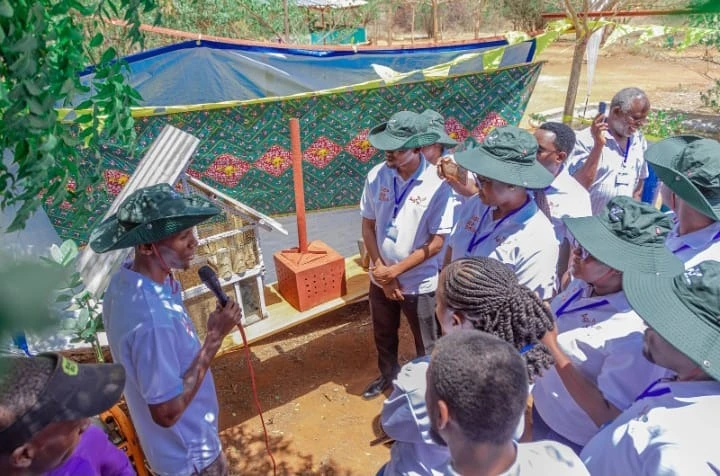
SIX agroecology centers in the country implementing the AgroKilimo Project have met for a three-day workshop to analyze and discuss ways to further promote agroecological farming among farmers.
The Country Director of Islands of Peace (IDP), Ayesiga Buberwa, stated this while speaking to journalists after the conclusion of the three-day workshop held at the St. Joseph Sustainable Organic Farm (SJS) Training Center in Kwanyange, Mwanga District, Kilimanjaro Region.
Buberwa said the AgroKilimo Project, funded by the Government of France with 515,000 euros for two years, has selected six pilot centers as an important step toward building a strong and sustainable future for agroecological farming.
“This program aims to strengthen pilot centers across the country. With support from the French Embassy in Tanzania, the project seeks to build capacity, disseminate knowledge, and create a strong national network of centers promoting innovation in agroecology,” he said.
The project will also fund Master’s degree research for students studying Agroecology and collaborate closely with the Agroecology Hub Tanzania (AEHT), which serves as the project’s main research center, linking all agroecology partners in research activities.
He said that during the workshop, each center reviewed key aspects of its operations, including its history, organizational structure, research and training methods, infrastructure and equipment, staff management, budget and funding systems, alignment with the Ministry of Agriculture framework, and long-term sustainability plans.
Buberwa noted that the AgroKilimo Project was launched in 2025 by the French Ambassador to Tanzania, Anne-Sophie Avé, and is built on two main pillars.
He explained that the first pillar involves conducting and validating a participatory assessment of how agroecology centers operate in Tanzania.
“The second pillar is to develop practical approaches to enable the centers to form a network and establish shared guidelines for research, development, and training.
This includes applied research and comparative crop studies in different environments, engaging farmers in research activities, participatory extension methods, and sustainable systems for professional training.”
Buberwa added that the workshop identified several challenges, including a shortage of experts at many centers due to limited budgets and other constraints, which they plan to address.
Speaking about the workshop, the Executive Director of PPIZ, Ikram Ramadhan Soraga, said the project has come at the right time and will bring significant changes to agroecological farming in Zanzibar.
Soraga said PPIZ hopes to see Zanzibar and the world at large embrace food produced through agroecological systems, given its economic, health, and environmental benefits.
Felician Pius of SJS said the arrival of the AgroKilimo Project is important to them, as their mission is to restore the agricultural sector to its traditional, safe systems.
The RECODA Program Leader said that through IDP, the AgroKilimo Project has helped transform their organization, particularly in strengthening its structure to achieve positive results more quickly.
Assistant Manager of MFEC, Peter Mwita, said the project will advance their efforts in agroecology, including improving infrastructure such as water harvesting systems and other initiatives.
Top Headlines
Trending Stories














© 2026 IPPMEDIA.COM. ALL RIGHTS RESERVED