




PM ranking digital shift as pillar of growth prospects
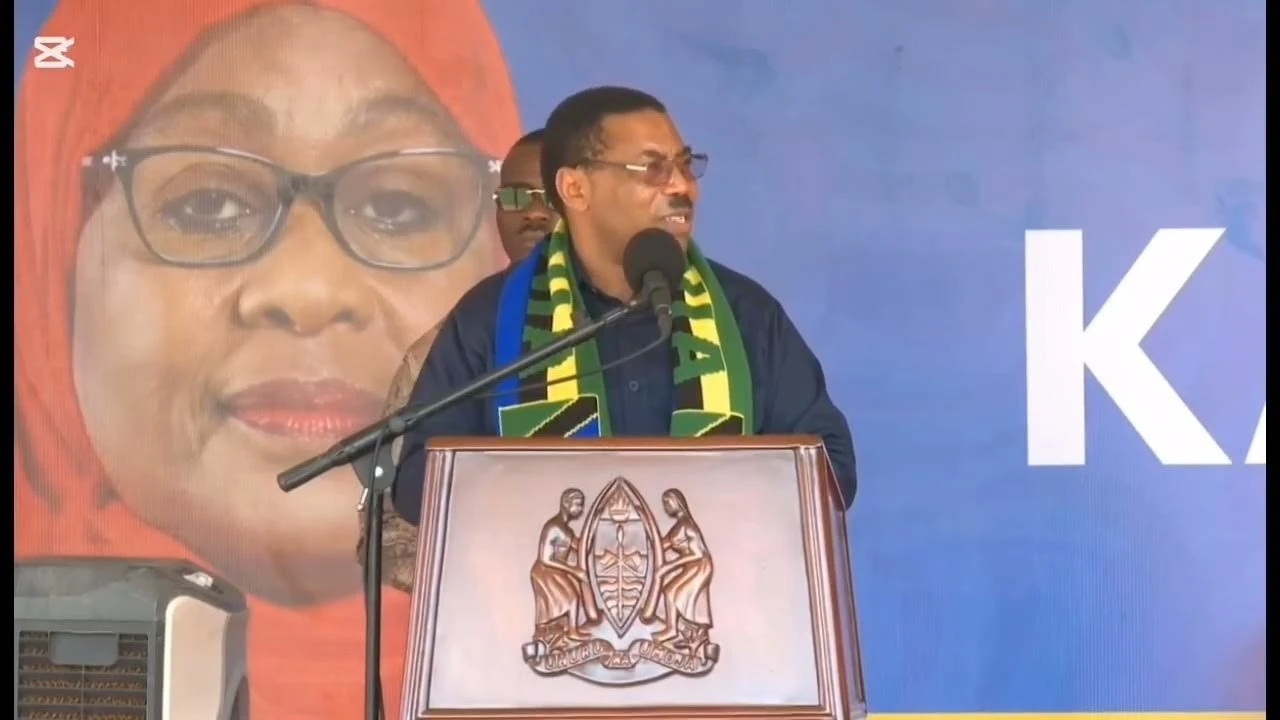
PRIME Minister Dr Mwigulu Nchemba has reiterated the government’s commitment to advancing higher education as the cornerstone for social and economic development.
Laying the foundation stone for a new dormitory at the Nelson Mandela Institute of Science here yesterday, he emphasized the role of education in preparing Tanzania to compete globally.
Science and technology is the key to produce a new generation of skilled professionals, he said, asserting that science and technology complements land, people, good policies and good leadership as an essential requirement for progress
He described science and technology as the fifth element that distinguishes poor nations, as modern technologies could solve longstanding challenges, including environmental issues affecting agriculture for instance in drying crops like tobacco.
Significant investments have been made in education, including the construction of secondary and higher education institutions across all regions, creating new opportunities for Tanzanian children from all backgrounds, he said.
Expanding the Higher Education Students’ Loan Board (HESLB) capacities from 464bn/- to 916.17bn/- in four years had enabled greater access to higher education for students from low-income families, with the number of beneficiaries growing from 1,772,925 to 2,527,733 during the period, he said.
Previously, loans favoured university students, leaving technical and mid-level college students with limited support, now corrected to reflect national priorities, he stated, intimating that the government is building a country with a highly skilled workforce equipped with knowledge, competence and values that will drive the National Development Vision 2050 and Sustainable Development Agenda.
Prof. Adolf Mkenda, the Education, Science and Technology minister said the Nelson Mandela Institute conducts research and technological innovations, registering patents boosting the science and technology sector.
High-performing students in science subjects will receive government scholarships to study abroad, with 11 students heading to South Africa and 34 to Ireland, he said, while Vice-Chancellor Prof. Maulilio Kipanyula said the new dormitory project will increase accommodation for female students, providing housing for more students within the campus.
About 50 students currently in a special Bootcamp have been assisted in securing scholarships at top universities abroad, reducing the financial burden on the government, he said, hailing the government’s prioritizing of capacity building and the development of digital technologies as catalysts for growth, job creation and global competitiveness.
The institute implements Samia scholarships extended for data science, artificial intelligence and collaborative science, picking top-performing secondary school graduates for higher education opportunities abroad.
The institute is currently able to accommodate 279 students, with planned capacity increasing to 459 once the dormitory is complete, as the three-storey, five-wing dormitory project is 83 percent complete, with a total projected cost of 7.9bn/- where 6.032bn/- has already been disbursed.
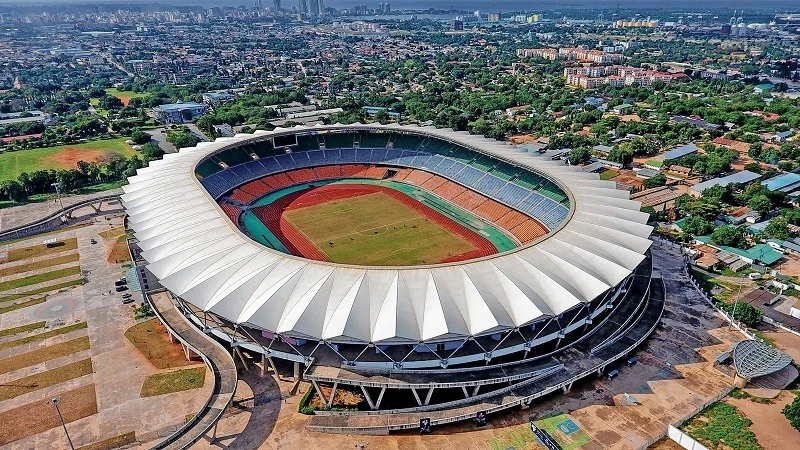
Arumeru East MP Joshua Nassari highlighted the need to upgrade the Mbuguni–Mirerani road to asphalt standard, as a key route for visitors attending next year’s African Nations Cup finals at the new stadium in Arusha.
A three-kilometre asphalt upgrade near the Tengeru Livestock College would serve multiple public institutions and the local market, he added.
Top Headlines
Trending Stories











© 2026 IPPMEDIA.COM. ALL RIGHTS RESERVED