




New education partnership aims to bridge skills gap in Tanzania’s schools
As Tanzania accelerates the shift towards competency-based education, questions continue to linger about whether classrooms are truly equipping young people with the skills needed to succeed beyond school.
While examination pass rates have improved in recent years, concerns persist among employers, parents and policymakers that many graduates still struggle with practical problem-solving, digital literacy and workplace readiness.
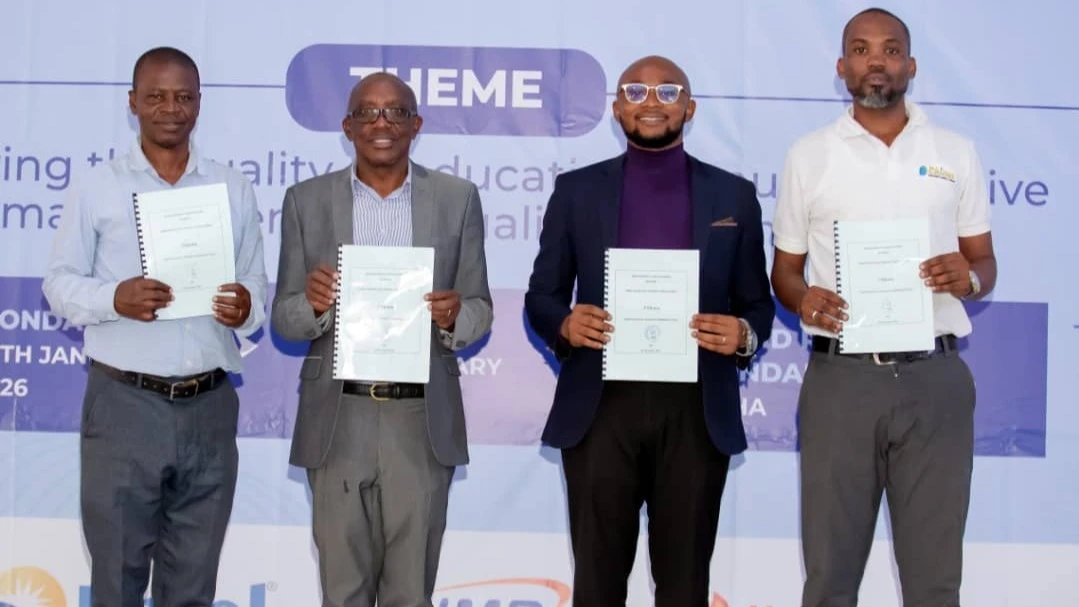
It is against this backdrop that Ekima Interactive Company Limited has signed a Memorandum of Understanding (MoU) with the Christian Social Services Commission (CSSC) to support the rollout of technology-enabled, competency-based learning across CSSC-affiliated secondary schools in Tanzania.
The partnership was formalised during the CSSC Annual General Meeting and Heads of Schools Conference held from January 26 to 30, 2026, bringing together education leaders from faith-based schools across the country.
The gathering provided a platform to reflect on progress made in implementing Tanzania’s Competency-Based Curriculum (CBC) and to explore practical ways of strengthening classroom delivery.
Under the agreement, Ekima will support schools through an interactive digital learning platform that integrates videos, simulations, virtual laboratories and assessments aligned with the national curriculum.
Initial pilot installations are expected to begin from April 2026 following completion of content development.
Education stakeholders say the collaboration is timely, as Tanzania grapples with a widening gap between academic achievement and functional competence.
Each year, the country produces more than 900,000 secondary and tertiary graduates, yet employer surveys repeatedly highlight deficiencies in critical thinking, communication skills and digital fluency.
Many young people remain trapped in informal or low-productivity work, despite having completed formal education.
Speaking at the meeting, Fr Fredrick Mosha of the Roman Catholic Archdiocese of Arusha emphasised that the reform is not merely about changing syllabi, but about reshaping how learning is assessed and applied.
“Competency-based education is about more than content coverage,” he said. “It is about skills, values and whether students can apply what they have learned in real-life situations.”
One of the conference highlights was a live presentation by Ekima’s Chief Strategy Officer, Kusiluka Aginiwe, who demonstrated how the digital platform can be used in classrooms to support teachers and deepen student understanding.
The session addressed practical questions from school leaders, particularly around how technology can enhance, rather than complicate, lesson delivery.

Proponents of the partnership argue that technology-enabled learning tools can help teachers move beyond lecture-based instruction towards more interactive, learner-centred approaches.
Research from similar initiatives in the region suggests that multimedia content and simulations are especially effective in improving comprehension in science and technical subjects, where abstract concepts often pose challenges for students.
The skills gap is particularly pronounced in digital literacy.
National surveys indicate that only a small proportion of Tanzanian youth possess basic digital skills, even as sectors such as fintech, e-commerce, creative industries and technology services continue to expand. Industry projections show that demand for ICT-related skills will far outpace current training capacity in the coming years.
Beyond education outcomes, the partnership also carries broader social and economic implications.
Tanzania’s population is young and growing, with more than half of citizens under the age of 25.
Whether this demographic trend becomes an economic advantage or a source of pressure depends largely on the education system’s ability to prepare young people for productive participation in the economy.
As neighbouring countries invest heavily in education technology and skills-based learning, analysts say Tanzania’s efforts to strengthen competency-based education will be closely watched.
Partnerships that combine institutional leadership with technological innovation are increasingly seen as critical to translating policy reforms into real change in classrooms.
With pilot projects expected to begin later this year, education observers say the true test will lie in whether technology-supported competency-based learning can deliver measurable improvements in teaching quality, student engagement and long-term skills development—outcomes that ultimately affect not just schools, but society as a whole.
Top Headlines
Trending Stories

















© 2026 IPPMEDIA.COM. ALL RIGHTS RESERVED