




When small cracks grow into national faultlines for family life and the future
OUTSIDE my professional work, I often find myself mentoring, coaching and advising couples, families, and young adults. Many of them belong to what I sometimes call Tanzania’s “PSA (Problem Solution Action) generation”. This is a young cohort navigating pressure, speed, anxiety, and endless choice. They care deeply about mental health, personal space, and boundaries. These are not weaknesses. In many ways, they are signs of progress.
Yet, in recent months, I have also watched how the absence of patience, resilience, and everyday tolerance can quietly unravel relationships.
Several young couples have come to me already at the edge of separation or divorce. What struck me was not the magnitude of their conflicts, but how small many of them were. One case involved a young marriage with two closely spaced children. The conflict did not begin with infidelity or financial betrayal. It began with hygiene routines: wet towels left behind, bathroom slippers left damp, a sink not rinsed properly after brushing teeth, a toilet seat left up, towels mistakenly shared.
What looked like minor habits slowly became symbols of disrespect. Health concerns followed. Arguments escalated. Eventually, separation loomed. A marriage with young children was close to collapse! not because of a single catastrophic event, but because small issues were allowed to accumulate without repair.
That experience forced me to ask a difficult question: as a society, are we equipping our young people with the emotional stamina required to live together, to negotiate differences, tolerate imperfections, and repair relationships?
This question becomes particularly urgent as Tanzania approaches International Women’s Day on 8 March - a moment rightly dedicated to celebrating women’s progress and resilience. But it is also a moment that calls for honest reflection on the changing structure of family life, and what those changes mean for the future of our society.
National statistics provide a sobering backdrop. According to the 2022 Population and Housing Census, female-headed households increased from 33.4 percent in 2012 to 35.8 percent in 2022 - representing more than five million households nationwide. This trend appears across both urban and rural areas. At the same time, marital dissolution, while still a minority status, is rising; 3.7 percent of adults are divorced and 1.8 percent separated, alongside 4.7 percent widowed.
These figures are not moral judgments. They describe demographic reality. Female-headed households often reflect women’s agency and resilience, but they can also signal loss, separation, abandonment, or economic vulnerability. In a youthful country, these patterns matter deeply.
The same census shows that Tanzania is a young nation. Over a third of the population is aged between 15 and 35, and broader analyses indicate that more than three-quarters of Tanzanians are under 35. The relationship norms and family choices of this generation will therefore shape the country’s social fabric for decades to come.
Concerns about children’s upbringing are not abstract. While Tanzania does not publish a single indicator labelled “children without father figures,” census data on orphanhood provides a closely related measure. In 2022, more than 10 percent of children under 18 were orphans -including over five percent who had lost their father while their mother was alive. Beyond mortality, separation and non-cohabitation further increase the number of children growing up without consistent paternal presence.
The implications are cumulative. Children carry emotional instability into classrooms, peer relationships, and adulthood. When family structures weaken at scale, trust becomes harder to sustain, cooperation becomes fragile, and social cohesion erodes quietly over time.
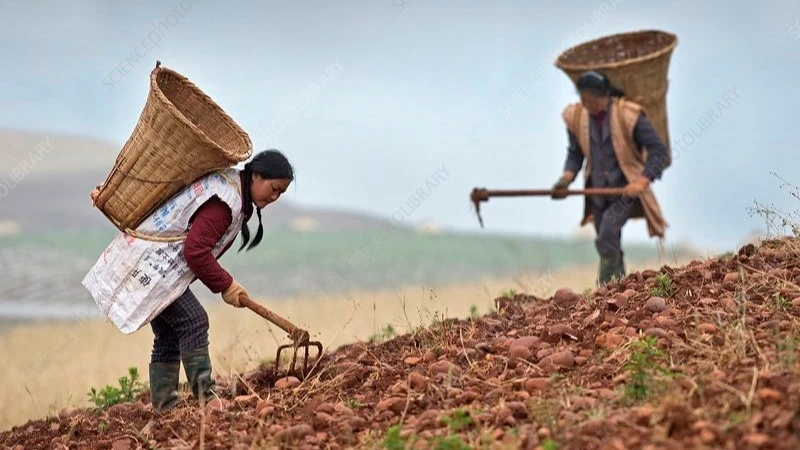
At the same time, it is essential to acknowledge women’s progress. National Bureau of Statistics gender profiles show that women contribute an estimated 60–65 percent of agricultural labour, underpinning food security and rural livelihoods. Women’s participation in economic activity has expanded, and representation in leadership has improved. Yet women continue to own and control a disproportionately small share of productive assets, including land, and face limited access to formal credit and high-value economic opportunities. For many female-headed households, empowerment coexists with pressure.
This is where the national conversation often falters. Raising concerns about family stability is sometimes misread as resistance to women’s empowerment. That framing is unhelpful and inaccurate. Development is not a zero-sum contest between women and men.
A nation cannot progress without women. But it also cannot progress without men.
Responsible fatherhood, partnership, and male engagement are not cultural luxuries; they are development necessities. When men disengage — emotionally, economically, or socially — the burden shifts to women and children, and the cost is borne by society as a whole.
Some countries have begun to confront this reality more openly. Namibia, for example, has elevated discussions on positive masculinity and fatherhood at the highest political levels, recognising that strengthening women’s rights and rebuilding responsible male participation must move together. The aim is not to reverse gender gains, but to stabilise families and communities.
Tanzania needs a similarly balanced approach.
This begins by recognising that relationships require skills. Conflict resolution, communication, financial discipline, emotional regulation, and accountability are learned behaviours - yet they are rarely taught systematically. Young people are expected to “figure it out” in a world that is faster, more individualised, and more pressured than ever before.
It also requires treating fatherhood as a public good. Encouraging men to be present, responsible partners and caregivers is not anti-women; it is pro-child, pro-family, and pro-nation. Community programmes, school-based interventions, and public messaging can play a role in reshaping norms without stigma.
As we prepare to mark International Women’s Day, celebrations of women’s achievements should be matched with sober reflection. A society where family bonds weaken at scale will struggle to sustain unity, ethics, and trust no matter how strong its economic ambitions may be.
The data is not calling for panic. It is calling for seriousness.
Tanzania’s future — socially, economically, and morally — will not be built only through policies, infrastructure, or technology. It will be built in homes, in everyday interactions, and in the capacity of women and men to collaborate rather than retreat into parallel struggles.
If we aspire to a cohesive, resilient nation by 2050, we must invest not only in empowering women, but also in restoring responsibility, patience, and partnership across families. Small issues need not become national fault lines - but only if we confront them early, honestly, and together.
The author is an independent consultant; she can be reached at annarugaba@gmail.com
Top Headlines
Trending Stories












© 2026 IPPMEDIA.COM. ALL RIGHTS RESERVED