




MPs push for evaluation unit in monitoring projects, loans
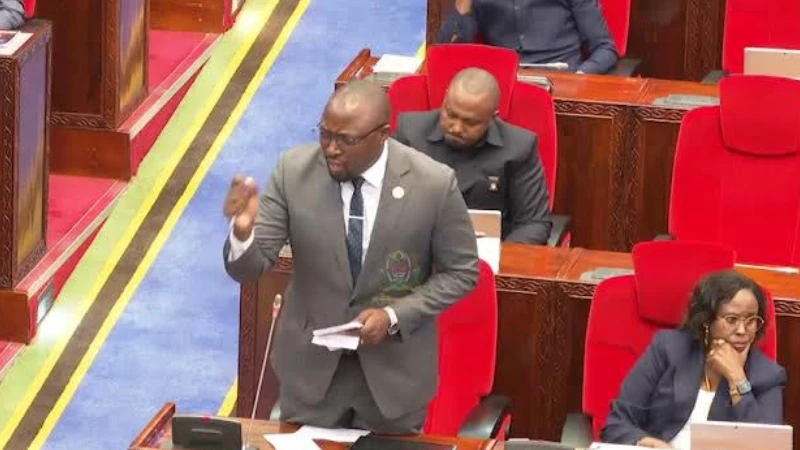
SINCE the government cannot assess itself there is need for the creation of an independent institution tasked with monitoring and evaluating development projects, the legislature advised yesterday.
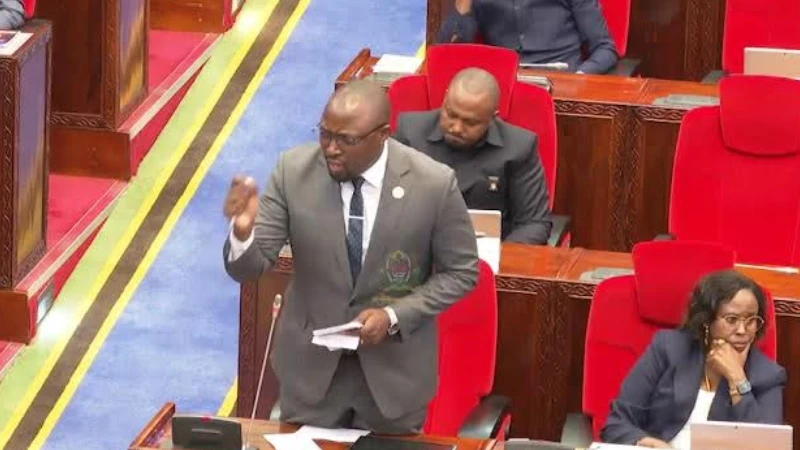
Joseph Kamonga (Ludewa) issued this appeal when contributing to debate on development plans and the Vision 2050, asserting that government allocations for development, including loans and domestic funds, will not achieve results without explicit legislation for monitoring and evaluation.
He asked the government to establish a dedicated unit for monitoring and evaluating the implementation of development plans and projects to ensure timely completion and address backlogs.
For the plans to be implemented effectively and deliver tangible benefits, the government must pass legislation to create an independent monitoring and evaluation unit with authority over all development projects nationwide, he said in remarks echoed by other contributors.
The MPs MP noted that many targets under the Third National Development Plan were not fully achieved due to the lack of a robust monitoring and evaluation framework.
Festo Sanga (Makete) said that the lack of an independent monitoring unit this has resulted in the initiation of multiple projects without completing earlier ones, increasing the government’s financial burden and delaying citizens’ access to essential services.
“We launch many projects, but they are not implemented because we lack a monitoring body. The government should assess all projects, identify which are incomplete and ensure unfinished projects are completed to benefit citizens,” he said.
Starting new projects before completing previous ones has placed a heavy financial burden on the government, while people miss out on vital services, he said, citing road, water and other strategic projects that remain unfinished despite contracts being signed over four years ago.
The government needs to prioritise completion before launching new initiatives, as the country cannot advance production if key projects remain incomplete. “The monitoring and evaluation unit must be prioritised and established by law to oversee implementation,” he emphasized.
The government has to move away from cash-based revenue collection and strengthen electronic systems, which should be few, robust and interoperable to reduce inconvenience to taxpayers, he further argued.
For these systems to function effectively, internet infrastructure must be improved and the Tanzania Communications Regulatory Authority (TCRA) be financially supported to enhance internet services nationwide, he said.
“We cannot collect revenue efficiently without improving the internet. TCRA needs funding to strengthen systems. They should be supported so we can collect revenue effectively,” he said.
He cautioned that the development plans would fail without tackling revenue leakages and corruption as corrupt practices in contract awards have been costly to the government and the nation.
Many contracts are awarded to individuals or companies without the required capacity to deliver, causing delays, cost overruns and further burdens on the nation, he said, stressing public servant accountability as government funds often benefit a few while failing to reach citizens.
He pointed at the existence of upwards of 70 youth-related funds, a situation that weakens coordination and reduces the visibility and impact of initiatives. These funds need to be placed under the Ministry of Youth to simplify monitoring and evaluation.
Although over 3.5trn/- has been lent to young people, unemployment and lack of capital remain persistent challenges, the Ludewa MP noted, asserting that allocating at least one per cent of GDP for research in collaboration with local universities to inform policies would address citizens’ challenges.
Joseph Musukuma (Geita) praised the Planning Commission for introducing competitive recruitment, including for board chairpersons, noting that these positions should advance vision rather than serve as rewards.
Competence and age should be considered in appointments to ensure officials have the energy, knowledge and capacity to drive plan implementation, he said, highlighting the importance of empowering local contractors as payments to domestic contractors remain in the country and support local economic growth.
Abdalah Chikota (Nanyamba) identified weak local governance as a major challenge in implementing the Third National Development Plan, with over 85 per cent of local governments depending on central government budgets.
He appealed for a decentralisation law clearly defining the responsibilities of central and local governments, as well as revenue sources, to prevent overlaps and administrative conflicts.
Keneth Ernest (Bahi) urged the government to establish a steel plant using Liganga and Mchuchuma resources, arguing that if the country could invest in the standard gauge railway (SGR) it can also invest in steel production.
Ester Bulaya (Bunda) emphasised that quality seeds are crucial for national food security, as insufficient supply of seeds limits production and market availability.
The country requires over 250,000 tonnes of seeds annually, while current production capacity stands at about 70,000 tonnes, which requires the Agricultural Seed Agency (ASA) to increase domestic production and reduce reliance on imports, she added.
Top Headlines
Trending Stories







© 2026 IPPMEDIA.COM. ALL RIGHTS RESERVED