




Tanzania attaining nearly 20pc of GDP from tourism as an economic paradox
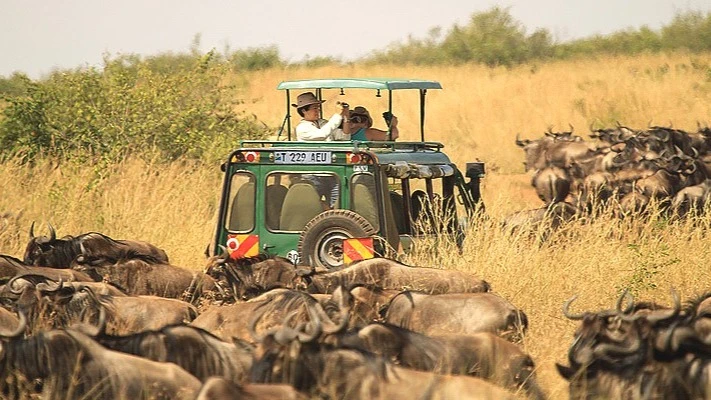
WITH earnings from tourism largely replacing hitherto assured aid flows, some of the math that is being floated in relation to ‘national income accounting’ can be somewhat perplexing, as statisticians talk of tourism as a pillar of Tanzania's economy, contributing 17.2 percent of the gross domestic product and over 24 percent of its total foreign exchange earnings or total ‘exports.’
Chroniclers are assertive that in 2024, the sector experienced a significant rebound, generating over $3.4bn in revenue and supporting over 1.5m jobs, whereas it is well known that the public sector as a whole doesn’t employ more than one million people. At most it is 1.2m.
Not many people in their daily walks of life can figure out how the tourists we see on the streets - and not everyone comes across tourists with the likely exception of Zanzibar residents – have more people working to ease their passage in Tanzania than there are civil servants.
While the numbers look odd, the big issue isn’t in the numbers but in the value chain, which comes down to tracking the value of the shilling in the ’international consumer basket index’, as it were. Having tourism being preponderant as economic activity or as gross income earner is entirely rational for small island economies or thinly populated littoral states, not those with 60m people.
This datum is a paradox of global economic realities on the side of gross economic inefficiency where 5m tourists keep 1.5m people on their jobs while the government has at most 1.2m people on its payroll.
Another datum in global realities that compares with this situation is the well-established truism that the United States produces up to one quarter of global food produce and to do so it has just five percent of the population relying on agro-sector activities to earn a living.
In a parallel note, South Africa accounts for just over half of Africa’$90bn food imports annually not because it has more land but it has retained efficient commercial famers it hounds every day.
The question is how rational are these economic realities and how are the paradoxes resolved, but in many instances policy makers are largely satisfied with ‘what there is’ and aren’t frankly brainstorming to see how these imbalances can be corrected.
One such outlook is expectation that by 2030 the country will have attained eight million tourist visitations annually, which isn’t altogether exaggerated as realistic projections were showing that tourism moved from 17.2 percent to what looks like 19.5per cent of GDP by the end of this financial year, so projecting it to 40opc of GDP in five years looks altogether feasible. This creates a positive picture of broad economic expectations, not realizing that this narrowness of income sources is itself a failing.
It basically suggests that other sectors are inefficient and appears likely to remain inefficient, as otherwise tourism could grow rapidly while keeping its position in GDP as slightly below 20pc or at most attain this figure and show tendencies of being stable in gross income terms. When the part of tourism earnings in GDP is growing by leaps and bounds, that means other sectors and in particular agriculture and industry are slow or stagnant.
Those who keep tabs on economic data will realise that for decades the contribution of industry to GDP was 80percent virtually in an unchanging manner, while agriculture has been swinging between 15pc and 25pc but in the past decade mining has been displacing agriculture especially in attracting labour, or capital.
The wider problem is that this concentration of gross earnings from tourism and to an extent mining, bespeaks of an increasingly inefficient farming, livestock rearing and fishing sectors in particular, which ‘employ’ large numbers of people with paltry incomes to share out in all those activities.
To be sure, all these activities are yearning for investors who take them by purchasing or leasing of assets and put millions on paid work as climate adaptation investments like vast seaweed plantations on the coastline, nitrogen fixing products inland so long as they can come into the country with bankable ideas and use land titles to access venture capital, not being provided with public land as it insecure in its title and fetches high taxes, thus costly products.
If investors can obtain loans from local banks, the number of those with regular incomes could be multiplied by two or three in the next half decade, hence providing the stability tourism needs to grow, as otherwise efficient sectors of economy become poison to stability, by envy, activism.
Top Headlines
Trending Stories




















© 2026 IPPMEDIA.COM. ALL RIGHTS RESERVED