




At the centre of global capital: How Mauritius became Africa’s next summit economic gamble
MORNING arrives slowly in Port Louis, the capital, where container ships idle beyond the harbour wall and office workers weave through narrow streets lined with banks, cafés, and currency exchanges. In recent months, conversations here have shifted from tourism forecasts to capital flows, investment corridors, and something once distant from everyday talk, geopolitics.
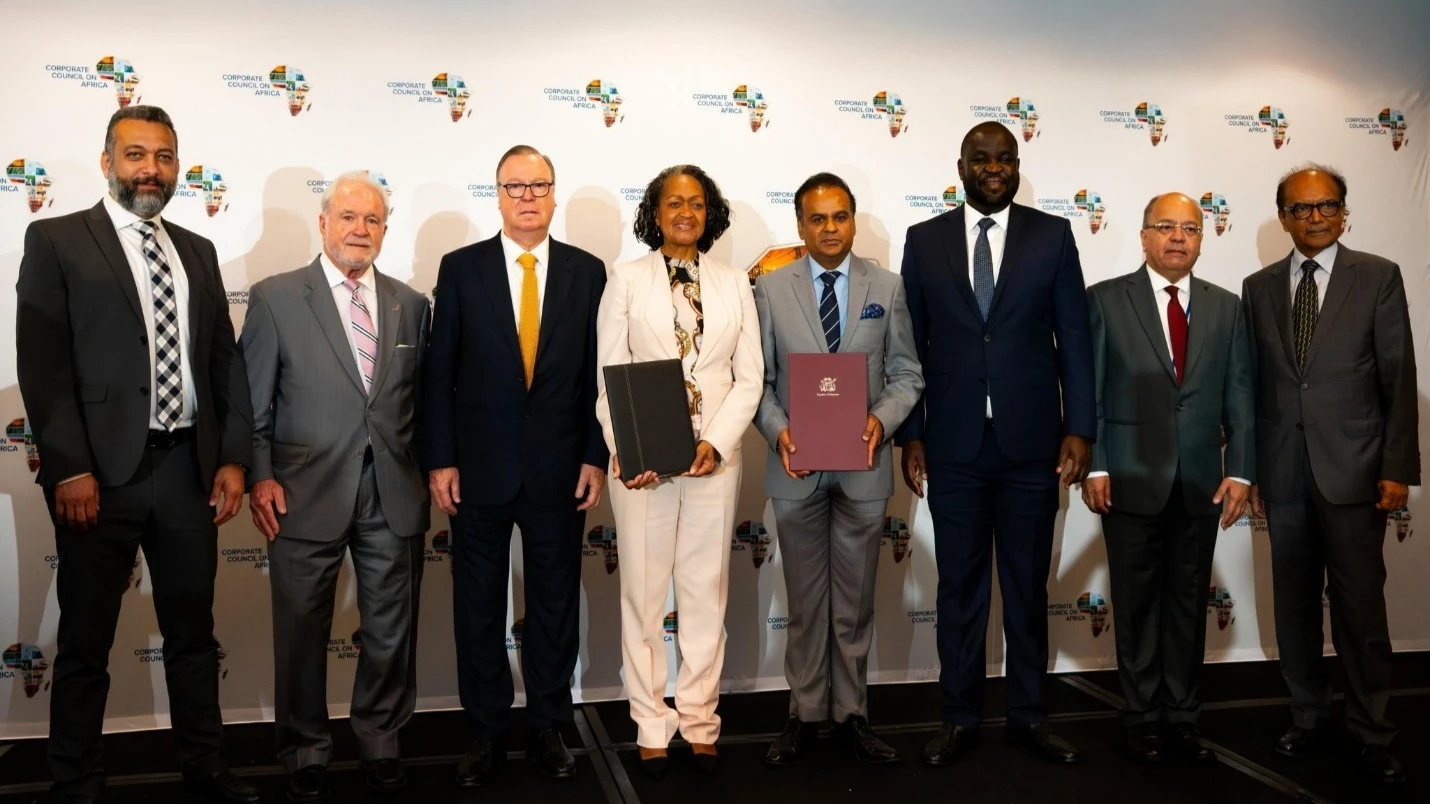
From July 26 to 29, the island nation of Mauritius will host the 18th U.S.–Africa Business Summit, organised by the Corporate Council on Africa. More than 3,000 delegates are expected, including heads of state, cabinet ministers, development financiers, and executives representing billions of dollars in potential commitments across infrastructure, energy, and digital industries.
For the United States, the gathering reflects an accelerating shift toward trade-led engagement. Two-way trade between America and Africa exceeded $70 billion in recent years, yet still trails far behind commercial relationships African economies maintain with Asia and Europe, a gap policymaker increasingly views as both risk and opportunity.
Mauritius, with a population of just over 1.3 million and a per-capita income among the highest in Africa, offers a carefully constructed economic narrative. Since independence, the country has diversified from sugar exports into textiles, tourism, offshore finance, and increasingly fintech services, achieving average annual growth rates near 4 per cent over the past decade despite global shocks.
Walk through Ebene Cybercity, the island’s technology district, and that transformation becomes tangible. Young programmers gather in shared offices overlooking manicured boulevards, discussing venture capital and artificial intelligence rather than migration plans. For many graduates, the summit represents not diplomacy but possibility, a chance for investors to notice talent that rarely appears in global headlines.
Government officials frame the moment in macroeconomic language. Prime Minister Navinchandra Ramgoolam has argued that hosting the summit confirms Mauritius as a gateway economy capable of channelling capital into continental markets. Behind that ambition lies a strategy built on low corporate taxation, investment treaties, and regulatory predictability designed to attract multinational firms.
The model, however, also raises questions familiar across financial hubs. Housing prices in parts of Port Louis and Grand Baie have climbed sharply, and service workers quietly wonder whether foreign investment inflates opportunity or inequality. Taxi drivers tracking hotel occupancy rates see prosperity arriving unevenly, measured as much in tips as in GDP statistics.
Last year’s summit in Angola offers a useful comparison. Held in Luanda, the event drew nearly 3,000 participants from more than 80 countries and generated over $2.5 billion in announced deals, including energy transmission corridors and digital infrastructure partnerships valued at hundreds of millions of dollars each.
Economists analysing those commitments note that announcement figures often exceed realised investment flows. Historically, implementation rates for large infrastructure memoranda across emerging markets range between 40 and 60 per cent, depending on financing conditions and political continuity. Mauritius now inherits the challenge of converting optimism into execution.
American officials increasingly describe their strategy as commercial diplomacy, leveraging export financing agencies and development finance institutions to mobilise private capital. The approach reflects data showing that every $1 billion invested in logistics and power infrastructure can raise regional trade volumes by as much as 5 per cent through reduced transaction costs.
Energy economics will likely dominate negotiations. Across sub-Saharan Africa, nearly 600 million people still lack reliable electricity access, while industrial demand continues rising at roughly twice the global average. Hydropower transmission networks discussed during previous summits aim to supply gigawatts of power capable of supporting mining, manufacturing, and urban expansion.
Agribusiness presents another measurable urgency. Africa imports more than $40 billion in food annually despite holding vast arable land reserves. Investments in grain silos, cold storage logistics, and fertiliser supply chains announced in Angola signalled attempts to reduce post-harvest losses, which in some regions exceed 30 per cent of total production.
Mauritius brings its own lessons into those discussions. Once vulnerable to commodity price volatility, the island diversified aggressively through export processing zones and financial services liberalisation. Economists often cite the country as evidence that institutional consistency, rather than resource abundance, drives sustained growth trajectories.
Foreign Affairs Minister Dhananjay Ramful has emphasised regional integration as central to the summit’s agenda. Trade facilitation across borders remains costly; moving goods between neighbouring African countries can sometimes cost more than shipping them overseas. Reducing those inefficiencies could significantly expand intra-African commerce.
Such ambitions align with the African Union’s integration goals, whose trade frameworks aim to create one of the world’s largest unified markets. Analysts estimate that removing tariff and logistical barriers could increase intra-African trade by more than 50 per cent within a decade.
Digital infrastructure may ultimately shape the summit’s most durable outcomes. Africa’s internet economy is projected to contribute more than $180 billion to GDP over the next few years, yet broadband penetration and cybersecurity capacity remain uneven. Technology partnerships combining training programs with infrastructure deployment attempt to close that gap simultaneously.
CCA President and CEO Florizelle Liser has argued that investment credibility increasingly depends on workforce development alongside capital deployment. Investors now measure success not only through returns but through measurable employment multipliers, local supplier participation, and technology transfer metrics.
Geopolitics quietly underpins the enthusiasm. Competition for critical minerals essential to electric vehicles and renewable energy systems has intensified global interest in African supply chains. Diversifying sourcing routes has become a strategic priority for multiple economies seeking resilience after pandemic-era disruptions exposed vulnerabilities.
The hosting agreement itself was formalised during meetings linked to the United Nations General Assembly in New York, underscoring how economic engagement increasingly overlaps with diplomacy. Trade forums now function as arenas where alliances are negotiated through contracts as much as speeches.
On the streets of Port Louis, preparations unfold with pragmatic energy. Hotel managers expand staffing rosters, vendors negotiate supply contracts, and university students volunteer for translation services, hoping proximity might lead to internships. Economic forecasts translate here into overtime shifts and cautious optimism about future careers.
Mauritius’ economy grew approximately 6 per cent during the post-pandemic recovery years before moderating amid inflation and global uncertainty. Policymakers hope summit-related investment announcements can stabilise medium-term growth above 4 per cent while attracting sectors less vulnerable to tourism cycles or external commodity shocks.
Still, the lessons from Angola linger as quiet reminders. Large announcements generate headlines, but sustained growth depends on procurement transparency, debt sustainability, and local participation. Citizens watching motorcades pass will ultimately judge success less by communiqués than by electricity reliability, wage growth, and affordable housing.
As evening settles over the harbour, fishermen return alongside container vessels carrying goods bound for distant markets. The juxtaposition feels symbolic: a small island balancing tradition and globalisation at once.
Economists have long warned that investment summits succeed only when institutions convert ambition into execution. As John Maynard Keynes argued, confidence matters, yet credibility matters more. Joseph Stiglitz reminds policymakers that growth without inclusion breeds instability, while Daron Acemoglu links prosperity to accountable institutions.
In Port Louis, shopkeepers and students understand this intuitively: announcements raise hope, but contracts pay salaries only when implemented. Angola learned that lesson after applause faded; Mauritius now watches carefully, measuring success not by speeches, but by electricity flowing, businesses hiring, and opportunities staying home because real development begins quietly after delegations depart and spreadsheets reconcile.
Top Headlines
Trending Stories













© 2026 IPPMEDIA.COM. ALL RIGHTS RESERVED