




Xi Story: Blazing a high-quality development path suited to local conditions
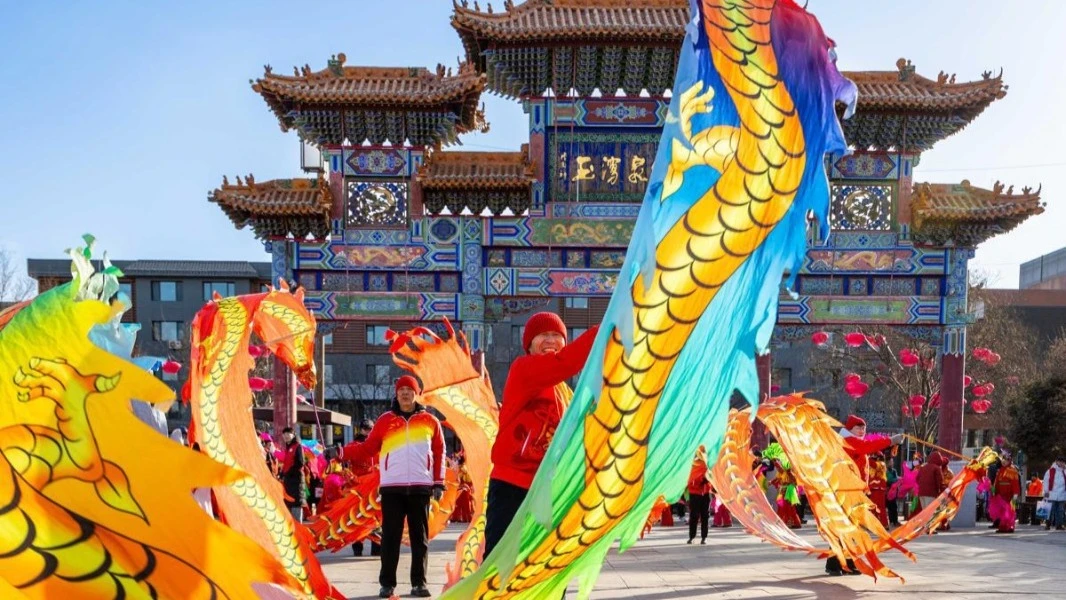
In a territory more than twice the size of the European Union and where per capita GDP varies up to fourfold across provincial-level regions, the challenge of modernizing China with the right solutions for diverse localities has become a test of governance wisdom.
When some regions rushed to chase projects in artificial intelligence, computing power or new energy vehicles amid the push for "new quality productive forces," a national strategy emphasizing innovation-driven growth, Chinese President Xi Jinping posed a profound question at the Central Urban Work Conference last summer: "Does it make sense for every single province to develop these same industries?"
This question revealed a core dialectic in China's development: pursuing modernization for a country of over 1.4 billion people while respecting distinct realities of each locality.
This philosophy has underpinned China's steady growth and is expected to deliver high-quality growth in the country's 15th Five-Year Plan period (2026-2030), a critical phase for advancing modernization, when strategic opportunities coexist with risks and challenges.
To make a good start in the first year of this period, the principle of "adapting measures to local conditions" was reiterated at the Central Economic Work Conference held in December 2025 by Xi, also general secretary of the Communist Party of China Central Committee and chairman of the Central Military Commission.
At this meeting, Xi criticized some localities for blindly chasing trends irrespective of local conditions, either by jumping on the bandwagon of developing the chip industry or being eager to follow suit with the "new trio" projects -- electric vehicles, lithium batteries and photovoltaics.
To drive home his point, Xi offered a vivid analogy: Just as nature features biodiversity, regions differ in their conditions, and a community includes the elderly and the young, why should everyone end up doing exactly the same thing?
This rejection of homogeneous development is a practical method Xi has consistently applied throughout his years in office.
During his earlier tenure in Fujian Province in east China, Xi urged the province to make full use of its unique dual endowment of mountains and sea in its quest for development. While working in Zhejiang Province, also located in east China, Xi advocated helping villages find their own path to prosperity. After becoming the country's top leader, Xi has stressed targeted, tailor-made governance for a broad range of sectors, be it poverty alleviation, ecological conservation, industrial development or urban planning.
He called on all regions to "look for the right key for each lock" and not to prescribe the same solution for every problem. "All regions should act in light of local conditions, build on strengths and compensate for weaknesses, blazing a path of high-quality development suited to local realities."
Latest data from Heilongjiang Province, northeast China, offers a vivid illustration of this philosophy in action. This "northern granary" celebrated its 22nd straight bumper harvest last year, with total grain output hitting a record 82 million tonnes, ranking first nationally for 16 consecutive years.
"Continuing to serve as China's granary in the north is just as glorious and important as the Yangtze River Delta serving as the country's hub of cutting-edge technology," Xi said.
Elsewhere, the same logic takes different forms. China's southwestern Guizhou Province, capitalizing on abundant hydropower and a naturally cool climate that significantly reduces server cooling costs, has built a data infrastructure cluster attracting tech giants including Apple, Huawei and Tencent, who have opted to store data there.
Inner Mongolia Autonomous Region in north China harnessed its abundant wind and solar resources to reach a new energy installed capacity of over 170 million kilowatts by the end of 2025, more than any other region in the country. Shanxi Province, also in north China, is revolutionizing its coal heritage: pursuing the efficient, clean utilization of coal reserves via upgrading technologies.
"Developing new quality productive forces does not mean neglecting or abandoning traditional industries," Xi warned, stressing the need to prevent blind expansion, bubbles or a one-size-fits-all approach.
His call serves as an alarm for those officials who are fixated on trophy projects to burnish their political records regardless of local realities.
"We must establish and practice a correct understanding of what it means to perform well, act on the basis of realities and in accordance with objective laws, and strive to deliver political achievements for the people through solid work," Xi told senior officials.
Top Headlines
Trending Stories









© 2026 IPPMEDIA.COM. ALL RIGHTS RESERVED