



Google finally lets you change your Gmail address, rewrite digital identity after 20 yrs
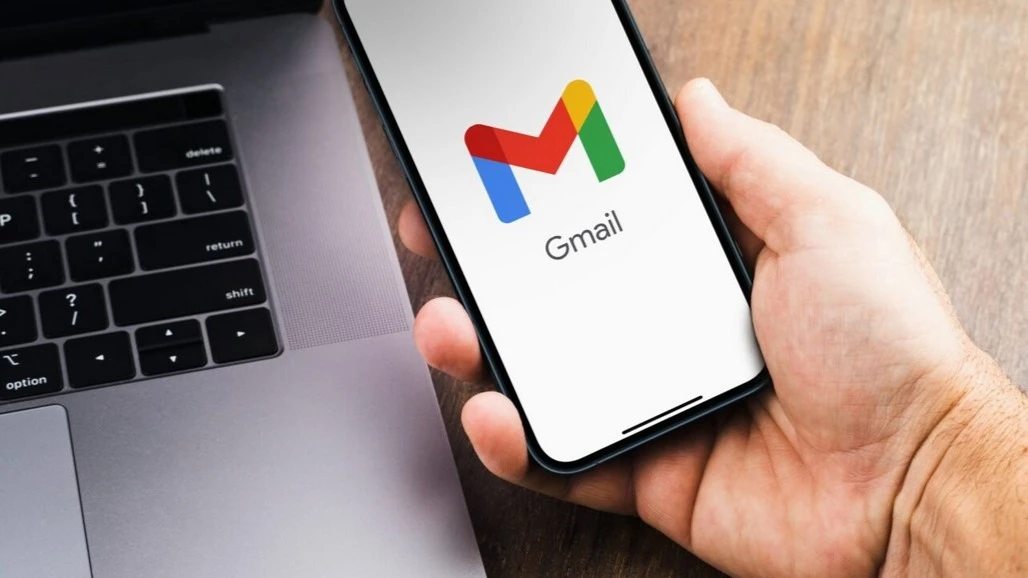
I couldn’t help but wonder if, in our rush to build digital lives, we accidentally locked ourselves into identities that were never meant to be permanent.
Twenty years ago, we chose our Gmail addresses the way we chose low-rise jeans—quickly, casually, and with absolutely no thought for the future. No one imagined that sk8r_girl_2004—pronounced, painfully, “Skater girl two thousand four”—would still be the alias we’d carry into a boardroom in 2026.
For two decades, that Gmail username became the one thing in your life you couldn’t change without blowing the whole house up. Jobs? Replaceable. Cities? Changeable. Relationships? Complicated, but doable. Your email address? Permanent. A digital tattoo you didn’t consciously choose to keep, but couldn’t laser off either.
Google finally looked at us and said: Alright, you’ve served your time. The crimes of your youth are officially pardoned.
By allowing us to swap our primary addresses while keeping the old one as an alias, Google is finally acknowledging a truth we’ve all known for a while: who we were in the early 2000s shouldn’t define how the world sees us today.
Ladies, you know how, before a big night out, you trim, polish, and make sure everything's in its place? Google's not just giving the interface a fresh coat of paint—they're slimming things down.
Starting January 2026, Gmail will no longer serve as a universal inbox for pulling in Yahoo or Outlook messages. Google is tightening its security perimeter, phasing out legacy protocols like POP and closing the quiet gaps that once allowed older systems to flow into its ecosystem. The goal is simple: reinforce the walls so the digital fortress actually stands.
POP is a true relic — born in the early 1980s, neon-leg-warm, dial-up, big-hair era. Forty-one years old. In tech terms, that's basically Jurassic.
That was the same year films like Ghostbusters, Beverly Hills Cop, and The Karate Kid lit up cinemas. And honestly — who can forget “Bad to the Bone” roaring through Terminator 2’s opening motorcycle scene? Pure cinema. And like those eighties icons, POP has definitely… aged, a lot.
There’s a strategic precision to the timing of these changes, particularly alongside the debut of Workspace Studio and the latest wave of Gemini 3 AI agents now embedded in our workflows. Google’s AI doesn’t merely triage emails, block spam, or schedule meetings—it adapts to how we operate, helping prioritize what truly counts.
To unlock that potential, it needs a streamlined, native ecosystem. By steering users toward a single Google identity and phasing out third-party aggregation, Google is effectively constructing a control centre for how modern work actually happens.
The shift toward a unified, native identity is less about restriction and more about the radical evolution of what an email address actually is. In the early days, an email was just a mailbox, a digital slot in the door where letters arrived. Today, your Google identity is your passport to the entire modern world. It is how you sign into your bank, how you access your medical records, and how you prove you exist to a thousand different apps.
When Google tethers your identity to a single, verified string of text, it isn't just protecting your mail; it is protecting the very core of your digital personhood. By finally allowing us to change that string, they are recognizing that a person at forty is not the same person they were at twenty.
It’s corporate empathy disguised as a technical update—a recognition that our digital shadows should evolve as we step into new light.
Consider the sheer scale of re-engineering a platform with nearly two billion active users. Each account is a dense web of integrations, subscriptions, recovery paths, and security tokens. For twenty years, the rule was simple: once created, an email address was permanent, because disturbing that web risked unraveling everything attached to it. But the landscape has shifted. Security is no longer just about keeping intruders out; it’s about ensuring the right people move frictionlessly through the right doors. By adopting an alias-based renaming system, Google is constructing a bridge between who we were and who we are becoming. Your original address doesn’t disappear; it lingers in the background, quietly collecting stray messages, preserving continuity while you step forward with a sharper, more deliberate identity.
We also need to examine the ‘why now’ behind the January 2026 cutoff, because in big tech, timing is strategy. Retiring Gmailify and POP fetching isn’t housekeeping—it’s ecosystem fortification. For years, Gmail functioned as a polished overlay for older, less secure services, importing mail from providers that lagged behind modern encryption standards.
That convenience introduced exposure—a single vulnerable link capable of stressing the wider Google Workspace chain. By severing those legacy connections, Google is making a clear statement: premium-grade security requires operating fully inside its architecture. It’s a decisive move that places the protection of 1.8 billion users above the nostalgia of those still tethered to servers built in another technological era.
Then there’s the gravitational pull of an AI-first future. Workspace Studio represents more than redesigned menus; it signals a new interface between humans and information. The Gemini 3 agents embedded in our sidebars depend on structured, reliable data to function at their best. When inboxes merge half a dozen external feeds, clarity dissolves into clutter, and AI performance dulls.
For an assistant to genuinely understand your patterns and priorities, it must operate within a coherent, native system where signals aren’t distorted. Google is effectively presenting a choice: cling to a fragmented digital past, or step into a streamlined, AI-augmented workflow. Anyone who has hunted endlessly for a buried boarding pass among promotional emails already knows which future feels more efficient.
I’ve long believed that the most powerful act is the willingness to rethink yourself, and now Google is enabling us to rethink the core of our communication. This shift closes the chapter on the “Digital Caveman” phase—an era defined by hoarding accounts and clinging to outdated identifiers out of inertia.
In its place emerges the ‘Digital Professional’, where identity is adaptable but the underlying platform remains steadfast. This change isn’t cosmetic; it restores dignity to the way we present ourselves online. In 2026, no one should feel compelled to apologise for a teenage username. Your digital signature should carry the same assurance as your handshake.
Of course, not everyone will celebrate. Some will lament the fading of the universal inbox. Others will bristle at POP’s retirement and the shuttering of Gmailify. Yet those critiques overlook the broader construction underway. What’s emerging is a more secure, more intelligent, and ultimately more human-centred web. By trimming obsolete infrastructure, Google is clearing space for systems that anticipate needs instead of reacting to chaos. In this environment, identity becomes propulsion rather than ballast—less an anchor holding us in place, more a sail catching technological tailwinds.
So when the long-awaited prompt appears, inviting you to rename your account, pause and recognise the two decades of infrastructure and evolution behind that moment. Remember the banner ads, the storage caps, the aesthetic excess of the early internet. Then exhale, retire the “sk8r_girl” persona, and claim the version of yourself you’ve intentionally built.
We can’t remain digital cavemen, stockpiling outdated addresses like relics. In an internet that archives everything, Google is finally offering what many of us have quietly wanted for twenty years: the grace of a reset.
By Joahua Mabina
Top Headlines
Trending Stories























© 2026 IPPMEDIA.COM. ALL RIGHTS RESERVED