




Closing women’s health gap could add $1trillion to global economy: Pathfinder chief
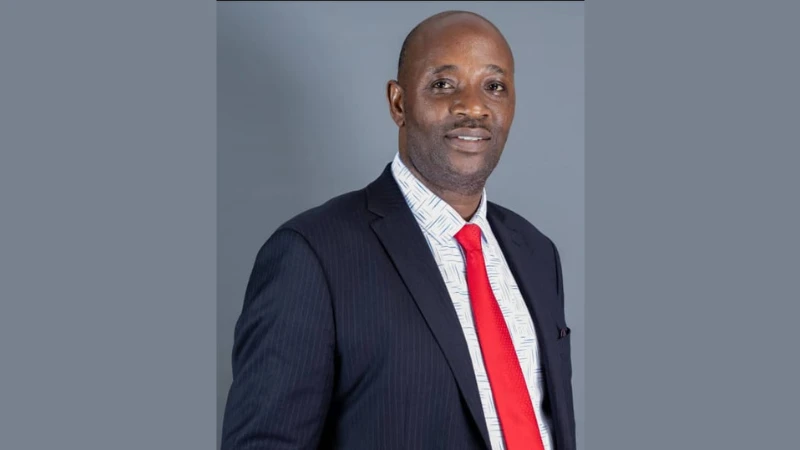
INVESTING in women’s health is one of the smartest economic decisions a country can make.
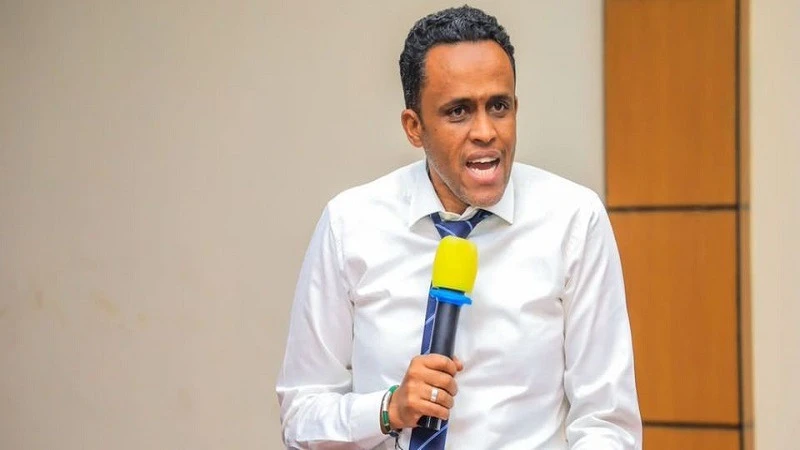
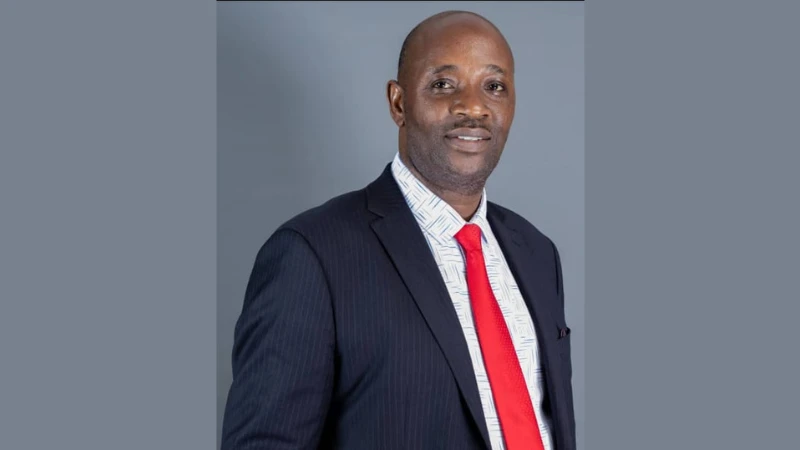
In this exclusive interview, Dr Joseph Komwahingiro, Country Director of Pathfinder Tanzania, points to global evidence showing that closing the women’s health gap could inject up to $1 trillion annually into the global economy.
He adds that women reinvest up to 90 percent of their income into their families and communities, multiplying returns far beyond the individual household.
How long has Pathfinder been working in Tanzania, and what are your main areas of focus?
A: Pathfinder has been a partner in Tanzania since 1957. Over the decades, we have worked alongside government and communities to strengthen health systems, improve maternal and child health, and advance women’s rights and leadership. Our approach is practical and outcomes-oriented.
We prioritise sexual and reproductive health so that women and girls can access contraception, family planning, safe delivery, and post-abortion care. We also invest in the prevention of and response to gender-based violence by supporting integrated models of care for survivors, particularly children.
A good example is the One Stop Center at Kivule Hospital. In many settings, survivors are forced to move from one office to another, repeating the same painful story multiple times.
At Kivule, services are brought together so survivors can access medical care, psychosocial support, and other critical services in one place. This integration reduces barriers to care and increases the likelihood that survivors remain connected to services.
We also work on youth empowerment because young people are already leaders and problem-solvers.
This includes peer education, such as programmes at Mtetema Primary School, as well as youth-led climate adaptation approaches, recognising that climate pressures increasingly shape health outcomes and household stability.
In parallel, we integrate climate and health by supporting climate-resilient health systems and climate-smart approaches that protect women’s health and economic security.
In addition, we support women’s economic empowerment through programmes like Tuungane, connecting health with economic opportunity, because health services alone are not effective if women cannot afford to access them.
All of this is done in partnership with the Ministry of Health; the Ministry of Community Development, Gender, Elderly, Children and Special Groups; the Prime Minister’s Office – Regional Administration and Local Government; and regional authorities in Morogoro, Arusha, and Zanzibar. We also work closely with community-based organisations, which are often closest to the issues and best placed to sustain progress.
Why should Tanzania continue investing in women’s health? What are the biggest challenges, and what gives you hope?
A: Women’s health is infrastructure. It is not separate from economic development; it is foundational to it. When women are healthy, families and communities thrive. When women can access contraception and plan their families, they are more likely to complete education and participate in the economy. When maternal mortality declines, societies retain productive members and families maintain the stability that women often provide through caregiving, income generation, and community leadership.
The economic case reinforces what communities already know from lived experience. Closing the women’s health gap could inject up to USD 1 trillion annually into the global economy, and women reinvest up to 90 percent of their income into families and communities. That is why investing in women’s health is one of the smartest economic decisions a country can make.
The challenges remain real and interconnected.
Access gaps persist for women in rural areas, women with disabilities, adolescent girls, and those in hard-to-reach regions. Barriers include distance, cost, stigma, and facilities that are not disability-inclusive.
Health systems are also under strain. Health workers are often under-resourced, understaffed, and under-supported. When facilities lack basic supplies, even skilled providers cannot deliver quality care, undermining trust and increasing the risk of preventable complications.
There is also a false separation between health and economic realities. Health services alone do not work if women cannot afford access, lack economic power to make decisions about their bodies, or face climate shocks that destroy livelihoods and health at the same time. Climate change is amplifying these challenges.
Floods damage health facilities and disrupt supply chains. Droughts increase child marriage as households cope with economic stress. Heatwaves complicate pregnancies, especially where transport and facilities are stretched. Displacement heightens the risk of gender-based violence and further weakens access to essential services.
Two things give me great hope. The first is the leadership we see from young people — leading peer education, demanding better services, holding systems accountable, and building community solutions that reflect their realities.
The second is the growing shift toward integrated approaches, where health is addressed alongside economic empowerment, education, and climate resilience.
These signals show Tanzania moving toward a model where women’s health is treated as infrastructure, communities lead, and sustainability is central. The challenges remain significant, but the pathway is becoming clearer, and Tanzania is helping define that pathway for the region.
Q: February is the International Day of Zero Tolerance for FGM. What does this day mean for Tanzania?
A: The International Day of Zero Tolerance for FGM is an important moment for reflection and action. This year, it coincides with a major milestone for Pathfinder. We have just signed the HER Future partnership, which will reach more than 380,000 young people in Morogoro and Arusha with integrated support, including sexual and reproductive health services, prevention of gender-based violence, economic opportunities, and youth leadership development.
Tanzania has made real progress. FGM prevalence has declined from 18 percent to 8 percent over the past three decades. However, 2.7 million Tanzanian women and girls have still experienced FGM, and prevalence in Arusha remains as high as 41 percent. The final 8 percent are often the hardest to reach because the practice is tied to deeply rooted social norms and household-level economic pressures.
HER Future treats FGM not as an isolated issue, but as part of a broader system linked to child marriage, maternal mortality, gender-based violence, and girls’ education. These issues are interconnected, driven by the same beliefs and pressures, and must be addressed together.
Q: Why is FGM still happening in some communities despite laws and awareness campaigns?
A: Because FGM is deeply linked to beliefs about marriageability, family honour, and economic security. In practising communities, families often believe their daughters will not be accepted for marriage without being cut, and marriage is viewed as the primary pathway to economic stability. That is why awareness alone is insufficient.
Change requires practical alternatives and social proof. Families need economic options that show different futures are possible for their daughters.
Male engagement is essential, so young men publicly commit to marrying girls who have not undergone FGM, breaking the perceived link between cutting and marriage acceptance. Religious and community leaders must lead change from within, grounding it in trusted values. Health systems must also be equipped to provide trauma-informed care so survivors can access services with dignity.
HER Future reflects what communities have told us clearly: you cannot simply tell us to stop FGM; you must help us build different futures for our daughters.
Q: What makes the HER Future project different from past FGM programmes?
A: Three things. First, the holistic approach. We address teenage pregnancy, maternal mortality, gender-based violence, youth economic empowerment, and sexual and reproductive health together, because in young people’s lives these issues are interconnected.
Second, disability inclusion. Girls with disabilities face heightened risks of violence and are often excluded from services. HER Future ensures facilities are accessible, trains providers in disability-inclusive care, and works with families so protection and access become real, not theoretical.
Third, the work is locally led. Tanzanian organisations — Pathfinder, Amani Girls Organization, Femina Hip, and Pastoral Women’s Council — are leading this work in partnership with government and with support from the Norwegian Embassy. This is a multi-year investment with government ownership from the outset, not a short-term project that ends before norms and systems have time to shift.
Q: How does FGM affect maternal and child health outcomes?
A: Severely. Women who have undergone FGM face 15 to 55 percent higher rates of perinatal death. They are more likely to experience prolonged labour, emergency caesarean sections, severe bleeding, and increased maternal mortality. Survivors also face chronic pain, infections, and psychological trauma, affecting education, livelihoods, relationships, and long-term wellbeing.
These are not only individual tragedies; they also burden the health system. Complications related to FGM require emergency interventions and prolonged hospitalisation, straining already limited resources. Health workers in Arusha and Manyara manage these complications regularly. Eliminating FGM is therefore not only a human rights imperative, but also a health systems priority.
Q: What role do men and boys play in ending FGM?
A: They are critical. Fathers, brothers, and potential husbands often influence decisions. Where marriageability is tied to FGM, young men must publicly commit to marrying girls who have not been cut. We have seen this work in Kenya, where Maasai warriors pledged not to marry girls who had undergone FGM, shifting social incentives for families.
HER Future actively engages fathers, religious and traditional leaders, and young men to understand the harms of FGM and promote positive masculinities that reject control over women’s bodies. That is how change becomes durable.
Q: How can Tanzania reduce dependency on donor funding for women’s health programmes?
A: This is a critical question, and it requires multiple strategies. Government ownership and domestic resource mobilisation are central. The more Tanzania invests its own resources in women’s health, the less vulnerable programmes are to shifts in external funding. The national scale-up of m-mama, led by government, demonstrates this clearly.
Public-private partnerships can also strengthen sustainability. m-mama works because of meaningful engagement from Vodafone Foundation. There is significant opportunity for the private sector to invest in women’s health not as corporate social responsibility, but as smart business, because healthy women are productive employees, consumers, and entrepreneurs.
Sustainable financing mechanisms also matter, including health insurance schemes that cover maternal care, community financing models, and social enterprises such as Kenya’s FemVive, where women earn income by distributing health products.
Finally, integration across sectors is essential. When health is linked to economic development, climate adaptation, and education — rather than treated as a standalone sector — it becomes easier to mobilise diverse funding streams and justify investment. The Women-Led Innovation Roundtable we convened this week explored these issues in depth. The message was clear: we must move from asking how to secure more donor funding to building models that can sustain themselves without it.
That is the future Tanzania is shaping, and the region is watching closely.
Top Headlines
Trending Stories




© 2026 IPPMEDIA.COM. ALL RIGHTS RESERVED