




CEOrt signs agreements with CBE and IAA to advance education, industry, business sectors
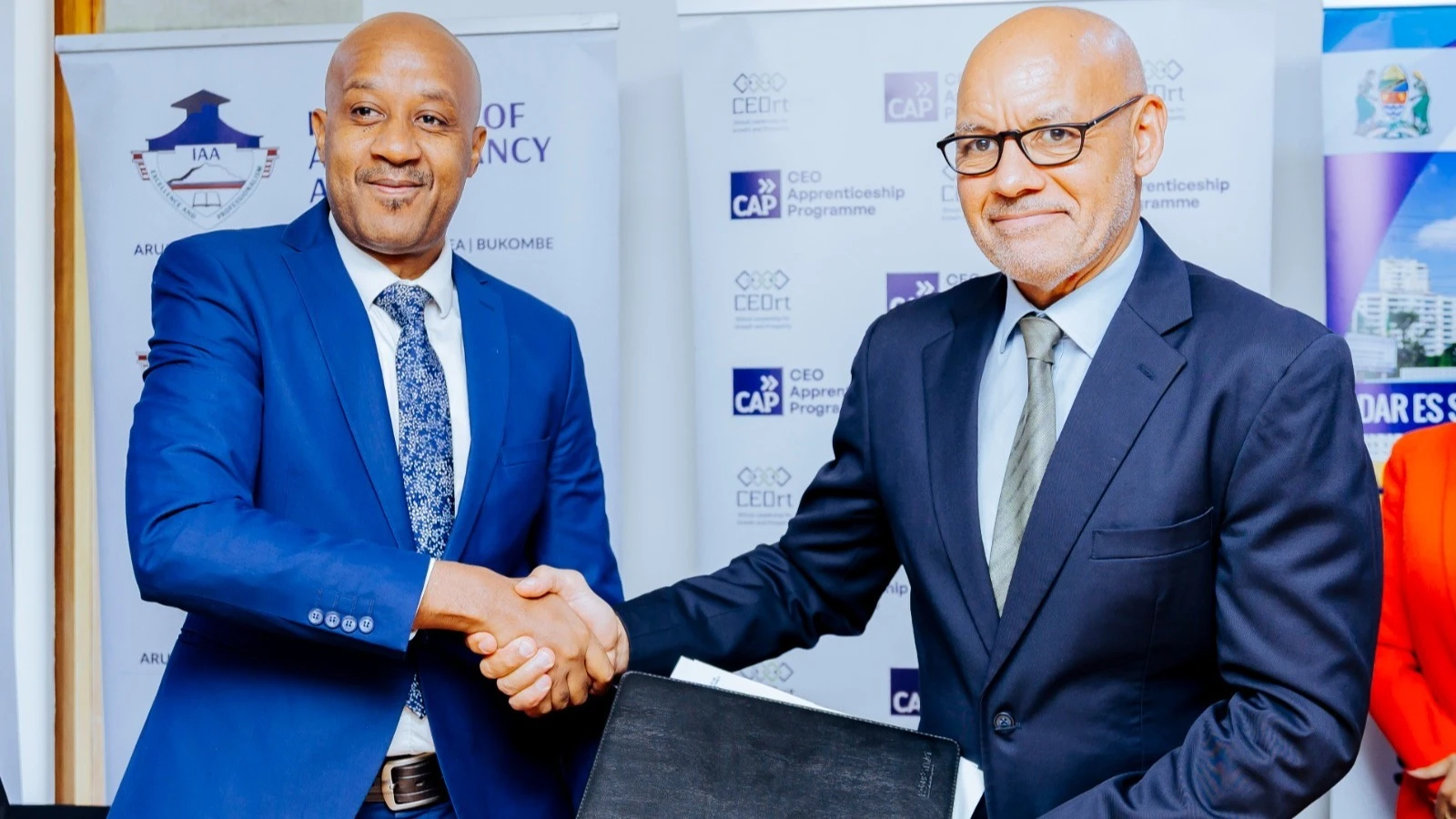
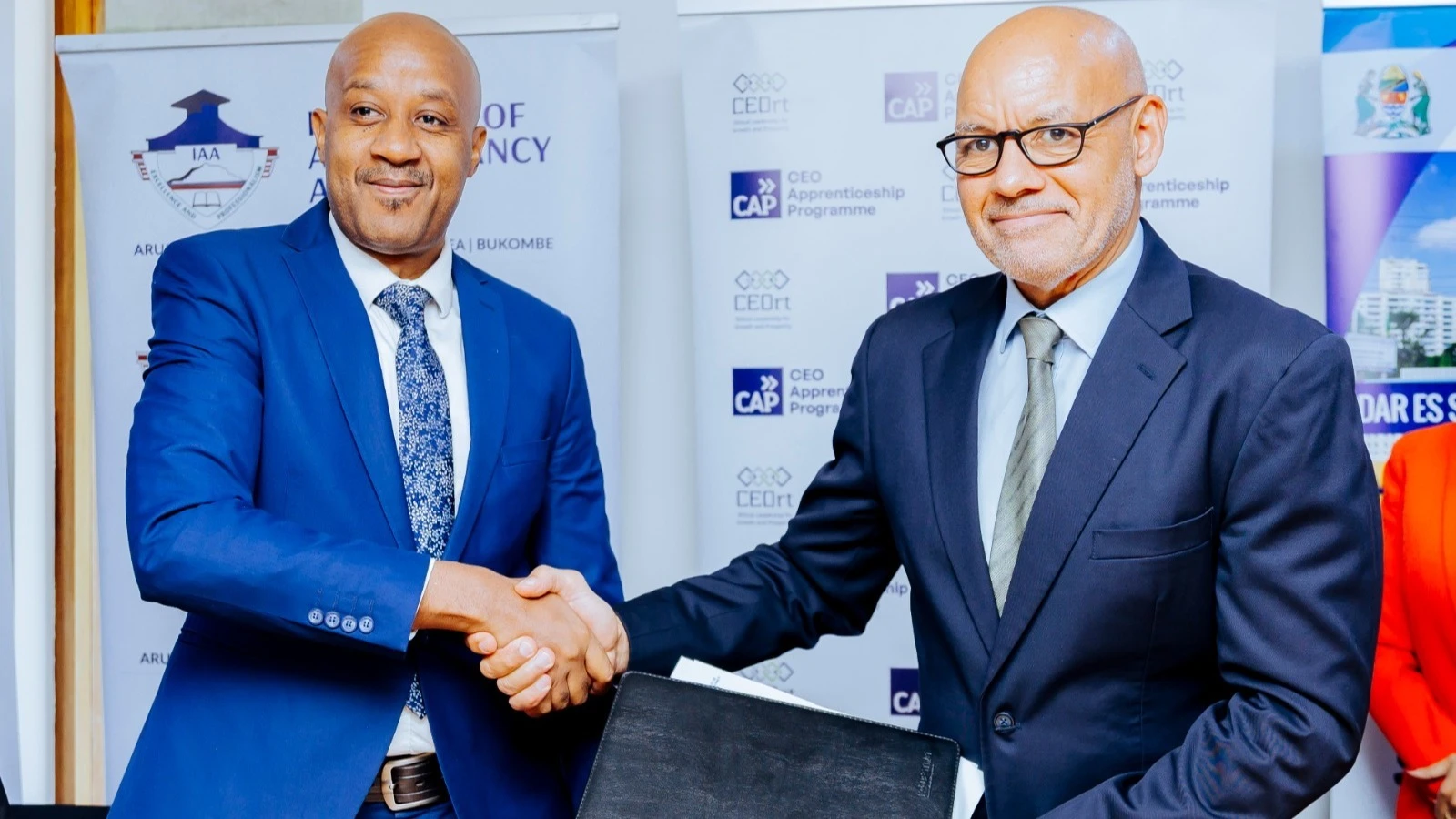
The CEO Roundtable of Tanzania (CEOrt) has signed Memoranda of Understanding (MoUs) with two higher learning institutions—the College of Business Education (CBE) and the Institute of Accountancy Arusha (IAA) to establish a strategic national framework —aimed at strengthening academic-industry collaboration between the education sector and industry/business in order to produce graduates with skills, knowledge, and competencies that meet labor market demands and the competitiveness of today’s world of work.
The agreements seek to integrate practical experience from the industrial and business sectors into academic programmes at the two institutions, enhance the capacity of students and faculty, and establish sustainable mechanisms for knowledge and experience exchange between business leaders and higher learning institutions.
The collaboration recognizes that Tanzania’s development requires graduates who are able to translate classroom theory into real-world practice, supported by business leaders who understand the dynamics of a growing economy, its challenges, and emerging opportunities.
Speaking after the signing ceremony held at CEOrt offices in Masaki, Dar es Salaam, CEOrt Chairman David Tarimo said that, together with IAA and CBE, CEOrt has established a strategic national framework aimed at strengthening linkages between the education sector and industry/business, particularly in research,consultancy, and human capital development.
Tarimo said that through this collaboration, CEOrt—whose membership includes more than 235 private-sector companies—will leverage its business experience to help analyze the challenges facing the country’s business and economic environment and jointly develop solutions with positive outcomes for national development.
He added that the partnership will also strengthen the research capacity of the two institutions while providing students engaged in practical learning with opportunities to confront real market challenges in today’s business environment.
“Through its member companies, CEOrt is among the largest private-sector employers in the country, and this collaboration will enable us to jointly prepare university students to meet the real demands of the labor market,” Mr. Tarimo said.
He noted that the agreements are founded on a shared vision of aligning education with the needs of the business world, advancing professional development, and contributing to sustainable economic growth by connecting classrooms with experienced corporate boardrooms.
Tarimo explained that the agreements with the two institutions are guided by similar core objectives, including embedding industry experience into academic curricula, building labor-market-relevant skills among students and faculty, and strengthening formal platforms for knowledge exchange between business leaders and higher learning institutions.
He further stated that a key pillar of the MoUs is collaboration in applied research and consultancy, where CEOrt members will use their business expertise to help address critical business and economic challenges facing Tanzania.
According to Tarimo, this practice-oriented research model aims to generate solutions with tangible social and economic impact, while strengthening the research capacity of IAA and CBE and giving students direct exposure to solving real challenges in the business and leadership sectors.
He added that the collaboration also introduces structured engagement through supplementary training and public lecture series, bringing together lecturers, students, and professionals from the business, leadership, and economic sectors.
Under this arrangement, CEOrt members and alumni of the CEOrt Apprenticeship Programme (CAP) will serve as adjunct lecturers, bringing practical, real-world experience into the classroom.
Tarimo said the agreements also focus on long-term capacity building through leadership development programmes, sustainability training, short courses, and experiential learning.
On the part of the Institute of Accountancy Arusha (IAA), the CEOrt Managers Sustainability Training Programme will be incorporated into the institution’s curriculum, while both parties anticipate offering executive leadership training, leadership programmes, consultancy services, and leadership boot camps.
At the College of Business Education (CBE), the collaboration will include short courses, industry-led training, as well as practical learning through field attachments and internships, ensuring that graduates complete their studies with the skills, experience, and mindset required to contribute meaningfully to Tanzania’s social and economic transformation in the modern world.
Speaking at the event, the Principal of the Institute of Accountancy Arusha, Prof. Eliamani Sedoyeka, said the collaboration will play a significant role in producing competitive leaders and professionals for Tanzania’s business sector.
Meanwhile, Prof. Robert Mashenene, Deputy Rector of the College of Business Education (CBE) responsible for Academic, Consultancy and Research, said the agreements will help bridge the existing gap in practical experience by providing students with opportunities to learn directly from business leaders.
“CEOrt has extensive experience in leadership and business, and this knowledge will greatly benefit our students, many of whom currently learn mainly through theory in the classroom,” said Prof. Mashenene.
“This collaboration will connect them with private-sector leaders across various business fields, enhancing their competitiveness in the labor market and their contribution to the national economy,” he added.
Top Headlines
Trending Stories


















© 2026 IPPMEDIA.COM. ALL RIGHTS RESERVED