




Africa at table: Guterres presses for Africa’s permanent seat at the UN
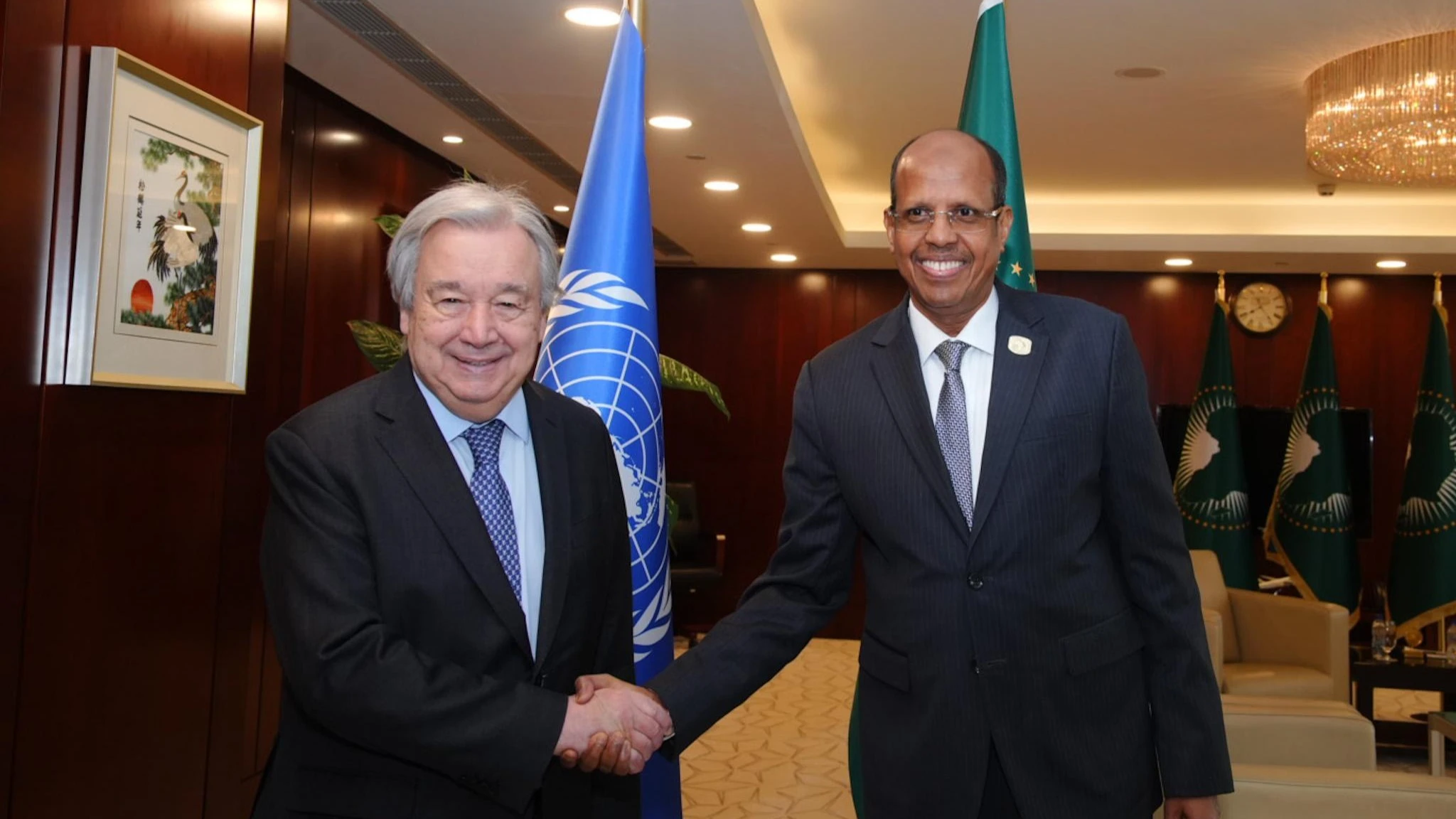
WHEN António Guterres said Africa’s absence from permanent membership on the United Nations Security Council was “indefensible,” it did not register as a carefully staged sound bite. It sounded more like a truth he had been carrying for years.
Speaking at the 39th African Union (AU) Summit in Addis Ababa on February 14, 2026, Guterres addressed African leaders with the quiet gravity of someone shaped by countless crisis briefings and long diplomatic nights.
His words bore the residue of lived experience, from war rooms to refugee camps, and they landed with unusual directness. After decades of stalled reform and polite communiqués, the Secretary-General of the United Nations spoke plainly: denying Africa a permanent seat at the world’s most powerful table is no longer just a historical oversight. It has become a failure that feels increasingly impossible to justify.
In many ways, he was giving voice to a frustration that has followed him through summit halls and late-night negotiations since taking office. I have seen earlier versions of this moment unfold, the private conversations with African diplomats, the carefully calibrated speeches, the familiar sense that history moves at a glacial pace.
That is what made Guterres’ blunt phrasing this time, “This is 2026, not 1946”, feel different. It sounded less like rhetoric and more like weariness, the kind that comes from years spent urging a system to catch up with the world it claims to represent.
After years of conflict mediation from the Sahel to Sudan, the mismatch between Africa’s growing global weight and its formal power inside the UN system has become harder to defend, even for the institution’s most careful stewards.
The numbers tell part of the story. Africa accounts for more than a quarter of UN member states and supplies a large share of peacekeeping troops, yet remains locked out of the Council’s inner circle, where five countries retain veto power over decisions that often directly affect African lives.
That imbalance traces back to the post–World War II order, a moment frozen in time while the rest of the world has moved on.
For many African leaders, this is hardly a new grievance. Years ago, Robert Mugabe argued that Africa’s exclusion was not accidental but structural.
He framed permanent representation as a matter of dignity as much as diplomacy, warning that without it, the continent would remain subject to decisions made elsewhere.
Mugabe’s politics were deeply controversial, but on this point, he echoed a broader continental consensus: representation matters, especially when sanctions, peacekeeping mandates, and interventions are on the table.
Still, Guterres’ call has landed in a more complicated world than Mugabe’s era. Today’s reform debate is shaped as much by geopolitics as by principle. Any change to the Security Council requires approval from the very countries that benefit from its current design, a reality that has stalled reform for decades.
Furthermore, critics argue that simply adding African permanent seats may not deliver the transformation Guterres hopes for.
From Dar es Salaam, Tanzanian political analyst Mussa Lugete has been blunt: expanding the Council risks reproducing old hierarchies unless deeper questions of accountability and veto power are addressed.
In his view, new permanent members could quickly become absorbed into the same elite culture, leaving ordinary Africans no closer to meaningful influence over global decisions.
Others raise a practical concern: which African countries would get those seats? Nigeria, South Africa, Egypt, and Kenya are often mentioned, but choosing winners on a diverse continent could spark fresh rivalries.
Without a clear continental consensus, critics warn, reform could fracture African unity rather than strengthen it.
Hitherto, it is hard to ignore the lived reality behind Guterres’ appeal. Much of the Security Council’s workload today centres on Africa, peace operations, humanitarian corridors, and sanctions regimes.
Guterres has spent years shuttling between crisis zones and capitals, listening to presidents one day and displaced families the next. That proximity to conflict gives his argument a human edge. Decisions made in New York echo in villages thousands of miles away, and too often, those most affected have the weakest voice.
What makes this moment different is the tone. Guterres is no radical reformer by instinct; he is a consensus builder. So, when he uses words like “indefensible,” it signals a quiet shift inside the UN itself, an acknowledgement that procedural patience is wearing thin.
Still, realism tempers urgency. Permanent members show little appetite for surrendering veto power, and past reform efforts have collapsed under their own weight. Even sympathetic diplomats privately admit that progress, if it comes, will likely be incremental.
That leaves the world in a familiar in-between space: moral clarity on one side, political inertia on the other.
Guterres has thrown his weight behind Africa’s case, but whether that translates into structural change remains uncertain. What is clear, though, is that the argument is no longer confined to African capitals.
It now sits squarely at the heart of the UN’s own identity crisis, a quiet but consequential reckoning over whether an institution built in the shadow of World War II can still credibly steer a multipolar 21st century. For Africa, the stakes are obvious. For the rest of the world, they may soon be too.
From Washington to Brussels, analysts are beginning to frame Guterres’s remarks as more than symbolic. Richard Gowan, a UN expert at the European Council on Foreign Relations, notes that Africa has become “the centre of gravity” for today’s Security Council agenda, from peacekeeping mandates to humanitarian access.
However, he argues, decisions are still shaped largely by powers far removed from the consequences. “That disconnect,” Gowan says, “is no longer sustainable.”
Others see the moment as part of a broader global realignment. Arancha González points out that emerging economies are demanding a greater say across multilateral institutions, not just the UN. Africa’s push, she suggests, mirrors similar frustrations in Latin America and parts of Asia, a collective impatience with systems that feel frozen in time.
Still, realism tempers momentum. Ian Bremmer of Eurasia Group warns that structural reform will collide with hard power. The five permanent members, he says, have little incentive to dilute their influence. “Moral arguments matter,” Bremmer observes, “but geopolitics usually wins.”
overtaken , something feels different now. Perhaps it is the accumulation of crises. Perhaps it is the steady rise of Africa’s demographic and economic weight. Alternatively, perhaps it is simply fatigue, the sense, reflected in Guterres’ voice, that incremental change is no longer enough.
After years spent navigating fragile ceasefires and humanitarian corridors, his appeal carries the quiet authority of lived experience. What began as a procedural debate has become a test of relevance.
If Africa remains outside the room where the hardest decisions are made, the UN risks drifting further from the people it was meant to serve. Additionally, if reform continues to stall, the Security Council may find itself presiding over a world that increasingly looks elsewhere for leadership. The choice, in the end, is stark: evolve with history, or be overtaken by it.
Top Headlines
Trending Stories



© 2026 IPPMEDIA.COM. ALL RIGHTS RESERVED