




Why foundational literacy, numeracy skills crucial in enhancing child’s ability to learn
RESULTS of the 2023 National Assessment of Reading, Writing and Arithmetic (3Rs) for Standard Two shows that 78.92 percent of the pupils assessed were able to read, 69.6 percent to write, and 62.56 percent to perform arithmetic.
These figures indicate that a significant number of children are progressing through school without mastering basic skills, a situation that threatens the overall quality of education.
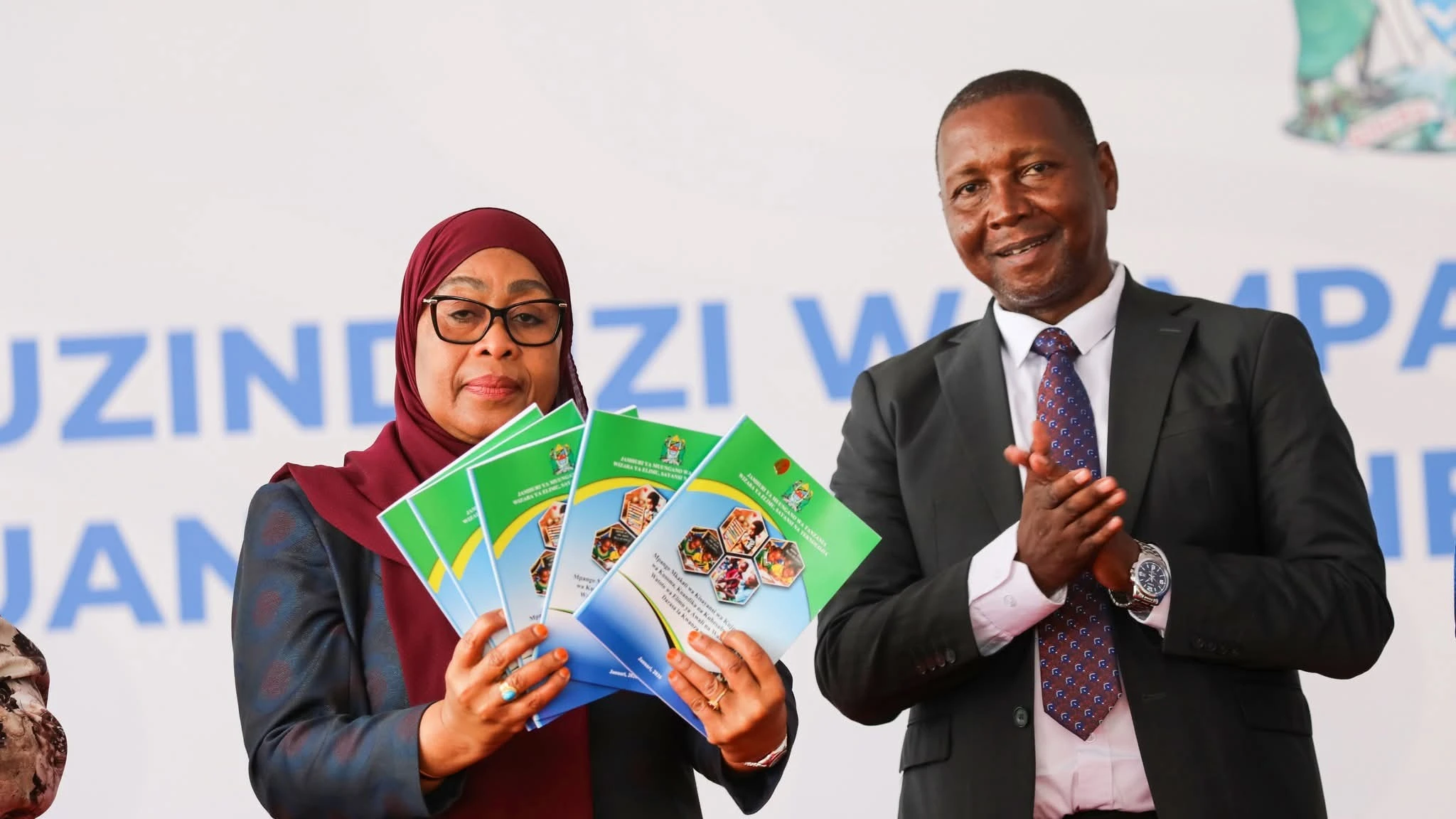
In response, the Government has developed a Strategic Framework for Foundational Reading, Writing and Arithmetic for pre-primary children and pupils in Standard One and Two.
The primary objective of the Strategic Framework for Foundational Reading, Writing and Arithmetic is to guide implementation in a manner that enhances efficiency, effectiveness and productivity.
The five-year programme aims to ensure that every child masters foundational skills by Standard Three through scientific, participatory and innovative approaches.
Speaking at the launch of the framework, Executive Secretary of the National Examinations Council of Tanzania (NECTA), Prof Said Mohamed, said that in today’s world, any nation aspiring to build a competitive economy must invest early in foundational learning skills.
He explained that such investment is not optional but a responsibility shared by the government, parents and society at large. He noted that when a child fails to acquire Foundational Literacy and Numeracy (FLN) skills, all aspects of development—intellectual, physical, social and emotional—are affected, limiting the child’s ability to learn effectively in other subjects.
He said NECTA has been conducting sample-based FLN assessments since 2015, selecting between two and five schools per round.
According to him, the assessment involved teachers through questionnaires designed to collect information on school conditions, pupils, teaching and learning environments, availability of textbooks, and the presence of trained teachers.
Prof Mohamed explained that education curriculum emphasises that by the time a pupil reaches Standard Three, they should already have mastered FLN skills in order to learn effectively.
Training provided to teachers and experience gained has contributed to improved performance in Standard Four national assessment and the Primary School Leaving Examination.
National Standard Four assessment data from 2022 to 2025 shows a steady decline in the number of pupils lacking FLN proficiency. In 2022, 25,841 pupils were identified as lacking these skills.
The number dropped to 15,616 in 2023, 8,960 in 2024, and reached 5,847 in 2025—an indication that measures taken by the government are beginning to yield results.
Government investment in education
President Samia Suluhu Hassan said that over the past four years, the government has made major efforts to improve access to education by increasing enrolment and strengthening infrastructure.
In primary education, the number of classrooms increased from 151,315 in 2021 to 184,550 in 2025, while at secondary level classrooms increased from 64,204 to 101,473 over the same period.
She said that under her administration’s first 100-day pledges, the government committed to recruiting 7,000 teachers. So far, 6,044 teachers have been recruited and posted to their duty stations, while the remaining 956 are in the process of filling the outstanding positions.
The President stressed that these improvements are not sufficient without ensuring the quality of learning, particularly in early stages of a child’s development. She called for strengthened school inspections and close monitoring to ensure children in pre-primary through Standard Two master FLN skills.
Role of teachers, inspectors
The President stated that the government is committed to ensuring teachers become a lasting solution in implementing the framework by providing them with tools, training and enhanced skills in modern teaching methods.
She emphasised that the framework should not remain on paper but should produce measurable results, with accountability strengthened from the classroom level up to the regional level.
Minister for Education, Science and Technology, Prof Adolf Mkenda, said the framework will strengthen teaching through continuous professional development for pre-primary, Standard One and Standard Two teachers.
Prof Mkenda noted that teachers will be involved in the preparation of teaching and learning materials, including the use of simple, locally available resources such as soda bottle tops.
He added that continuous assessment and evaluation will be conducted to ensure the programme is implemented as intended, alongside the involvement of parents, guardians and the wider community in collaboration with the Prime Minister’s Office – TAMISEMI.
Stakeholders’ views
Despite high expectations, some education stakeholders have expressed concern that the framework may look good on paper but face challenges in implementation.
They stressed that the main challenge is not lack of strategies but their execution, recommending stronger monitoring systems, reduced pupil congestion, and an increase in the number of teachers.
Early childhood education and child development researcher Anna Ishengoma said the FLN framework cannot succeed if it focuses only on schools without involving parents and communities.
She told The Guardian that reading and writing skills begin at home, and environments that do not stimulate language and thinking affect a child’s outcomes even when teachers make strong efforts.
Teacher Ferdinand Ilungu said the framework is an important step that will help children move away from routine learning and instead build genuine skills in reading, writing and communication.
Ilungu advised that teacher training should begin at colleges so that graduates are fully competent in teaching these skills.
Moses Kyando emphasised that FLN proficiency is the key to acquiring all other knowledge, highlighting the importance of in-service teacher training, research, and the use of appropriate teaching methods to ensure full implementation of the framework.
Speaking on the impact of technological change, Kyando said the use of digital devices by pupils should follow clear guidelines, noting that for young children, hands-on, activity-based scientific approaches are more effective than heavy reliance on machines.
Teacher Ilungu added that children aged 10 to 12 have a strong desire to learn, making it essential to ensure they master FLN skills through appropriate methods, supplementary reading materials, and a learner-friendly teacher–pupil ratio.
Top Headlines
Trending Stories























© 2026 IPPMEDIA.COM. ALL RIGHTS RESERVED