




Form 1V results 2025: The need to go beyond pass rates, ensure real learning
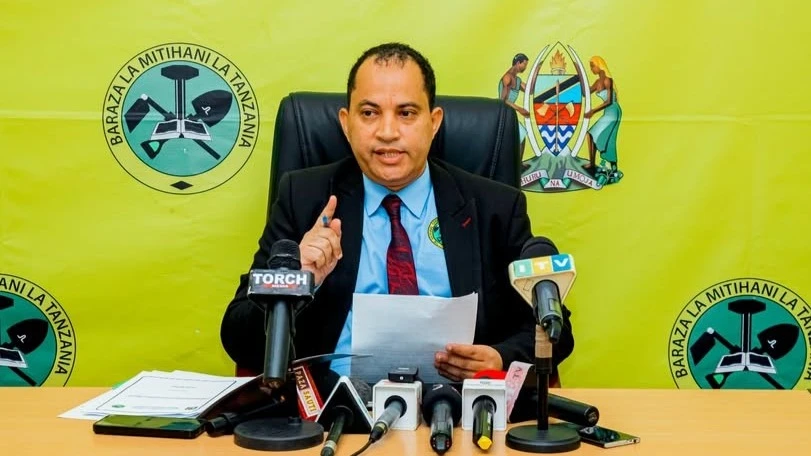
WHEN the Form Four results were released, one statistic stayed with me. About 46 percent of candidates scored Division I to III.
But about 54 percent scored Division IV and Division 0.
And I keep asking myself: where do these 54 percent go?
More importantly, what are we doing, as a country, to reduce this number year after year?
It is easy to celebrate pass rates. It is much harder, and more important, to look at the majority that remains behind and ask uncomfortable system-level questions. If education is to be a solution, not just a set of annual statistics, then these are questions we cannot avoid.
Exams must be a gateway, not the end of the road
Form Four examinations should not be the final verdict on a child’s future. They should be a gateway, not a dead end. Every learner deserves a clear pathway after Form IV, whether academic, technical, vocational, or blended.
NECTA should never become the “password” that determines the destiny of a child. Exams must help us understand where learners are, but they should not be used to close doors permanently. When an exam becomes a judgment rather than a guide, we lose too many young people too early.
We must measure skills, not memorisation
We also need to rethink what and how we assess. Too much of our system still rewards memorisation rather than understanding.
The future of work is already here, and it demands a different skill set, thinking and problem-solving, numeracy and basic data skills, digital literacy and AI awareness, communication and teamwork, ethics and emotional intelligence, practical and technical skills, creativity and adaptability.
If these are the skills the world is rewarding, then these are the skills our schools must deliberately build. Assessment drives teaching. If we change what we assess, we will change how teachers teach and how students learn.
NECTA data must drive action, not just reports
NECTA holds a powerful resource: data. But data should do more than inform annual press conferences.
NECTA data must help us reflect, adjust, and hold ourselves accountable. It must speak to the school inspection system, to TVET institutions, to colleges, and to curriculum developers. Synergy between NECTA, quality assurance, TVET, and training institutions is no longer optional, it is essential.
When institutions operate in silos, learners fall through the cracks. When systems speak to each other, pathways open.
Rethinking school inspection; from policing to coaching
School inspection must also evolve. A system that relies heavily on physical, compliance-focused inspections is slow and often intimidating. Many of us remember the fear that accompanied inspectors’ visits, teachers hiding, students panicking. That culture does not build quality.
In a country where internet access is growing, smartphone use is widespread, rural electrification has expanded, and connectivity continues to improve, we must rethink our approach. Inspection should be frequent, digital, supportive, and focused on coaching and mentoring teachers, not policing them. Quality assurance should nurture improvement, not enforce fear.
Specialised teachers matter
We also need to invest intentionally in teacher specialisation. Having many teachers who teach everything is not the same as having a few teachers who teach key subjects exceptionally well.
Quality often comes from depth, not just numbers. A well-supported, highly skilled mathematics or science teacher can change outcomes for an entire school.
No child should be lost in the system
Perhaps the most painful reality is the size of the group in Division IV and Division 0. These learners are too many to ignore.
It is not acceptable for a child to spend four years in secondary school and exit with “nothing.” That child has something. A skill, a strength, a potential. Our responsibility as a nation is to identify it and develop it.
Rescue and re-entry pathways must be deliberate and structured. Leaving young people outside the system is not just an education failure, it is a future economic and social cost.
Restoring dignity to skills and TVET pathways
We must also restore the dignity of practical skills. TVET and middle-level colleges are not second-class options; they are essential pillars of national development.
When skills are respected, pressure on Form Five reduces, cheating decreases, and learners choose paths aligned to their abilities and interests. Skills development is not a fallback; it is a strategy.
Education is everyone’s responsibility
Finally, we must be honest with ourselves: quality education is not the responsibility of government or one institution alone. It is a shared national duty.
Parents matter. Families matter. Communities matter.
National Bureau of Statistics data shows that a growing number of Tanzanian households are single-mother-headed homes. The father figure, presence, guidance, stability, is increasingly absent from many children’s lives. This is not a moral judgement; it is a social reality with educational consequences.
Children do not arrive at school as blank slates. They come carrying the weight of their homes, their environments, and their emotional worlds. When we ignore where children are coming from, we misunderstand why some struggle to thrive academically.
These are the small cracks, family instability, weak parental engagement, lack of role models, psychosocial stress, that quietly grow into national challenges. If we do not address them early, no exam reform will fully succeed.
Parents must be more engaged in learning. Schools must communicate more clearly. Communities must take ownership of their children’s education. Education outcomes improve when children feel supported both in school and at home.
Beyond divisions, towards real outcomes
In the end, education quality should not be measured by divisions alone. Quality is progress. Quality is capability. Quality is whether a learner can live, work, adapt, and continue learning in a changing world.
Good education is not the one that produces many certificates. It is the one that produces skills that last, skills that earn a living, skills that build dignity, and skills that allow young people to keep learning long after they leave the classroom.
If we can move our conversation and our reforms in that direction, then these results will become not a source of anxiety, but a starting point for national progress.
Annastazia Rugaba, an Independent Consultant specialising in Strategic Communications, Policy Advocacy, Systems Change, and Governance. She can be reached at annarugaba@gmail.com
Top Headlines
Trending Stories








© 2026 IPPMEDIA.COM. ALL RIGHTS RESERVED