




Reflections by China’s Ambassador to Tanzania
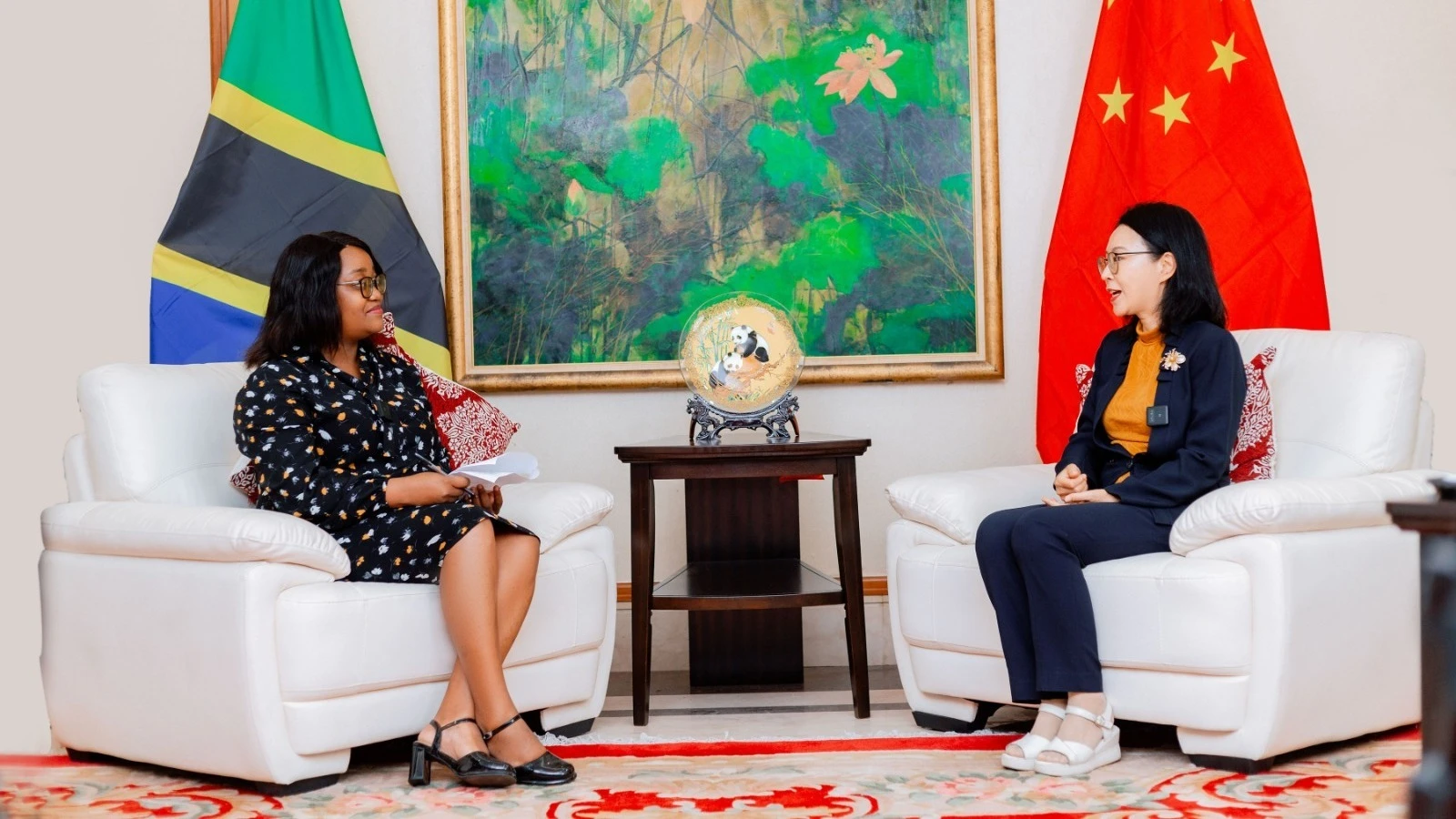
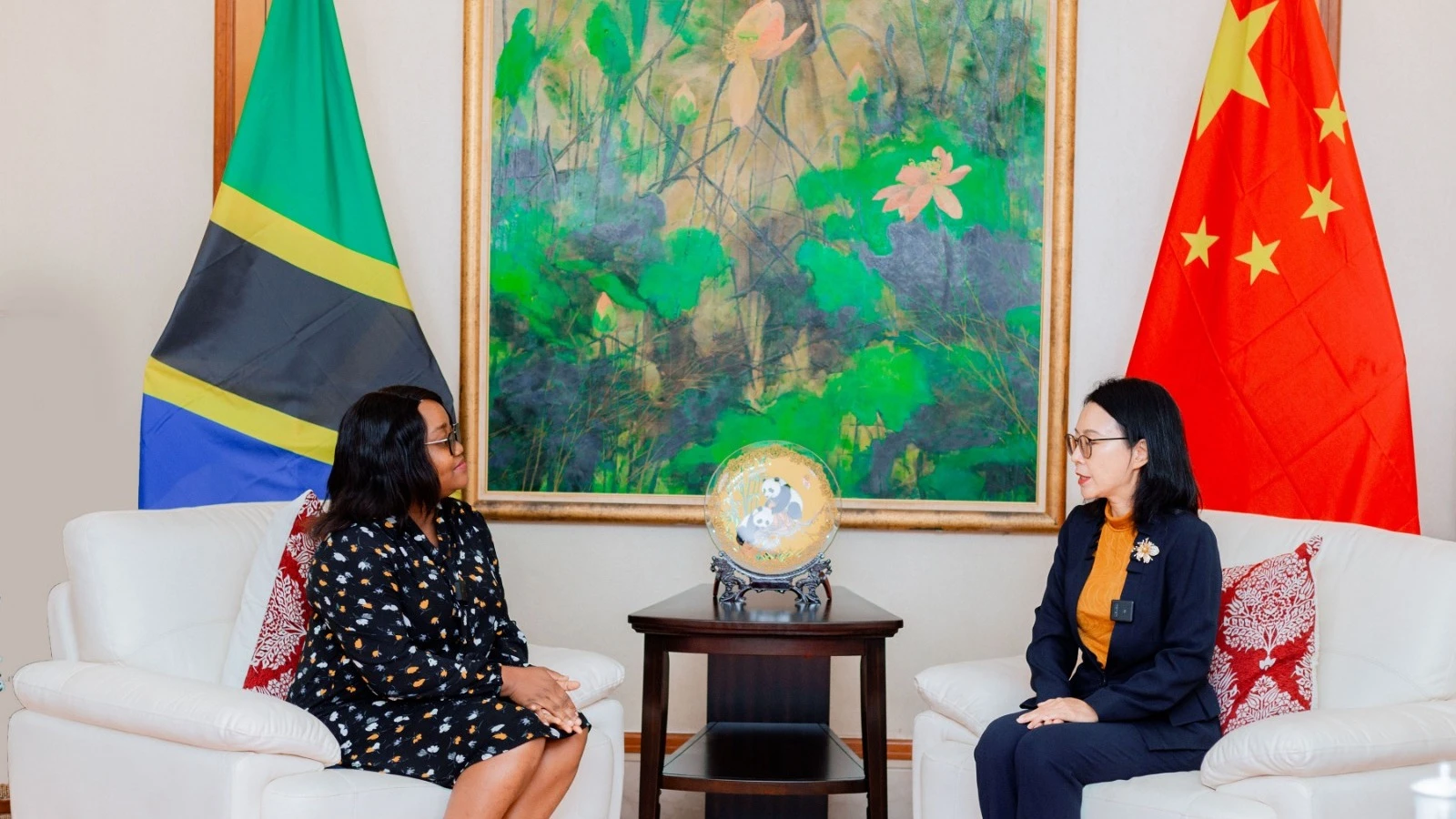
China’s Ambassador to Tanzania, Chen Mingjian, described the decades-old multifaceted relations between the two countries strategic and people-centred. She made remarks to that effect in a recent interview with Correspondent Mary Kadoke of The Guardian. In part, she touched on China’s stand on global economic shifts, tourism and diplomacy as well as personal reflections on Tanzania. Excerpts:
What is your take on relations between the People’s Republic of China and the United Republic of Tanzania?
Recent developments in relations between China and Tanzania are directly linked to the two countries’ common past. Indeed, these very special links date back to the leadership of the founding fathers of our two nations. We will never forget how China’s then Chairman Mao Zedong and Prime Minister Zhou Enlai on the one hand Tanzania’s then President Julius Nyerere and Vice President Abeid Amani Karume nurtured our solid friendship with sincerity and good faith in those old days.
From then on, China and Tanzania have relentlessly nurtured and shared a strong links built on mutual respect and mutual trust. No matter how the international situation changes, no matter what challenges we face, and no matter what kind of disturbance and disruption we encounter, the friendship and generally cordial relations between our two countries and nations have withstood the test of time and are getting stronger and stronger with time.
Across these past decades, high-profile diplomacy has given clear guidance and increasingly shed light on our mutually enriching relations. Chinese President Xi Jinping visited Tanzania right after assuming office. During that visit, he put forth the sincerity, real results, amity and good faith and the principle of pursuing greater shared interests, which have since been the guiding principles of China’s policy toward Africa. President Samia Suluhu Hassan and President Xi have meanwhile met three times, with the Tanzanian President having visited China two times.
China has stood as Tanzania’s largest trading partner for nine consecutive years now, with the volume of trade between the two countries exceeding USD 8.88 billion in 2024. A number of Tanzanian high-quality agricultural products including soybeans, sesame and avocados were exported to China, boosting Tanzania’s economy while also rewardingly accommodating Chinese consumers. China is also the largest source of investment for Tanzania, with countless infrastructure projects established and executed by Chinese enterprises. Among these are the SGR (standard gauge railway) network, Julius Nyerere Hydro-power Plant and the newly completed JP Magufuli Bridge.
This year meanwhile marks the 25th anniversary of the Forum on China-Africa Cooperation (FOCAC), an official forum between China and African states. It is widely viewed as the primary multi-lateral coordination mechanism between African countries and China.
Incidentally, China and Tanzania are working hard to revitalise TAZARA (Chinese-built Tanzania-Zambia Railway), expecting encouraging progress soon. In between, has also China implemented the Minimally Invasive Medicine Programme. It has shared crucial techniques with Tanzania, and this has helped open a new era of minimal invasion surgery in Africa. Positive progress has also been made in the upgrade and expansion of Jakaya Kikwete Cardiac Institute. Additionally, China has cooperated with the International Fund for Agricultural Development (IFAD) in advancing agricultural projects in Tanzania through the use of satellite digital technology.
As is well known, this specialised United Nations agency supports a wide array of programmes and projects focused on improving agricultural development and livelihoods in developing countries. The idea is to increase productivity, enhance market participation, and strengthen the environmental sustainability and climate resilience of rural livelihoods. The agency’s work is particularly focused on vulnerable groups like smallholder farmers, pastoralists and small-scale entrepreneurs.
The US recently slapped so-called reciprocal tariffs on its trading partners, destabilising the global economy. What is China’s position on this?
The United States’ move cast a shadow on the world economy and inflicted great uncertainties on economic and trade activities globally. African countries are most vulnerable. Some Tanzanian economic analysts have rightly warned that soybeans, coffee, textiles, cashew nuts, cocoa beans, beeswax and other Tanzania’s primary exports to the US will suffer, which may result in job losses and economic recession.
China’s position on tariffs is clear – there are no winners in trade wars. Protectionism hurts everyone’s interests. China and the US are the two largest economies in the world. Sound and steady China-US trade ties have a direct bearing on the well-being of both people and global development and prosperity.
As the largest developing country and an open, honest and responsible country, China has stepped forward at this critical juncture. It has adopted resolute countermeasures while proactively working with other nations across multilateral platforms to uphold justice. This stance serves to defend China’s legitimate development rights and to shield the shared interests of the international community, especially small and medium-sized states, and to safeguard global fairness and justice.
China and the US have been holding trade talks and have reached a framework of agreement. Especially at this moment, China would like to cooperate much closer and more with Africa. It has granted zero-tariff to 100 per cent of tariff-line products of Africa. I sincerely believe that, through our joint efforts, we can achieve common development together.
The international landscape is especially complex and volatile. How can China and Tanzania cooperate in addressing the prevailing global risks and challenges?
Surely, the world is marked by turbulence and complexity, with globalisation facing headwinds and with unilateralism and protectionism on the rise. China and Tanzania ought to further solidify the unity and cooperation they have enjoyed over the decades as they seek to address prevailing and future risks and challenges.
First, we need deepen political mutual trust. China and Tanzania have always shared various similar views, this including common positions and supporting each other at the international arena. In the new era, guided by bilateral diplomacy and the common need to implement the FOCAC Summit outcomes, we continue to support each other on various issues concerning core interests and major concerns.
Second, we need to further strengthen practical cooperation. China is happy with Tanzania’s new foreign policy for its emphasis on economic diplomacy. It also supports Tanzania for fostering new growth areas such as the digital economy, green development and the blue economy under the 10 partnership actions put forward by President Xi Jinping. The two sides will work together to create more stories about China-Tanzania cooperation for high-quality development and send a strong message of solidarity and collaboration among members of the Global South.
Third, we need to continue upholding multilateralism. Open cooperation is the “in” trend of history, and mutual benefit and win-win outcomes are the aspirations of people worldwide. President Xi Jinping has very correctly proposed the Global Development Initiative, the Global Security Initiative, and the Global Civilisation Initiative.
In recent years, Tanzania has attracted an increasing number of Chinese tourists, while more and more Tanzanian young people are busy learning Chinese. How do you see people-to-people exchanges like these helping to enhance bilateral relations at the national and higher levels?
Amity between and among people and peoples holds the key to the stepping up of state-to-state relations. Despite the vast geographical distance between China and Tanzania, people-to-people exchanges have fostered and enhanced mutual learning, brought both countries closer together, and yielded fruitful results.
Last year saw our two countries celebrating the 60th anniversary of bilateral diplomatic ties. We did through a rich array of cultural and other programmes, including a series of events under the framework of the China-Tanzania Tourism and Culture Year. Mutual visits and promotion events at various levels achieved positive outcomes.
According to the latest data, the number of Chinese tourists visiting Tanzania per year has overshot the 70,000 mark, which is a record. Chinese medical teams dispatched to mainland Tanzania and Zanzibar have meanwhile attended to over 20 million patients, with their numerous success stories adapted into the television drama ‘Welcome to Milele Village’, which has resonated deeply with audiences in both China and Tanzania.
As rightly noted, an ever-rising number of Tanzanian youths are learning Chinese – with the Confucius Institutes at the University of Dar es Salaam and the University of Dodoma witnessing a steady rise in enrollment. The launch of direct flights between China and Tanzania has further facilitated relations between our two countries, as people-to-people exchanges continue to provide rich cultural nourishment and strong spiritual momentum for the cordial bilateral relations.
You may meanwhile have learned that next year is the China-Africa Year of People-to-People Exchanges. In this connection, President Xi Jinping has aptly noted: “The foundation and lifeline of China-Africa relations lie with the people. Therefore, the development of our bilateral relations should be more people-oriented.” Our two countries will host a series of people-to-people exchange activities under the theme of ‘Consolidate All-Weather Friendship, Pursue Shared Dream of Modernisation’. We hope the celebrations will further consolidate public support for our everlasting friendship.
Finally, please share with us your most memorable experiences as China’s resident Ambassador to Tanzania for several years as well as the kind of the China-Tanzania relations of the future you dream of?
Tanzania is a geographically vast and marvellous land. I’ve been to more than 20 regions over the past four years in my capacity as Chinese Ambassador, and have learnt various new things from each trip. I have had a lot of memorable experiences – but here I will dwell on only two.
The first is with respect to Her Excellency President Samia Suluhu Hassan’s visit to China last year. I had the honour of accompanying her throughout the trip. The 2024 FOCAC Beijing Summit was a grand gathering of the world’s largest developing country (China) and the continent with the largest number of developing countries (Africa), as well as the biggest diplomatic event with highest attendance of foreign leaders ever held by China in recent years.
At the Summit, President Xi Jinping met with President Samia. His Excellency Xi proposed ten partnership actions that China and Africa can pursue together during the next three years. Her Excellency Samia expounded her idea of the way to modernisation. You can see – at the very highest level of national governance – the leaders of two countries planning with thoughtful vision for the future of their two countries, through bilateral cooperation.
The second is the hospitality of the Tanzanian people. I was often greeted with “Nihao” (literally, ‘Hello’ or ‘How do you do’ in Mandarin Chinese) by strangers – often complete with a smile. Once, as my colleagues and I waited at the red (traffic light) signal to cross a road junction, a police officer came to help us to pass through safely. All these – and lots more – always make me feel that I’m truly at home, recognized and helped by true brothers and sisters.

Top Headlines
Trending Stories









© 2026 IPPMEDIA.COM. ALL RIGHTS RESERVED