




More than numbers: What Form IV results reveal about flared learning gaps in Tanzania
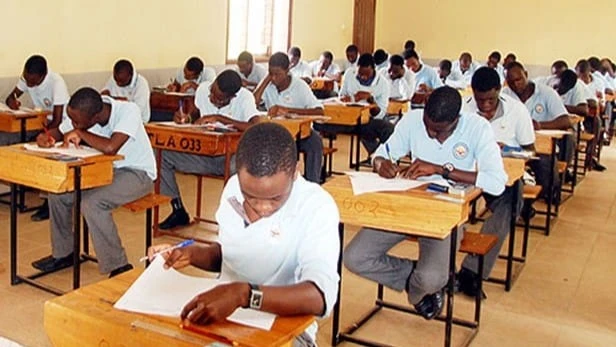
WHEN the Form IV results were released on February 8, 2026, the headline numbers felt familiar: about 46 per cent of candidates earned Division I to III, while roughly 54 per cent landed in Division IV or Division 0. I lingered on those figures longer than usual, not because they shocked me, but because they felt painfully routine. This time, though, the statistics came with a name and a face.
My great-niece was among those in Division IV, sitting her exams at Bwabuki Secondary School in Misenyi District, Kagera Region. Suddenly, the national averages felt deeply personal. Even though days have passed since the release, this conversation is still urgent because behind every percentage is a young person quietly recalibrating their dreams.
Education scholars have warned about this for years. Professor George Kahangwa of the University of Dar es Salaam points to weak early literacy and numeracy, overstretched teachers, and under-resourced classrooms as the roots of mass failure.
Baraka Mgohamwende of Uwezo Tanzania adds that learning gaps begin long before Form IV and quietly widen over time. In other words, these results are not sudden; they are cumulative. Additionally, that is why this reflection still matters, because until we stop celebrating pass rates and start building real learning, families like mine will continue carrying the cost.
I thought about the students I have met over the years. The bright girl in Mtwara who loves science but never seen a laboratory. The boy in Singida who walks five kilometres to school and shares one textbook with four classmates. These numbers are not abstract. They have faces.
So yes, we can celebrate the 46 per cent. However, the harder question remains: what happens to the other 54 per cent? Where do they go after four years of secondary school? Besides, more importantly, what kind of system keeps producing the same outcome year after year and still calls it success?
In Tanzania, more than half of Form IV candidates exit the system with limited pathways forward. Compare that with countries like Vietnam, where over 85 per cent of lower-secondary graduates transition into either upper secondary or formal skills training.
Alternatively, in Estonia, where assessment is embedded in continuous learning, fewer than 10 per cent of students leave compulsory education without a certified competency pathway.
Those systems do not just measure learning. They built it. Here, too often, exams act as verdicts rather than diagnostics. NECTA tells us who passed. It tells us who failed. Nevertheless, it does not yet tell us, publicly, clearly, systematically, why students struggled in mathematics, or where reading comprehension collapsed, or which regions lack qualified science teachers.
Data exists. Nevertheless, it is not driving reform. In countries that perform well, assessment is used as feedback, not a final judgment. Finland abandoned high-stakes testing before age 16 and instead relies on teacher-led continuous evaluation.
Singapore uses national exam data to redesign curricula every five years, aligning learning outcomes with labour market needs. Rwanda publishes district-level learning dashboards tied directly to teacher deployment and school support.
Meanwhile, in Tanzania, we hold press conferences. We also need to be honest about what our exams reward. Much of our assessment still favours recall over reasoning. Students memorise definitions instead of learning how to solve problems. They reproduce notes instead of analysing information. That might produce certificates, but it does not produce capability.
However, the world they are entering demands something else entirely. Employers increasingly value problem-solving, digital literacy, teamwork, and adaptability. The World Bank estimates that by 2030, over 60 per cent of jobs in Africa will require at least basic digital skills. Moreover, many of our schools lack electricity, let alone computers.
Assessment drives teaching. Change the exam, and classrooms will follow. Nonetheless, reform cannot stop at papers and marking schemes. We also have to confront the material conditions of learning. Tanzania’s pupil–teacher ratio at the secondary level remains above 30:1 nationally, and much higher in rural districts. Science teachers are unevenly distributed. Laboratories and libraries remain scarce. According to Uwezo, nearly 40 per cent of Form II students struggle with basic numeracy.
These are not marginal issues. They are foundational. And then there is inspection. For decades, school inspection has felt more like policing than coaching. Teachers brace for visits. Students panic. Forms are filled. Nothing changes. In an era where smartphone penetration exceeds 70 per cent, and connectivity continues to expand, quality assurance should be digital, continuous, and supportive.
High-performing systems use real-time classroom observation tools, peer mentoring, and data dashboards. They do not wait a year to discover a school is failing.
We also talk a lot about teacher numbers. However, quality matters more than quantity. A single well-trained mathematics teacher can transform outcomes for hundreds of learners. Countries like Japan invest heavily in subject mastery and professional learning communities. Here, many teachers are asked to teach outside their specialisation, with minimal ongoing support.
Depth matters. And then we arrive at the most uncomfortable statistic: Division IV and Division 0. These learners are too many to ignore and too young to abandon. It is unacceptable for a student to spend four years in secondary school and exit with no recognised skills. Every child leaves school with something, whether we choose to identify it or not.
Germany ensures that over 50 per cent of secondary students enter structured vocational pathways aligned to industry. South Korea integrates technical training into mainstream schooling. In Tanzania, TVET remains underfunded, under-enrolled, and socially undervalued.
We treat skills as a fallback. Successful systems treat them as a strategy. Restoring dignity to vocational education would immediately reduce pressure on Form Five places, lower examination malpractice, and help learners choose paths aligned with their strengths. Skills build economies. Certificates alone do not.
Still, education does not begin in classrooms. National statistics show a growing number of households headed by single parents, mostly mothers. That is not a moral failing; it reflects economic realities, migration, and social change. However, children carry these pressures into school: financial stress, limited supervision, and emotional fatigue.
In strong systems, schools compensate. They provide counselling. They offer meal programmes. They engage parents deliberately. Here, psychosocial support remains the exception, not the norm.
We cannot talk about learning without talking about lives. Moreover, we cannot continue to spread responsibility so thin that no institution is truly accountable. NECTA must examine exam design and transparency. The Ministry must confront teacher deployment and infrastructure gaps. Curriculum developers must align learning with economic reality. TVET institutions must be integrated, not sidelined.
Systems must speak to each other. Most painfully, we must stop treating these results as annual events instead of national signals. Fifty-four per cent is not just a statistic. It is future unemployment. It is social vulnerability. It is wasted potential.
Education reform is not glamorous work. It requires budgets, timelines, coordination, and political courage. Still, countries that leapt, Vietnam, Estonia, and Rwanda, did so by grounding policy in data, respecting teachers, and building multiple pathways to success.
They decided that a single exam would define no child. In the end, quality education is not measured by divisions. It is measured by progress. By whether a young person can read with understanding, calculate with confidence, learn new skills, and adapt to change.
Good education produces citizens who can work, think, and grow long after they leave school. If we choose to learn from these results, really learn, they can become more than numbers. They can become the starting point of a system that finally works for all.
Top Headlines
Trending Stories












© 2026 IPPMEDIA.COM. ALL RIGHTS RESERVED