




Tanzania and Liberia bet on the sea: A new push to build Africa’s blue economy
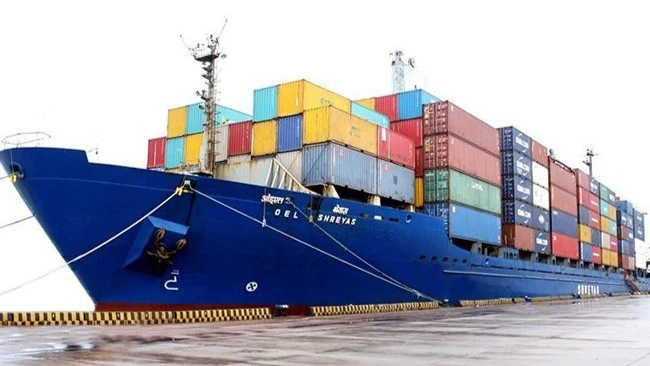
ON a warm afternoon along the Indian Ocean, the cranes at Dar es Salaam Port move with practised patience, lifting containers high above the dock before lowering them onto waiting trucks. Below, dockworkers shout instructions over the rumble of engines, their voices blending with the rhythm of global trade.
For many who earn their living here, the port is more than infrastructure. It is hope, uncertainty, and endurance rolled into one long workday.
It was against this working backdrop that Tanzania and Liberia quietly formalised a maritime partnership in Dar es Salaam, signing an agreement designed to reshape how both nations participate in the global shipping economy.
The deal focuses on ship registration, seafarer training, and regulatory cooperation, but its implications stretch far beyond technical language. For Tanzania, it represents a bid to professionalise its maritime sector. For Liberia, it is a chance to deepen African collaboration while sharing hard-earned expertise.
Officials described the agreement as practical rather than symbolic. Mohamed Salum, Director General of Tanzania Shipping Agencies Corporation, said the partnership offers a faster route to international standards. Liberia, he noted, brings decades of experience managing one of the world’s largest ship registries.
Tanzania contributes strategic geography and a growing labour force. Together, they hope to build something more durable than paperwork, a working system that creates jobs while strengthening oversight.
Liberia’s permanent representative to the International Maritime Organisation, Wilmot Kpadeh, framed the deal in continental terms. Africa supplies only a small share of the world’s seafarers, despite possessing long coastlines and a youthful population.
That imbalance, he said, signals opportunity waiting to be unlocked. However, opportunity, he added, must be paired with skills, regulation, and sustained investment if it is to mean anything on the ground.
Those realities are visible in training centres around Dar es Salaam, where young Tanzanians study navigation charts in the morning and practice rope work under the sun in the afternoon.
Among them is Abdulrahman Mussa, a 23-year-old from Bagamoyo who enrolled after struggling to find steady employment. He speaks softly about his hopes of joining an international vessel someday, not out of wanderlust, but because the income could help support his family.
“I did not grow up thinking about ships,” he said, folding his notebook into his backpack. “But now I see this as a real profession. If I get certified and placed on a vessel, that could change everything.”
Stories like Abdulrahman’s sit at the heart of Tanzania’s ambitions. Cargo volumes through Dar es Salaam have climbed to more than 30 million tonnes annually, nearly double what they were less than a decade ago.
The government has invested heavily in port modernisation, digital customs systems, and regional transport corridors. These upgrades have drawn business from neighbouring countries and shortened clearance times, reinforcing Tanzania’s role as a logistical gateway for East and Central Africa.
However, growth brings pressure. Traffic backs up near port entrances. Housing developments inch closer to industrial zones. Environmental advocates warn that coastal expansion risks outpacing conservation, particularly for mangroves and fisheries that support thousands of small-scale livelihoods. The blue economy, they argue, cannot be reduced to shipping statistics alone.
Asha Mhando, a marine conservation advocate based in Dar es Salaam, says the challenge lies in balance. Ports can drive prosperity, she acknowledges, but ecosystems carry their own value. If coastal communities are excluded from planning, she warns, development will deepen inequality rather than reduce it.
Liberia’s experience offers lessons here. Its ship registry did not become globally respected overnight. It took years of regulatory discipline, technical staffing, and credibility-building with international partners. Kpadeh is quick to caution that Tanzania’s progress will also be incremental. Registry reform, he said, demands consistency more than quick wins.
There is also the question of financing. Training seafarers to international standards is costly, often requiring thousands of dollars per student once certification, medical clearance, and placement are factored in.
Without sustained funding, experts worry Tanzania could produce graduates faster than it can place them on ships. Esther Ngowi, a maritime consultant in Dar es Salaam, sees promise in the agreement but stresses that implementation will determine its value.
“We have signed many memoranda across Africa,” she said. “What matters is whether young people actually board vessels, whether institutions get stronger, and whether timelines are respected.”
To that end, the Tanzania–Liberia agreement includes a joint technical committee and six-month milestones focused on registry development and seafarer deployment. Pilot training cohorts are expected later this year, though officials concede funding details are still being finalised. It is an encouraging start, but one that will require patience and accountability.
Beyond bilateral interests, the partnership is being watched closely across the continent. African leaders have long spoken about maritime integration and blue economy strategies, yet progress has often been uneven. If Tanzania and Liberia succeed in pairing infrastructure with workforce development, their model could offer a blueprint for others.
Still, for dockworkers unloading cargo at Dar es Salaam Port, such policy frameworks feel distant. What matters more immediately is whether overtime becomes predictable, whether safety improves, and whether port expansion translates into better pay rather than heavier workloads.
As the afternoon light fades and the harbour settles into evening operations, Abdulrahman reflects on what lies ahead. He does not expect instant transformation. He understands that global shipping is competitive and placements are scarce. However, he holds onto something quieter, the possibility that this agreement might open doors that once felt closed.
“We just want a chance,” he said. “If this helps even a few of us get started, that is already progress.” In many ways, the Tanzania–Liberia alliance captures Africa at a familiar crossroads: rich in potential, constrained by resources, and searching for partnerships that lead to lasting change.
The cranes will keep lifting containers tomorrow. Ships will continue arriving from distant ports. Nevertheless, beneath that steady rhythm, a deeper experiment is underway, one that aims to turn oceans into opportunity, training into livelihoods, and diplomacy into something tangible.
For now, Tanzania and Liberia have charted a course together. Whether it delivers real change will depend not on ceremonies or headlines, but on certificates earned, ships boarded, and communities strengthened along the way.
The economic stakes are hardly abstract. Tanzania’s GDP now stands at roughly $85 billion, driven by transport, logistics, and regional trade, while Liberia’s economy, just over $4 billion, leans heavily on maritime services and shipping revenues. On paper, they are uneven partners. In practice, they share something more equal: a belief that the ocean can still open doors.
Thus, the real story unfolds far from conference rooms, in classrooms where cadets learn navigation, on docks where night shifts stretch long, and in homes where families wait for contracts to come through, balancing patience with quiet hope.
If this alliance works, it will not be remembered for the MoU. It will be measured in paychecks sent home, skills quietly mastered, ports that hum longer after sunset, and a generation in Tanzania and Liberia that finally finds its footing on open water, not by chance, but by design, carrying with them dignity, discipline, and the quiet confidence of earned opportunity.
Top Headlines
Trending Stories




















© 2026 IPPMEDIA.COM. ALL RIGHTS RESERVED