




Exclusive: Samia takes the helm as AU champion for maternal, child health
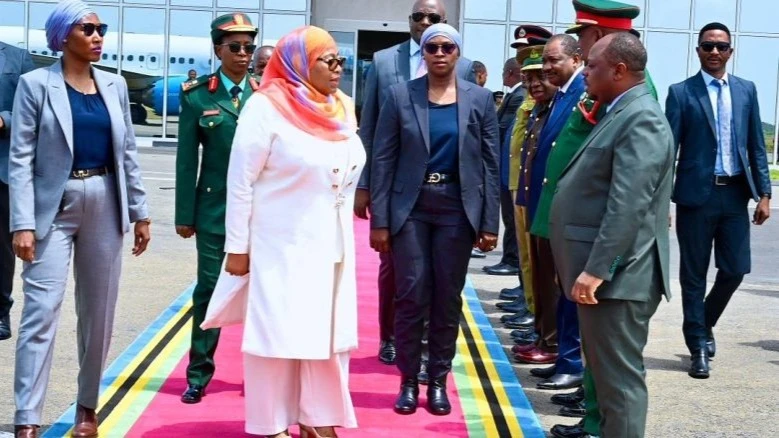
President Samia Suluhu Hassan has been interviewed following her endorsement as the African Union Champion for Maternal, Child and Reproductive Health.
Her appointment was endorsed during the 39th AU Summit after the presentation of the 2025 Report of the Committee of heads of state and government on Africa Centre for Disease Control and Prevention (Africa CDC). The report focused on two principal areas: progress made in implementing Africa CDC programmes - including key achievements and operational challenges - and the impact of declining funding levels on the sustainability of its initiatives. It also presented a draft Work Plan for 2026, which proposed the designation of President Samia as AU Champion for Maternal, Child and Reproductive Health for a one-year term.
In this interview, conducted on the margins of the Summit, President Samia reflects on the responsibility entrusted to Tanzania, the urgency of strengthening health systems across the continent, and her vision for advancing maternal, newborn and child survival, as well as protecting sexual and reproductive health and rights in Africa.
Q: Your Excellency, congratulations on this significant recognition. How have you received this responsibility, both personally and on behalf of your nation?
A: Thank you very much. First, I thank the African Union for entrusting this responsibility to Tanzania, not to me personally, but to the United Republic of Tanzania. I have received it with humility and a deep sense of responsibility.
This recognition reflects the efforts Tanzania has made to safeguard the lives of mothers and children. However, I am aware that coordinating Africa’s agenda on safe motherhood and child survival is a great responsibility. I accept it with determination and a clear sense of purpose.
Q: In practical terms, what does this responsibility mean for Tanzania and for Africa?
A: This responsibility complements what Tanzania is already doing. It does not replace it. Tanzania will continue leading in health sector reforms while advocating across Africa for safe motherhood, child survival, especially under-five children, youth health and future generations
It also means stronger coordination among AU Member States, the Africa CDC, and other regional health institutions.
Most importantly, it requires transformative reforms in the health sector. The first reform must be domestic financing. African governments must prioritize health in their national budgets. We are investing in the future generation.
Secondly, we must engage communities more actively in health service delivery.
Thirdly, we must embrace digital transformation - from village level to national level - to ensure accurate data, efficient systems, and improved service delivery.
Q: Tanzania has made strong progress in maternal and child health. What innovative approaches can be scaled across Africa?
A: Our success has come from several reforms and innovations, massive investment in hospital construction and equipment at all level; Increased domestic financing for health; Partnerships with faith-based organizations, private sector, and civil society to widen service coverage; Strengthening referral systems from villages to district and referral hospitals.
One key innovation is the M-Mama program, implemented with Vodacom Tanzania. When a pregnant woman goes into labour, a coordinated transport system is activated - including a driver and a nurse - who monitor and report progress while transporting her to a health facility. This has saved many lives.
We have also improved rural road infrastructure to ease referrals, strengthened maternal nutrition programs, expanded and empowered community health workers across villages.
As a result, maternal deaths reduced significantly - from 556 deaths per 100,000 live births in 2015/16 to 104 in 2023/24. Our goal is to reach the global target of 70 per 100,000 live births.
Q: What outcomes would you like to see by the end of your term in this continental role?
A: I would like to see reduced maternal mortality across Africa, fewer child deaths, especially under five, strong coordination among AU Member States under Africa CDC, progress in ending malaria, which remains a major killer and improved nutrition for mothers and children. Ultimately, I want to see Africa scaling up successful national models continent-wide.
Q: You speak about labour rooms of celebration. As you have said back home in Tanzania - “Tabasamu la Uti” - it appears that you are taking it to Africa. Your comments?
A: When a mother goes into labour, she wants to come out holding her baby — celebrating life.
We want labor wards across Africa to be places of celebration, not mourning. That is the true meaning of our commitment - Tabasamu la Utu- ensuring safe deliveries, healthy mothers, and healthy children.
Q: Thank you Your Excellency.
A: Thank you very much.
Top Headlines
Trending Stories









© 2026 IPPMEDIA.COM. ALL RIGHTS RESERVED