




OUTLOOK: Strong Infrastructure, Mining Investment To Sustain Tanzania’s Growth Through 2026
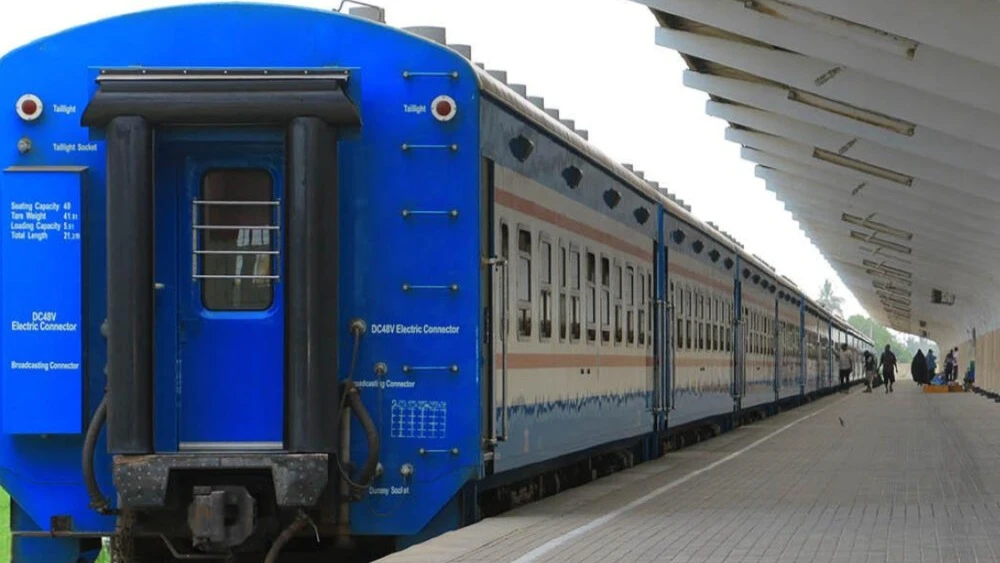
Tanzania’s ambitious infrastructure drive and sustained mining investment are expected to keep the economy on a firm growth path through 2026, even as expansion moderates slightly from recent highs.
Analysts forecast by BMI, a FitchSolutions Company says the economy will grow by 5.9 percent in 2026, easing marginally from an estimated 6.1 percent in 2025.
According to the forecast, growth is projected to remain resilient in 2027 at 5.6 percent—well above the regional average of 3.8 percent—supported by robust fixed capital investment, improving logistics networks and steady private consumption.
“A strong pipeline of transport and energy projects is set to enhance Tanzania’s export competitiveness and position the country as a regional trade hub,” it says.
“Of the 124 major projects currently at the planning or construction stage, 58 falling under transport and 52 under energy and utilities, reflecting the government continued emphasis on infrastructure-led growth.”
Key projects include Lifezone Metals’ $75 million investment in railway infrastructure and grid upgrades, revitalisation efforts for the Tanzania-Zambia Railway Authority (TAZARA) under a $1.4 billion agreement with China Civil Engineering Construction Company, and a $2.2 billion trilateral railway agreement between Tanzania, Burundi and China Railway Engineering Group.
“These initiatives aim to strengthen connectivity to the Port of Dar es Salaam, a critical gateway for regional trade,” says FitchSolutions forecast.
In western Tanzania, Zijin Mining has secured a concession to invest in and manage Kigoma Port, further expanding the country’s logistics footprint along Lake Tanganyika and deepening trade links with neighbouring countries.
Also, upgrades to the Standard Gauge Railway (SGR), prioritised in the government’s 2026/27 budget framework, are expected to reduce transport costs, ease congestion and boost both goods and services exports.
Analysts note that Tanzania’s improving logistics profile is reflected in favourable risk assessments, signalling lower operational risks for investors.
According to the forecast, net exports are forecast to contribute 0.2 percentage points to headline growth in 2026, reversing an estimated 0.7 percentage-point drag in 2025, as infrastructure improvements enhance trade efficiency.
Recent economic data underscore the economy’s underlying strength as the National Bureau of Statistics show that real GDP expanded by 6.4 percent year-on-year in the third quarter of 2025, up from 6.3 percent in the second quarter.
Growth was driven by stronger activity in accommodation services, construction and agriculture, while the finance sector remained particularly robust, recording 14.2 percent growth.
Accommodation activity accelerated from 3.9 percent year-on-year in the second quarter to 6.7 percent in the third, construction rose from 5.2 percent to 6.5 percent, and agriculture improved from 3.0 percent to 4.1 percent. Despite political unrest surrounding the October 29 general elections, analysts expect overall growth to have remained above 6.0 percent in the final quarter of 2025.
Fixed capital investment is expected to remain the primary engine of growth in 2026, underpinned by strong foreign direct investment (FDI) inflows into mining and continued large-scale infrastructure development.
“High global gold prices and rising demand for critical minerals have strengthened Tanzania’s appeal as a mining destination,” say BMI analysts.
The mining sector’s contribution to GDP has expanded significantly over the past decade, rising from 4.4 percent in the third quarter of 2015 to 12.7 percent in the third quarter of 2025.
Recent investments highlight the sector’s momentum as Australian Volt Resources and Unbounded Opportunities Fund SPC have committed $11.1 million to the Bunyu Graphite Mine and Processing Facility.
Barrick Gold is investing $558 million to expand operations at Bulyanhulu and conduct drilling at the Gokona and Gena deposits while EcoGraf’s Tanzania Graphite project is also expected to reach final investment decision in 2026, further supporting output growth.
“Overall, fixed investment is forecast to contribute 6.6 percentage points to headline growth in 2026, up from an estimated 6.2 percentage points in 2025, reinforcing its role as the backbone of economic expansion,” say BMI analysts.
However, downside risks remain due to a significant and sustained drop in global gold prices could weigh on government revenues, weaken the shilling and dampen investment appetite in the mining sector.
Given the sector’s growing weight in the economy, such a shock would have broader macroeconomic implications.
Even so, Tanzania’s diversified investment pipeline and continued infrastructure build-out suggest that the country is well positioned to sustain above-average growth in the medium term, consolidating its role as a strategic trade and logistics hub in East and Central Africa.
Private consumption will remain another important driver of growth in 2026, growing by 4.2%, just above the average of 4.1 percent posted from 2015 to 2024.
On January 1, the minimum wage in the private sector was hiked by 33.4 percent to 358,322/- (USD135) per month, which will bolster household purchasing power and stimulate consumer spending.
This follows a 35.1 percent rise in the public sector minimum wage implemented in July 2025, further underpinning real household income growth.
“Additionally, subdued inflation, which we forecast to average 3.6 percent- in line with our 2025 estimate of 3.5 percent - will preserve consumers’ real purchasing power, thereby reinforcing the positive contribution of private consumption to overall GDP growth,” says BMI.
“Indeed, we forecast that private consumption will contribute 3.5pp to headline growth. “
In 2027, despite easing further, BMI analysts expect growth to remain robust and above the regional average of 3.8 percent, at 5.6 percent.
Top Headlines
Trending Stories














© 2026 IPPMEDIA.COM. ALL RIGHTS RESERVED