




Using $16.35bn/- investment roadmap to secure "Vision 2050"

As the global investment community shifts its focus toward resilient frontier markets, Tanzania has unveiled a bold blueprint to redefine its economic destiny.
The Tanzania Investment and Consultant Group Ltd (TICGL) has released a strategic portfolio detailing a $16.35 billion pipeline of 21 transformational projects, all meticulously aligned with the ambitious Tanzania Development Vision 2050.
This roadmap is not merely a collection of infrastructure goals; it is a comprehensive strategy to elevate the nation from its current $78.78 billion GDP to a staggering $1 trillion powerhouse by 2050.
Macroeconomic Resilience and Visionary Targets
Tanzania stands as one of East Africa’s most dynamic economies, consistently outperforming regional peers with a real GDP growth rate of 5.5 percent in 2024. This momentum is projected to accelerate to 6.0 percent in 2025 and 6.4 percent by 2026.
Such growth is underpinned by a stable macroeconomic environment, including an inflation rate of 3.1 percent in 2024 and a 7 percent appreciation of the Tanzanian Shilling in late 2024, signaling increasing foreign exchange inflows.
The Vision 2050 objectives prioritize structural transformation and industrialization to move away from low-productivity sectors.
Currently, agriculture contributes 23.7 percent to the GDP, followed by services at 28.9 percent, and mining at 9.1 percent.
The strategic aim is to shift this balance, fostering a competitive manufacturing sector that currently accounts for 8.4 percent of the GDP.
Infrastructure and Energy: The Foundations of Growth
Central to the 2025–2030 portfolio are massive capital investments in energy and transport, sectors that currently face significant deficits.
The $2.9 billion Julius Nyerere Hydropower Project (2,115 MW), operational since 2024, is a cornerstone of this effort, designed to provide the reliable energy necessary for industrial expansion.
To complement this, the government is pursuing a $3.0 billion Natural Gas Monetization program and a $700 million Rufiji Basin Solar Power initiative, tapping into the nation's 5,000+ MW solar potential.
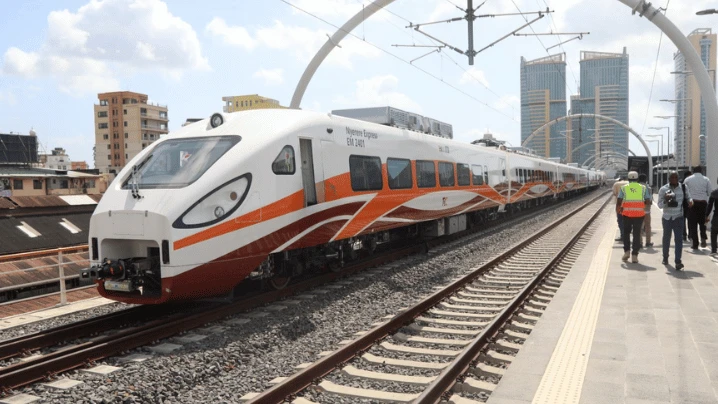
In transport, the expansion of the Standard Gauge Railway (SGR) with a $2.0 billion investment for Phases 4–6 and the $1.2 billion development of the Bagamoyo Deep Sea Port are set to solidify Tanzania’s role as a regional trade hub.
These projects aim to unlock trade corridors for eight landlocked neighboring nations, serving a regional market of over 177 million people within the East African Community (EAC).
Industrialization through Import Substitution
The TICGL report highlights a critical opportunity in manufacturing, where current imports of manufactured goods account for 67 percent of total imports.
To address this, the portfolio identifies over $2 billion in manufacturing opportunities. Key targets include pharmaceuticals—aiming to reduce a heavy reliance on imports—as well as textiles, plastics, and construction materials.
Agriculture, while still the primary employer for 65 percent of the workforce, is undergoing a shift toward value-addition.
The strategy targets a $300 million plus annual market in fruit and vegetable processing, alongside efforts to replace imported edible oils and dairy products with local production.
These efforts are designed to ensure that the "Vision 2050" goal of inclusive growth is felt across the rural landscape.
Demographic Dividends and Urban Transformation
Tanzania’s greatest asset may be its "youth dividend." With a population of 65 million and a median age of 18, over 63 percent of the population is under 25.
This provides an expanding labor force and a growing consumer base, particularly as urbanization reaches 37 percent.
This rapid urban shift has created a 3 million-unit housing deficit, presenting a multi-billion dollar opportunity in affordable housing and smart city infrastructure.
Urbanization is also driving the services sector, where tourism remains a titan, generating $3.37 billion in revenue between 2021 and 2023.
Strategic Facilitation and Risk Mitigation
Navigating this complex landscape requires more than just capital; it requires local expertise.
TICGL has positioned itself as the essential bridge for global investors, having already facilitated $3.7 billion in Foreign Direct Investment (FDI) and structured $500 million in Public-Private Partnerships (PPPs).
Their role involves guiding investors through the reformed 2022 Tanzania Investment Act, which provides enhanced incentives like tax holidays and 99-year land leases.
While challenges such as a Human Capital Index of 0.39 and logistical bottlenecks remain, the government’s commitment to transparency and the MKUMBI II reform program are actively improving the investment climate.
A Gateway to the Future
The successful execution of this $16.35 billion portfolio is expected to create over 1.1 million jobs and add an estimated $6.7 billion to the annual GDP by 2030.
As Tanzania marches toward its "Vision 2050" goals, it offers a compelling case for investors seeking high returns in a stable, reform-driven environment. For those looking to capitalize on Africa’s next big success story, the message is clear: Tanzania is ready for global impact.
Some analysts describe Vision 2050 as more than just a policy document — it’s a commitment to sustained socioeconomic transformation with practical priorities in industrialisation, economic diversification, human capital and infrastructure development.
Economists like Prof Abel Kinyondo acknowledge that the Vision addresses vital pillars for future growth, including technology, human capital, and broader citizen prosperity. However, he’s careful to note that a plan alone is not enough (The Citizen).
Academics like Dr George Kahangwa was quoted by the Guardian noting that while the Vision is ambitious, its messaging may lack clarity for grassroots implementers, and terms like “shared prosperity” need clearer, measurable definitions.
In remarks highlighting the launch, President Samia Suluhu Hassan urged a shift away from “business as usual” — underscoring that achieving the Vision’s ambitious targets (like a US $1 trillion economy by 2050) will require changes in how government and institutions work, evaluate performance, and deliver results.
Top Headlines
Trending Stories











© 2026 IPPMEDIA.COM. ALL RIGHTS RESERVED