




Tanzania’s education moment: Teaching for purpose in a rapidly changing nation
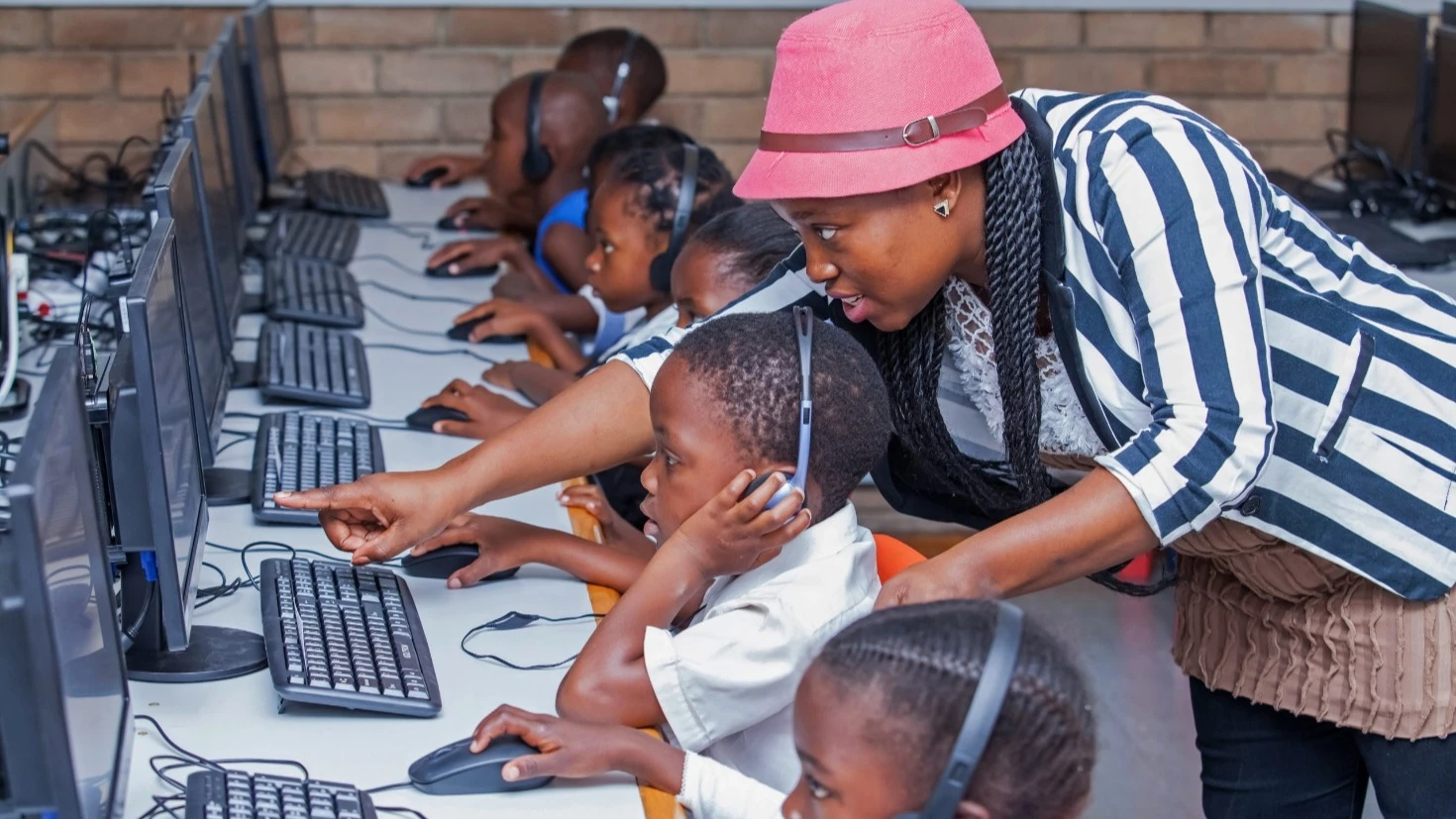
TANZANIA’S education conversation has grown more serious and more intimate. It is no longer just about enrollment figures, new syllabi, or examination formats. It is about what kind of life education makes possible, and whether classrooms can become places where young people learn not only to pass, but to belong, to build, and to imagine themselves as capable actors in a changing world.
For a long time, schooling in Tanzania followed a familiar rhythm. Students listened, memorised, and repeated. Success meant mastering what had already been decided. Many emerged with certificates but little confidence that those papers would translate into real work or meaningful contribution. Employers complained quietly; graduates felt it more loudly. The gap between schooling and life widened.
This disconnect is not new. Professor Abel Ishumi of the University of Dar es Salaam warned decades ago that education divorced from production and problem-solving risks creating “certified incapacity.”
His critique was not hostile to education, but deeply protective of it. Schooling, he argued, should expand people’s ability to act in the world, not narrow it to examination rooms. Today’s reforms read almost like a delayed response to that call.
The revised education framework now being implemented aims to make learning more purposeful. Compulsory education has been extended. Vocational and technical pathways have been elevated from afterthoughts to core options.
Subjects such as entrepreneurship, digital literacy, ethics, and communication are no longer peripheral. The idea is simple but disruptive: education should prepare students for life as it is lived, not as it was once tested.
Walk into a secondary school today, and you can feel the shift, even if it is uneven. In some classrooms, students are encouraged to debate, to apply concepts to local problems, and to imagine small projects that respond to community needs.
A science teacher in central Tanzania describes it as “teaching with the door open.” Students look outward now, she says, not just at the chalkboard but at the world beyond the school fence.
Still, optimism sits beside strain. Large classes remain common. Resources are thin, especially outside cities. Teachers are being asked to do more with little time to retrain or experiment.
A head teacher in a rural district admits that while the new curriculum is exciting, it also feels heavy. “We are changing the plane while flying it,” he says, half-joking.
Scholars have been quick to note this tension. Professor George Kahangwa, whose work focuses on higher education and knowledge systems, has long argued that reform cannot succeed without investing in the people who carry it.
Curricula may change on paper, but classrooms change only when teachers are supported, trusted, and continuously developed. Otherwise, reform risks becoming performative, ambitious language layered onto old habits.
Dr Apollo Mugyenyi of Tumaini University Makumira approaches the issue from another angle: education as social transformation. His research emphasises that lived realities, gender, distance, poverty, and community expectations shape learning.
For students balancing school with family responsibilities or economic pressure, relevance matters. When learning connects to real life, persistence increases. When it feels abstract or punitive, dropout becomes rational.
This attention to lived experience is crucial. Education policy often speaks in averages, but schools live in particulars. A student in Mwanza talks about wanting to study technology not to leave, but to stay and “fix things here.”
Another student says the most important lesson she has learned is that failure is not final, that skills can be built, not inherited. These small mindset shifts may be the reforms’ most enduring outcome.
Some Tanzanian thinkers have looked beyond the continent for inspiration, not as a template but as a provocation. Public intellectuals like Former Zanzibar Chief Minister Shamsi Vuai Nahodha have spoken of East Asia’s post-war education strategies, particularly South Korea’s decision to treat education as a national survival project. Teachers were respected, industries were linked to training, and learning was aligned with long-term national purpose. The lesson is not imitation, but seriousness.
Nahodha often pairs this with the Japanese idea of Ikigai, the meeting point of what one loves, what one does well, what society needs, and what sustains life. Applied to education, it asks a different question: not “What job will you get?” but “What role can you play?” For Tanzania, this framing resonates deeply. It speaks to dignity in work, whether that work is technical, agricultural, creative, or civic.
Theory supports this shift. Traditional human capital thinking treats education as an investment to raise productivity and income. That logic matters, especially in a growing economy. Nevertheless, capability theory, which emphasises expanding people’s freedom to live meaningful lives, offers a fuller picture. Tanzania’s reforms increasingly straddle both ideas: skills for work, yes, but also skills for agency.
The most challenging test lies ahead. Vocational education, for all its promise, must connect to real economic opportunities. Skills without markets breed frustration. Teachers without training breed fatigue. Reform without patience breeds cynicism. These risks are real, and Tanzania is not immune to them.
Nonetheless, something quietly hopeful is unfolding. Education is being discussed not just in ministries, but in homes, staff rooms, and student circles. It is being framed as a shared project, not a distant policy. Parents talk about options they never had. Teachers talk about learning themselves. Students talk about futures that feel less predetermined.
This is not a revolution. It is slower, messier, and more human. Progress will be uneven. Some schools will move faster than others. Some reforms will need revision. But the direction matters. For the first time in a long while, Tanzania’s education system is asking a deeper question: not simply how to educate more, but how to educate better, and for what kind of life.
If these reforms endure, their impact will not be neatly summarised in reports or rankings. Those measures may capture progress, but they rarely notice the quieter transformations that matter most. Change will surface in ordinary places, through decisions that seem personal yet reflect something larger taking root across the country.
It will appear in a young person who chooses to stay, not because options are limited, but because opportunity feels possible at home. Someone who looks at farming, teaching, engineering, or skilled trades and sees dignity rather than disappointment. In that choice is confidence: the sense that education has prepared them to shape their surroundings, not simply escape them.
It will appear, too, in teachers. In a teacher who feels trusted enough to try a new lesson, to invite questions, and to admit uncertainty. That trust changes classrooms. Students lean forward. Conversations replace recitation. Teaching becomes demanding, sometimes draining, but also newly meaningful. Many educators describe this shift as a rediscovery of why they entered the profession in the first place.
possibilitys feel the difference as well. Parents notice children explaining ideas at the dinner table, solving problems collaboratively, speaking with assurance. Schools begin to feel less like pressure chambers and more like shared spaces of possibility, where learning connects to life instead of standing apart from it.
Progress will not be smooth. Some schools will advance quickly; others will struggle longer. Mistakes will be made, policies revised, patience tested. Still, education has never been about perfection. It has always been an act of belief.
At its best, education is faith in the future. Tanzania appears to be quietly renewing that faith. Not loudly. Not flawlessly. However, as the seriousness of what is at stake grows, there is a clearer sense that the future is not something to wait for, but something to prepare for.
Top Headlines
Trending Stories


© 2026 IPPMEDIA.COM. ALL RIGHTS RESERVED