




Govt reviewing current science and technology policy, of 1996
THE government is currently reviewing the national science and technology policy of 1996.
Edwin Konzo, coordinator for science, technology and innovation in the Ministry of Education, Science and Technology, made this observation at the high-level Tanzania-Japan knowledge-sharing forum here yesterday, focused on envisaged measures to uplift productivity in agriculture.
He said the projected review seeks to align the legal framework for scientific activity with the Development Vision 2050, ensuring that technology takes root as the engine of the economy. "To reach our 2050 goals, we must invest heavily in innovation and update policies to reflect the digital and mechanical demands of the 21st century," he stated.
Prof Amandus Muhairwa, the Sokoine University of Agriculture (SUA) deputy vice-chancellor, noted that rapid urbanization is shrinking available arable land.
"As villages transform into towns, we are losing land. The only solution is to use agricultural engineering and advanced technology to produce more on smaller plots," he said, reaffirming collaboration with the government and the Japan International Cooperation Agency (JICA) to conduct research that simplifies the use of complex technologies for local farmers.
Stakeholders at the forum agreed that the campaign promise of setting up 1,000 agriculture mechanization hubs will be a game-changer by reducing post-harvest losses and increasing cultivation speed.
The shift is expected to boost rural incomes, stabilize food prices and cement Tanzania’s position as a regional food basket, they said of the pivotal initiative now being set out for implementation.
Mechanization hubs across the country are key to a decisive move to abandon rudimentary farming methods, as the centers are designed to serve as focal points for the storage, maintenance and leasing of modern farm machinery.
Prof Peter Msoffe, the Agriculture deputy permanent secretary for crop development and food security, said that the era of relying on hand hoes or ox ploughs must come to an end if the nation is to achieve sustainable food sovereignty.
Setting up the 1,000 hubs is not for equipment warehouses but active service centers catering for a significant leap toward the professionalization of the sector, he explained, underlining that they will provide farmers with easy access to tractors, power tillers and harvesters, alongside technical support and maintenance services.
This infrastructure is intended to bring small-scale farmers closer to accessing expensive technology that was usually out of reach as modern agriculture is driven by machinery. ”These hubs will ensure that maintenance services and expert consultancy are available right at the grassroots level, empowering farmers to transition from subsistence to commercial productivity," he elaborated.
The mechanization drive complements existing government interventions, such as the provision of subsidized fertilizers and quality seeds, aimed at maximizing yields per acre, he told the forum which paid homage to the long-standing agro-sector cooperation between Tanzania and Japan.
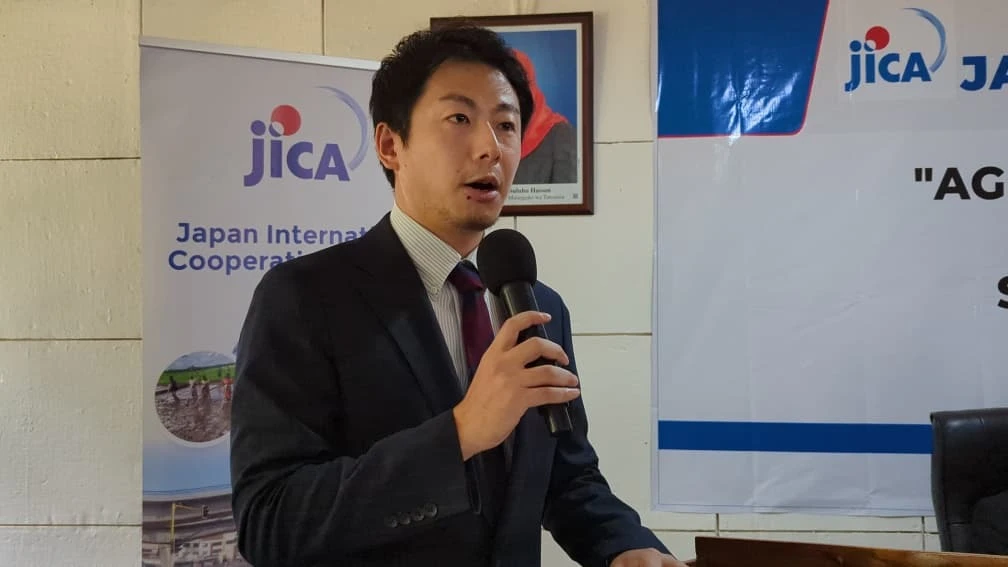
Ara Hitoshi, the JICA country representative, reaffirmed Japan’s commitment to bolstering Tanzania’s agricultural evolution, noting that Japan’s focus remains on technology transfer and youth empowerment
By introducing Japanese expertise in precision farming and efficient machinery, the partnership expects to make the agricultural sector more lucrative and attractive to the younger generation, who often shun traditional manual farming, as part of modernization efforts with a ripple effect in science policy and its application, participants noted.
Top Headlines
Trending Stories



















© 2026 IPPMEDIA.COM. ALL RIGHTS RESERVED