




Reconciling Tanzania’s constitutional ideals with local, global labour crisis
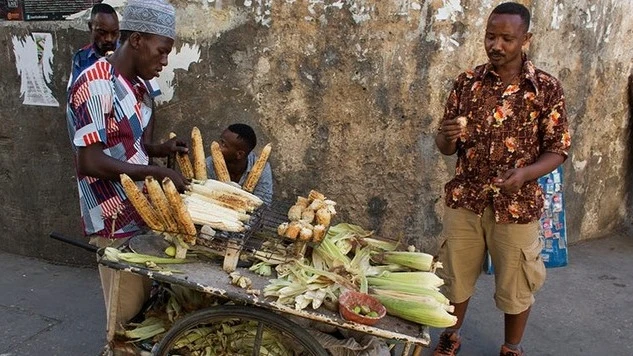
ARTICLE 9 of the Constitution of the United Republic of Tanzania (1977) explicitly outlines the state's obligation to facilitate a nation of free individuals enjoying justice, fraternity, and concord. Crucially, the supreme law mandates that state agencies direct policies toward ensuring that every able-bodied person works. While Article 22 provides for the right to work, Article 23 provides for the right to just remuneration.
In this constitutional context, "work" is defined broadly as any legitimate activity by which a person earns a living. However, for millions of Tanzanians, the chasm between these high-minded ideals and the harsh reality of the modern labour market is widening at an alarming rate.
Today, a painful friction exists between the employed and the jobless. Those with secure tenure—the "insiders"—frequently view job seekers with scepticism, occasionally accusing them of failing to "utilise available opportunities." Simultaneously, political rhetoric often shifts the burden onto the individual, urging the youth to leverage an "enabling environment" to create their own jobs.
Meanwhile, higher education institutions face criticism for failing to groom students with the "soft skills" required by the labour market. Yet, for a graduate who possesses the will, but lacks the way, the search for employment remains a soul-crushing endeavour that transcends a simple lack of initiative.
Data from the National Bureau of Statistics (NBS) underscores this struggle. According to the most recent Integrated Labour Force Survey (ILFS), while the general unemployment rate fluctuates, youth unemployment (ages 15–35) remains a significant challenge.
The NBS highlights that a large portion of the youth population is under employed or engaged in low-productivity informal activities. Specifically, the "Not in Education, Employment, or Training" (NEET) category remains a critical concern for policymakers, as thousands of graduates enter a market that can only absorb a fraction of them annually.
Behind these statistics are profound human stories. Consider the journey of a friend of mine, a university and law school graduate. Determined to practise, he was sworn in as an advocate of the High Court of Tanzania. Despite his elite credentials, inexperience became an insurmountable wall. For five years, he remained "hidden" from the economy, surviving entirely on his wife’s income.
He recounts the psychological sting of watching peers build homes while he contemplated joining manual brick-makers just to secure a subsistence meal. His story eventually reached a turning point when he established his own firm, but only after years of emotional erosion that no constitutional clause could soothe.
This crisis also haunts those who once believed they had achieved security. Many professionals have fallen victim to the "economic crunch," laid off as companies, organisations and institutions downsize. One particular case involved a person whose job loss tested the foundation of his marriage. As the adage warns, "When poverty enters through the door, love flies out the window."
Despite his wife’s desperate attempts to start small ventures—selling smoked fish or trading second-hand clothes—each effort collapsed in a saturated market. The family was left in financial paralysis, misunderstood by relatives who mistook misfortune for a lack of effort.
These personal tragedies are local echoes of a global stagnation documented by the International Labour Organisation (ILO). In its “World Employment and Social Outlook: Trends 2026” report, ILO reveals that the quality of global employment has slowed significantly. Between 2015 and 2025, the reduction of extreme poverty among workers slowed to a crawl. Today, a staggering 284 million workers globally live on less than $3.00 (about Sh7,700) a day.
In this context, the ILO’s "working poor" category becomes chillingly relevant. These are employees living in households that fall below the poverty line, proving that having a job is not always sufficient to escape poverty due to low pay and a lack of social protection.
ILO notes that working poverty is increasingly an African phenomenon; in sub-Saharan Africa, about 30 per cent of the employed population lives in extreme poverty. Globally, 2 billion workers are in informal employment, which serves as a primary driver of this poverty.
In low-income countries, the situation is even more precarious. Nearly 68 per cent of workers live in extreme or moderate poverty. The shift toward "own-account" work—undertaken out of necessity—rose significantly between 2015 and 2025. This reflects a major roadblock: the slowdown in transforming economies toward high-productivity sectors. The process of workers moving across economic activities to better roles has essentially halved globally over the last 20 years.
Furthermore, the global labour force participation rate is projected to decline to 60.5 per cent by 2027. This is exacerbated by a "jobs gap" projected to reach 408 million people by 2026. The report also highlights that high income inequality—where the top 10 per cent holds 53 per cent of total global income—continues to fuel social conflict, crime, and low social cohesion.
ILO decries that existing policies are no longer sufficient. The current "structural downward trend" requires more than just job fairs; it demands a "primordial" shift in how labour is valued. ILO's Global Coalition for Social Justice calls for weaving labour policies into broader domains like finance, industry, and environmental planning.
To move forward, ILO suggests, we must acknowledge that getting a job has become a labyrinth rather than a ladder. Breaking down silos between government ministries and international partners is essential to create a coordinated response. Unless we adapt our institutions to meet the unique demands of this digital and demographic transition, the constitutional promise of "freedom and justice" through work will remain an elusive dream for the millions trapped in the shadows of the informal economy.
Top Headlines
Trending Stories





© 2026 IPPMEDIA.COM. ALL RIGHTS RESERVED