




Safeguarding truth: Social, analytical blueprint for information integrity
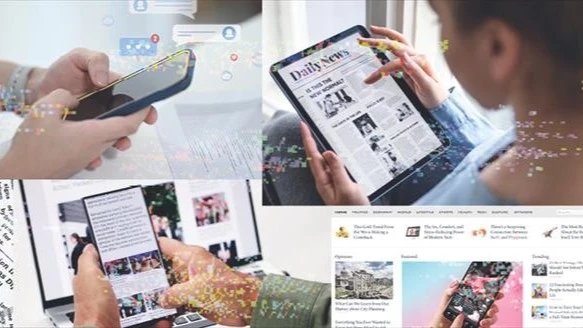
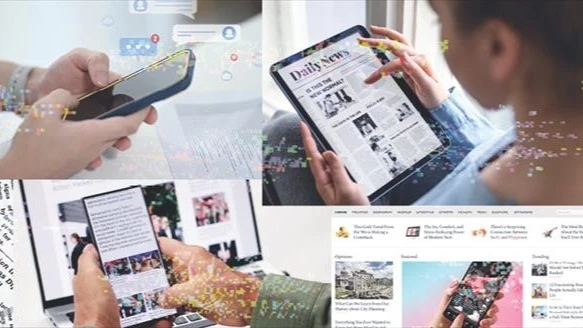
IN today’s complex digital landscape, encountering a "shocking" social media headline that feels too sensational to be true has become a daily occurrence. More often than not, these initial instincts are correct.
From "cooked" news narratives designed to divert public attention away from pressing social issues to sophisticated, coordinated campaigns intended to mislead the masses, the global information ecosystem is increasingly compromised. We are no longer just dealing with occasional errors; we are navigating a deliberately poisoned well of discourse.
Consider the alarming frequency of sudden, fabricated texts regarding the death of public figures or the detailed, yet entirely false, accounts of government officials being flown abroad for emergency medical treatment. In many instances, well-meaning individuals—driven by a sense of urgency or concern—become secondary conduits for these falsehoods.
By sharing unverified content with peers, we inadvertently participate in an information disorder that can lead to significant personal embarrassment, the erosion of public calm, or even severe legal repercussions for defamation.
As we navigate 2026, the ability to distinguish truth from deception has emerged as the defining struggle of our era. To navigate this "post-truth" landscape, conceptual clarity is paramount. Scholars Elena Broda and Jesper Strömbäck, in their 2024 systematic review published in the Annals of the International Communication Association, acknowledge that while misleading information is not a new phenomenon, its prevalence has exploded over the last decade. This explosion is not accidental; it is the result of a radical transformation in how information is produced, disseminated, and consumed.
To address this challenge effectively, we must move beyond the generic and often weaponised label of "fake news" and adopt the precise technical distinctions recognised by global experts and behavioural scientists:
Misinformation: Inaccurate information shared without harmful intent. This typically arises from a genuine misunderstanding, "sloppy" journalism, or a lapse in rigorous verification before sharing.
Disinformation: Information that is deliberately manufactured and disseminated with the explicit goal to deceive, manipulate, or cause targeted harm to individuals, institutions, or national stability.
Malinformation: The strategic sharing of truthful information—such as leaked private data, confidential communications, or non-consensual imagery—with malicious intent to stir conflict, conduct smear campaigns, or inflict reputational damage.
Fake News: A specific genre of disinformation that meticulously mimics the aesthetic, tone, and formatting of professional journalism to gain unearned credibility and bypass the reader’s critical filters.
The rise of this "misinformation age" poses a systemic threat to individual wellbeing, organisational integrity, and democratic stability. Research consistently indicates that well-informed citizens are more likely to participate in political processes, exhibit social tolerance, and engage meaningfully with societal challenges. Conversely, a compromised information supply chain breeds "knowledge resistance"—a psychological state where individuals become so sceptical of the information landscape that they begin to reject even verified, scientifically accurate information.
Between 2010 and 2021, over 1,200 journal articles were published on the topic, reflecting a global urgency to understand how these phenomena erode democratic deliberation and social cohesion.
UNESCO, in its seminal work "Journalism, ‘Fake News’ & Disinformation" argues that the most potent defence against this tide of falsehood is a return to rigorous ethical standards. Professional media must eschew the publication of unchecked data and resist the financial temptation of "clickbait" that may attract high traffic, but serves no genuine public interest.
This problem is further compounded by the ubiquity of manipulated visual content. Hoaxers frequently strip photos and videos of their original context to recycle them for current events—a tactic known as "recontextualisation" that has successfully deceived both seasoned politicians and veteran journalists.
To combat this, a process of manual and digital triangulation is required. Verification tools can now establish the geographic origin of a post, while social media history analysis can reveal a source’s long-term credibility. However, the ultimate responsibility rests with the consumer. In a world where falsehoods travel faster than facts, cross-checking information against reliable, established sources is no longer just a recommendation; it is a vital civic duty.
In their collaborative study, "Misinformation and Disinformation: An International Effort Using Behavioural Science" OECD lead behavioural scientist Chiara Varazzani and her colleagues argue that false information disrupts policy implementation and erodes the institutional trust necessary for elected governments to function. They advocate a multifaceted, agile response rooted in behavioural insights to address the psychological vulnerabilities that make humans susceptible to "sensational" narratives.
Expanding on this, Elie Alhajjar, in his 2024 analysis, emphasises that the fundamental distinction between these threats lies in intent. Disinformation campaigns are particularly insidious because they exploit emotional triggers—fear, anger, and outrage—to bypass rational analysis and polarise communities. These are not public consumption.; they are coordinated efforts designed to achieve specific political, financial, or ideological outcomes.
Diligent verification remains the only viable safeguard against the pervasive threat of information disorder. Neglecting this responsibility risks the spread of falsehoods that can have devastating socio-political impacts. By consistently cross-referencing sources and understanding the behavioural mechanics of deception, we ensure that the information we rely on remains accurate, purposeful, and safe for public consumption.
Top Headlines
Trending Stories










© 2026 IPPMEDIA.COM. ALL RIGHTS RESERVED