




ACT Wazalendo’s power-sharing boycott and its implication to Zanzibar democracy

DECISIONS by the opposition party—ACT Wazalendo to boycott participation in Zanzibar’s Government of National Unity (GNU) is now revealing far-reaching political and social implications, particularly for citizens who rely on political institutions to amplify their voices.
The party has formally refused to be part of the power-sharing government and has also refused to respond to official correspondence from the Zanzibar government requesting the nomination of a candidate for the post of First Vice President.
The party argues that the general election held on October 29th last year wasn’t free and fair, thus lacked the legitimacy required to produce a lawful President or a Vice President drawn from an opposition nomination.
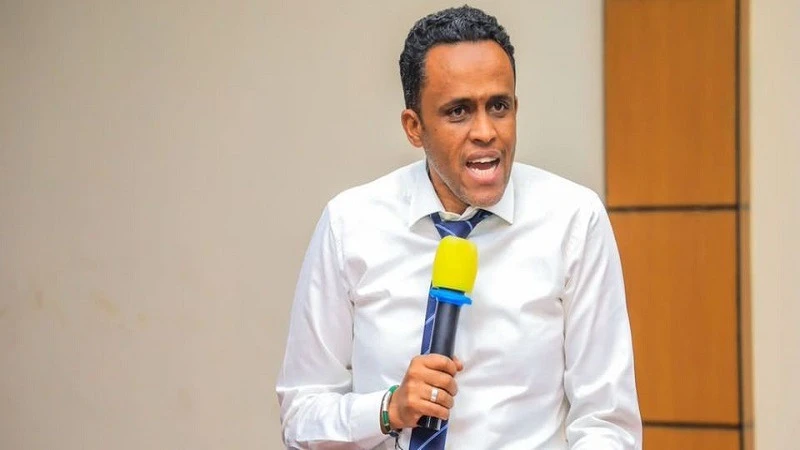
The stance has drawn mixed reactions from political analysts. A political commentator, Maggid Mjengwa said that ACT Wazalendo’s position may be constitutionally defensible; it carries significant consequences for ordinary Isle citizens.
“This is a constitutional matter, it does not erase the fact that democracy belongs to the people, and politics directly affects their lives,” Mjengwa remarked. “When a party fails to fulfil a constitutional obligation, public trust is weakened. Not every citizen has the ability or access to appear before the House of Representatives to express their views.”
Mjengwa said the Zanzibar Constitution guarantees space for opposition participation, thus boycotting those positions effectively denies citizens their right to representation and the opportunity to channel their concerns through formal institutions.
Und the current arrangements, when a party refuses to nominate a representative, the position remain vacant for the entire term of that particular administration.
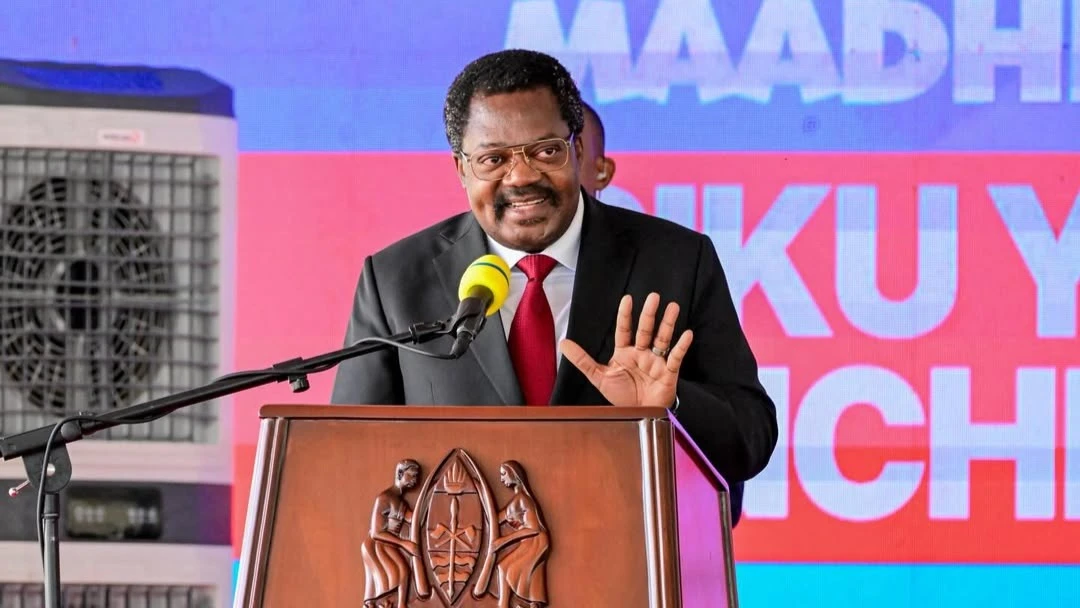
However, ACT Wazalendo remains resolute. The party’s Vice Chairperson (Mainland), Isihaka Mchinjita, told journalists recently that their priority is not power-sharing but restoring political rights of Isle dwellers to freely choose their leaders.
“Our priority is not joining the GNU. The general election was not a trap designed so that votes could be stolen and then the defeated party invited to share top posts, only to prepare for another cycle of electoral theft. It should be remembered that before the GNU, blood was shed and lives were lost,” stated the party’s Vice Chairperson.
He insisted that for the GNU to be legitimate, it must be the product of a credible and lawful election. Where there are fundamental flaws, he says, those issues must first be addressed. In our view, the purpose of national unity should never be to strip citizens of their sovereign authority.
Addressing events before, during, and after election day, Mchinjita maintains that the process fell short of the standards of a free, fair, and credible election. As a result, he argues, the government that emerged lacks the consent of the people, who are the ultimate constitutional authority in determining national leadership. He calls for a repeat election to restore Tanzanians’ right to choose leaders of their preference.
Mchinjita said the party’s Central Committee reviewed election reports from both sides of the Union and commended the party’s legal office to file 84 court cases seeking justice for citizens’ voting rights.
The committee also praised ACT Wazalendo’s lawyers for their ongoing litigation, including a major case challenging the legality of parliamentary election results nationwide, results that determine eligibility for special seats and public funding.
“The Central Committee is deeply disturbed by the gross violations of the Constitution and electoral laws in the allocation of special seats,” Mchinjita says. “ACT Wazalendo received 2,222,162 votes, equivalent to 6.8 percent of all valid parliamentary votes as announced by the Independent National Electoral Commission (INEC), yet the party was not allocated a single special seat despite surpassing the constitutional threshold of five percent. The Committee has strong confidence that the courts will deliver justice.”
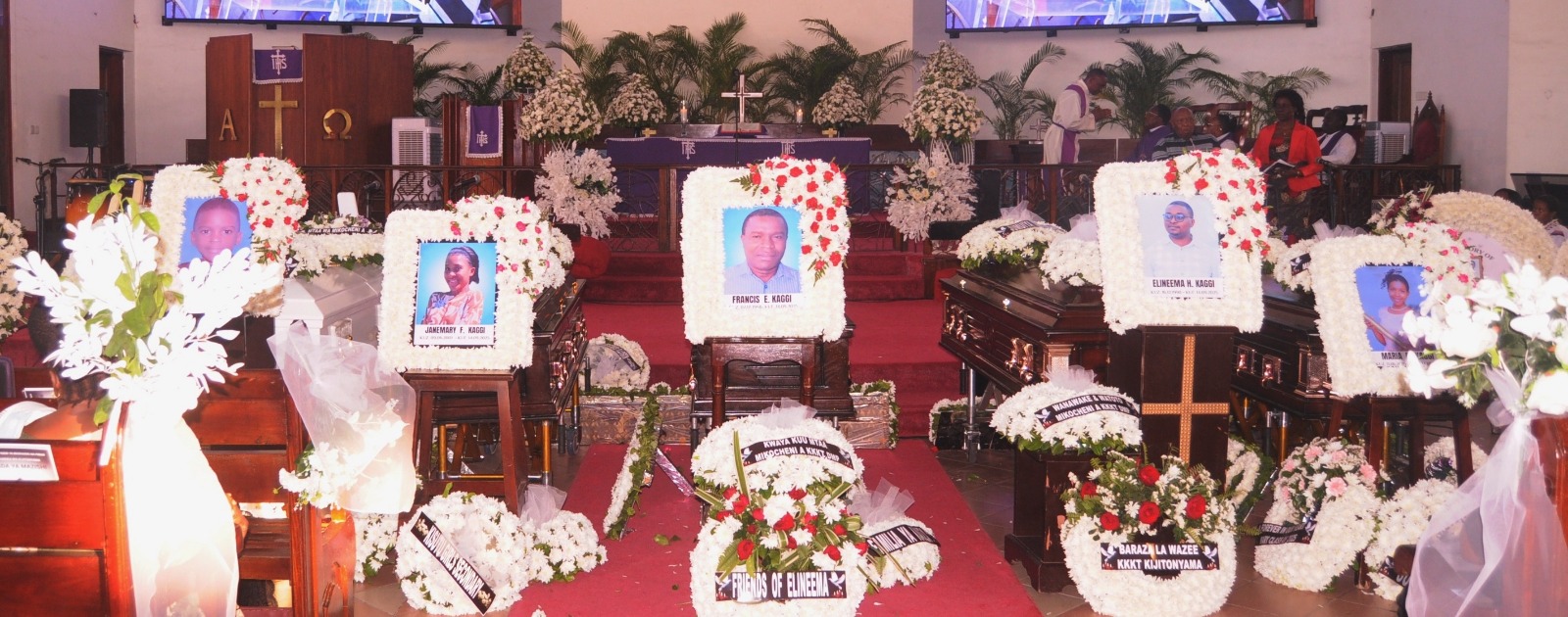
On the killings reported on election day, Mchinjita says the party has resolved to continue condemning the violence and demanding legal accountability for all those involved in planning and executing the killings. The party is also calling on the government to release accurate figures of those killed, rather than focusing solely on property damage.
“The value of human life cannot be compared to the value of material possessions,” he says. ACT Wazalendo further demands that the bodies of those killed be handed over to families who continue to seek closure, and that an independent international commission of inquiry be established to investigate the killings.
Mchinjita also accuses the country’s constitutional and political processes of being “hijacked” by the security apparatus, a situation he says has significantly undermined democracy.
“Tanzania, by any interpretation and by all standards, is no longer a democracy but a ‘securocracy’,” he says. “Decisive steps must be taken to ensure that security organs withdraw from the role they have assumed of imposing leaders on Tanzanians and Zanzibaris without public consent.”
On constitutional reform, ACT Wazalendo says it has resolved to lead the struggle for a new constitution, arguing that without it, democracy and justice cannot be realized. The party is calling for the immediate resumption of the constitutional reform process, beginning with a review and amendment of the Constitutional Review Act and the Referendum Act to reflect current realities.
Mchinjita says a bill to amend these laws should be tabled and passed during the parliamentary session beginning this January 2026. He also proposes a National Conference involving all stakeholders to reach consensus on contentious constitutional issues, including the structure of the Union. A panel of constitutional experts should then be appointed to draft a new constitution, which would ultimately be subjected to a national referendum.
In November last year, Zanzibar President Hussein Mwinyi, while announcing the Revolutionary Government of Zanzibar’s Cabinet, said he had reserved three ministries for ACT Wazalendo. In addition to the post of First Vice President, the party was offered leadership of the Ministry of Tourism and Antiquities, the Ministry of Trade and Industrial Development, and the Ministry of Health.
This is not the first time an opposition party has boycotted the GNU. Between 2015 and 2020, the Civic United Front (CUF) similarly refused to nominate a candidate. However, from 2021 to 2025, ACT Wazalendo did join the GNU as the main opposition party in Zanzibar after negotiations between party chairperson Maalim Seif Sharif Hamad and President Mwinyi. Maalim Seif served as First Vice President until his death on February 17, 2021.
As the current standoff continues, the political cost of absence—from institutions designed to foster unity—remains a central question for Zanzibar’s fragile democratic experiment.
Top Headlines
Trending Stories













© 2026 IPPMEDIA.COM. ALL RIGHTS RESERVED