




Govt reaffirms the roles of PPPs in National Development Vision 2050

The government has pledged to continue working closely with the private sector to improve citizens’ livelihoods by ensuring the implementation of various development projects and enhancing essential services, including transport, in order to facilitate the achievement of the National Development Vision 2050.
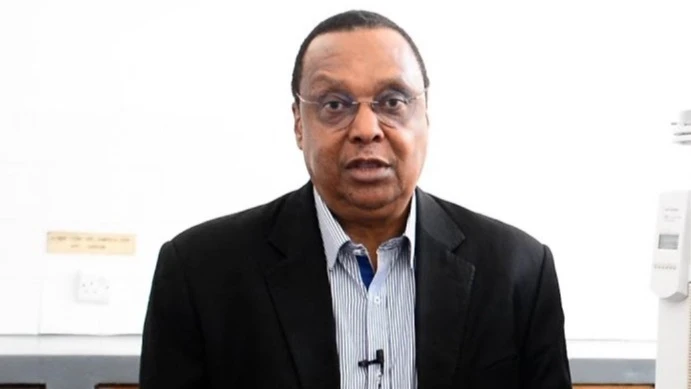
The remarks were made by the Acting Commissioner of the Public–Private Partnership Unit (PPPU), Bashiru Taratibu, when he officially opened, on behalf of the Deputy Permanent Secretary in the Ministry of Finance, Amina Khamis Shaaban, the first joint cooperation meeting between the Ministry of Finance through the PPP Unit (PPPU), the Public–Private Partnership Centre (PPPC) Tanzania, and the Ministry of Labour and Investment–Zanzibar through the Public–Private Partnership Department (PPPD).
He said the private sector plays a significant role in driving economic growth and that it is therefore important for the government to continue creating investment opportunities for private sector participation in infrastructure and other development projects to stimulate the economy and improve the lives of Tanzanians.
“Vision 2050 will begin implementation in June 2026 under the Fourth Development Plan, which will be the first plan to operationalise the Vision. It requires the private sector to contribute 70 percent to the implementation of that plan. Through PPPs, we must ensure that there are development projects ready to invite private sector participation,” Taratibu said.
For his part, the Deputy Permanent Secretary in the Ministry of Labour and Investment–Zanzibar, Rashid Ali Salim, called on various sectors to fulfil their responsibility of preparing development projects in order to create opportunities for private sector implementation.
“The sectors themselves own the projects, including construction, health, agriculture and infrastructure. We therefore call upon them to prepare bankable project proposals so that we can market them to investors,” Salim said.
Meanwhile, the Executive Director of the Public–Private Partnership Centre (PPPC), David Kafulila, highlighted several areas where the private sector can invest to drive economic development.
“The government’s direction to ensure that the private sector takes a larger role in the construction of water infrastructure, roads, bridges, airports, ports and railways is a crucial step toward building a competitive and robust economy capable of achieving the National Development Vision 2050,” Kafulila said.
The first cooperation meeting between the Ministry of Finance of Mainland Tanzania and the Ministry of Labour and Investment Zanzibar on PPP matters for the 2025/2026 financial year was held at the Ministry of Finance sub-offices in Dar es Salaam.
The meeting was accompanied by a field visit to various PPP projects being implemented in Mainland Tanzania, including the Dar es Salaam Rapid Transit (DART) project and the DDC project in Dar es Salaam.
Tanzania Development Vision 2050 (TDV 2050) is the country’s long-term blueprint to transform the nation into a high-income, competitive, inclusive and sustainable economy by mid-century. At its core, the Vision is about structural transformation — shifting Tanzania from a largely factor-driven economy to a productivity-driven, knowledge-based and innovation-led economy.
One of the central targets is to grow Tanzania into a high-income country by 2050, with an economy valued at around one trillion US dollars and per capita income rising to roughly 7,000 US dollars.
The Vision seeks to position Tanzania among Africa’s leading investment destinations by strengthening the business environment, deepening industrialisation, expanding exports, and promoting private sector-led growth. Competitiveness, innovation and value addition are emphasised as the new engines of expansion.
Another major target is the eradication of extreme poverty and a significant improvement in living standards. The Vision aims to reduce extreme poverty to below five percent of the population while expanding formal employment opportunities so that a majority of Tanzanians are engaged in decent, productive jobs.
It also prioritises universal access to quality healthcare, education, water, sanitation and social services, alongside raising life expectancy to around 75 years. Human capital development, especially in science, technology, engineering and mathematics, is considered essential, with a strong push to increase tertiary education attainment.
Agricultural transformation is a key pillar of Vision 2050. The goal is to modernise agriculture into a high-productivity, technology-driven and commercially viable sector.
Mechanisation, irrigation expansion, agro-processing, and climate-smart farming practices are central to this ambition. By strengthening agricultural value chains and reducing post-harvest losses, Tanzania aims to ensure food security, increase rural incomes and expand exports.
Infrastructure development is another strategic priority. The Vision targets near-universal access to reliable and affordable electricity, with an increasing share of clean energy sources.
Integrated transport networks — including modern railways, roads, ports and airports — are expected to position Tanzania as a logistics and trade hub for East and Central Africa. Infrastructure is seen not only as a support system but as a driver of industrialisation and regional competitiveness.
Environmental sustainability and climate resilience form a distinct component of the Vision. Tanzania aims to manage its natural resources responsibly, protect biodiversity, expand forest cover and reduce carbon intensity. Climate adaptation and resilience measures are expected to be integrated into infrastructure, agriculture and urban development planning to ensure long-term sustainability.
The Vision also places strong emphasis on building a digital and innovation-driven economy. Expanding broadband connectivity, improving digital literacy and integrating ICT into government services and business operations are core objectives.
Science, technology and innovation ecosystems — including research institutions, technology parks and innovation hubs — are intended to drive productivity and competitiveness.
It also seeks to empower women, youth and vulnerable groups while narrowing inequality gaps across regions and communities. The broader ambition is to build a cohesive society where economic growth translates into shared prosperity.
Top Headlines
Trending Stories


















© 2026 IPPMEDIA.COM. ALL RIGHTS RESERVED