




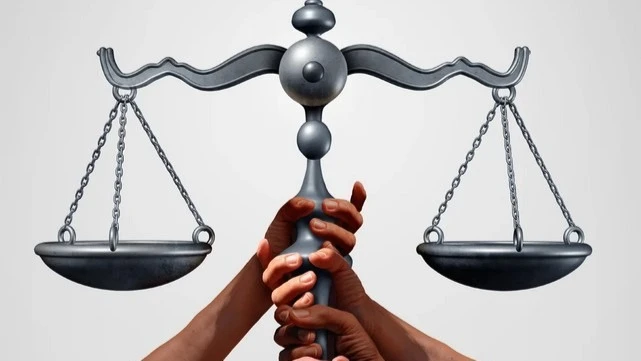
Recognising value of human rights, dignity of every person
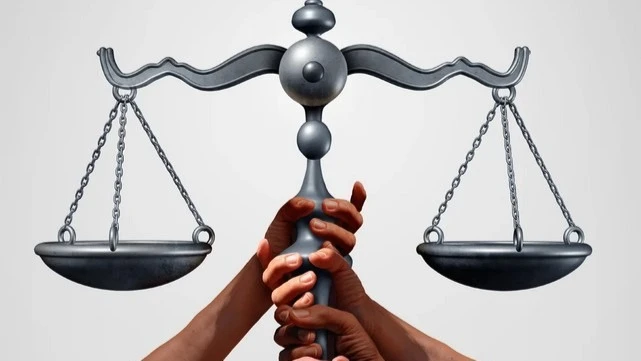
TODAY, the global community marks World Day of Social Justice under the theme: “Renewed Commitment to Social Development and Social Justice.”
Since its inception on February 20, 2008, this day has served as a powerful reminder of our collective responsibility to build a fairer, more equitable world—one that actively combats unemployment, social exclusion, and poverty.
Amidst a global focus on strengthening a just transition for a sustainable future, the call is clear: every nation and individual must contribute to a better world, beginning within the communities where we live and work.
In Tanzania, social justice is not merely a modern catchphrase; it is a foundational legal principle. Article 8 of the Constitution of the United Republic of Tanzania defines the nation as a state adhering to the principles of democracy and social justice.
It explicitly mandates that sovereignty resides in the people, from whom the government derives its authority. Crucially, the Constitution declares that the "primary objective of the government shall be the welfare of the people" and that the state remains accountable to its citizens.
The roots of social justice trace back to the 1840s, when Jesuit priest Luigi Taparelli coined the term to advocate the fair treatment of the poor. By the 20th century, the concept expanded beyond economics to encompass civil liberties and gender equality. American philosopher John Rawls later popularised this in his 1971 masterpiece, “A Theory of Justice”, arguing that a just society is defined by how well it protects its most vulnerable members and guarantees basic liberties for all.
Today, the United Nations views social justice as an "underlying principle for peaceful and prosperous coexistence." Within the UN framework, justice is built upon five key pillars: 1) equity (recognising that different people have different needs), 2) access (ensuring everyone has the resources and opportunities to succeed) 3) participation (enabling all individuals to play a role in political and social life), 4) rights (protecting the human rights of all), and 5) diversity (valuing and respecting differences between people).
These principles are enshrined in Sustainable Development Goal (SDG) 16, which calls for the promotion of peaceful societies, equal access to justice, and the development of effective, accountable institutions.
Despite these noble frameworks, the state of the world remains fragile. The Global Peace Index (GPI) 2025, published by the Institute for Economics & Peace (IEP), suggests that global peacefulness is in decline. According to the GPI, peacefulness deteriorated by 0.36 per cent recently—marking the 13th such deterioration in the last 17 years.
Factors preceding major conflicts are now higher than they have been since the end of World War II. Against a backdrop of rising geopolitical tensions, economic uncertainty, and the fracturing of traditional alliances, more countries are increasing their levels of militarisation. While nations like Iceland, Ireland, and New Zealand remain benchmarks of stability, the overall global trend is one of rising risk and instability, according to IEP.
There is a long-standing debate over which comes first: justice or peace? Historical literature and modern philosophy agree that justice is the foundation of peace: no justice, no true peace. Mwalimu Julius Nyerere championed this view, asserting that peace cannot exist without justice. To understand this, IEP distinguishes between "positive" and "negative" peace.
Negative peace is simply the absence of direct violence or the fear of violence. It is often harbours underlying tensions because the root causes of conflict remain unaddressed. But positive peace represents the attitudes, institutions, and structures that sustain a peaceful society. It is a social good and a transformative concept. Societies with high levels of positive peace are more resilient and associated with robust economies, better environmental performance, and higher levels of social cohesion and happiness.
The UN Department of Economic and Social Affairs (UNDESA), in its document “Social Justice in an Open World,” warns that neglecting the pursuit of justice translates into a "de facto acceptance of a future marred by violence, repression, and chaos."
The document suggests that while social justice is a relatively recent term, economic justice is a vital component. As the market economy becomes more pervasive and barriers to cross-border transactions lower, the need for public institutions to protect social gains increases.
It suggests that throughout history, advances made by philosophers, scientists, and leaders have been implemented by institutions. However, these gains are reversible. Forces driven by power and greed can undo political and social progress. In the modern age, distributive and international justice often struggle to remain high priorities.
The document stresses that social justice is impossible without strong, coherent redistributive policies implemented by public agencies. The wellbeing of citizens requires sustainable economic growth, employment opportunities, and conditions for the optimal development of people as both individuals and social beings.
As we mark World Day of Social Justice, we must recognise that the path to a prosperous, peaceful coexistence is paved with equity and human dignity. Justice is not a static goal, but a continuous pursuit—a commitment to ensuring that the sovereignty of the people results in the welfare of all. By strengthening this transition today, we protect the peacefulness of tomorrow.
Top Headlines
Trending Stories






© 2026 IPPMEDIA.COM. ALL RIGHTS RESERVED