



Paradox of progress: Humanity’s looming ‘institutional recession’

THE 21st century was heralded as an era of unprecedented enlightenment, defined by the rapid democratisation of information and staggering technological leaps.
From the sophisticated frontiers of Artificial Intelligence (AI) to life-saving breakthroughs in biotechnology and renewable energy, our technical capacity to solve human problems has never been greater.
Yet, beneath this veneer of innovation, humanity is grappling with a profound and paradoxical "institutional recession." As our machines become more intelligent and our energy cleaner, the foundational pillars of governance—the essential checks and balances of civilisation—are becoming increasingly brittle.
This ethical regression is no longer a mere subject for philosophical debate; it is a measurable, empirical crisis documented by the world’s leading monitors of human rights. Recent data suggests a synchronised collapse of the guardrails intended to ensure justice, liberty, and fiscal responsibility. We are witnessing a grim global portrait: a rise of corruption culture, shrinking civic space, and flourishing autocracies, and the rule of law in freefall.
Rise of ‘corruption culture’
According to Transparency International’s 2025 Corruption Perceptions Index (CPI), the global average score has dropped to 42 out of 100 for the first time in over a decade. This decline signifies that the majority of nations are losing the battle against the abuse of power for private gain. Widespread failure as 122 out of 182 countries now score below 50 on a scale of 0-100, whereas 0 indicates “highly corrupt” and 100 indicates “very clean”. A decade ago, 12 nations scored above 80, but today, that "clean" group has dwindled to just five.
Even established democracies are showing a worrying trend toward systemic corruption. What is true is that, corruption does more than deplete national treasuries; it acts as a corrosive agent that widens inequality and denies the marginalised access to justice.
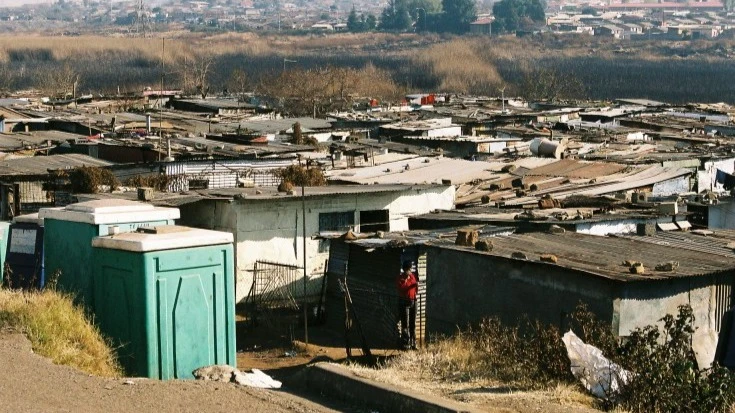
Globally, income inequality remains staggering. In 2025, the top 10 per cent of earners captured 53 per cent of global income, while the bottom 50 per cent received a mere 8 per cent, according to World Inequality Report 2026.
The Constitution of the United Republic of Tanzania establishes a legal and ethical framework designed to ensure that national wealth serves the collective interest rather than a small elite. Article 9 is central to this mission, outlining the "Directive Principles of State Policy" that guide the government's economic and social programmes.
Under Article 9, state authorities are specifically obligated to ensure that:
National resources: The country's heritage and resources are harnessed, preserved, and applied for the common good.
Eradication of poverty: The utilisation of national wealth is directed specifically toward the task of eliminating poverty, ignorance, and disease.
Preventing concentration of wealth: Economic activities are conducted in a manner that prevents the concentration of wealth or major means of production in the hands of a few individuals.
Equality and justice: The government provides equal opportunities to all citizens, regardless of tribe, religion, or social status, while eradicating all forms of corruption and injustice.
Despite these constitutional aspirations, recent data highlights a "development paradox" where strong macroeconomic growth has not yet fully translated into the equitable distribution envisioned by the supreme law. To align more closely with Article 9, the government has launched the First Strategy for Improving Poverty Statistics (2025/26–2029/30) to better inform policy formulation and ensure growth is inclusive.
Global income concentration
According to Global Wealth Inequality 2026, in 2025 the top 10 percent of earners captured about 53 percent of global income, while the bottom 50 per cent received only 8 per cent, indicating persistent wealth concentration. “The top 0.1 earns about 8 per cent on its own, as much as the entire bottom half of the population…There are people in the top 0.1 per cent, and 74 million people in the next 0.9 per cent, compared to 4.1 billion in the bottom 50 per cent” (wir2026.widworld/methodology).
Tanzania scored 40/100 on the 2025 Corruption Perceptions Index (CPI), ranking 84th globally. While this is a historical high for the country, it remains below the global average of 42/100, signalling ongoing challenges in managing resources and a persistent struggle to modernise integrity systems.
Global rule of law
The World Justice Project (WJP) Rule of Law Index 2025 ranked Tanzania 98th out of 143 countries, noting that while some areas like "constraints on government powers" have shown resilience, others like "fundamental rights" and "open government" face continued pressure.
Maíra Martini, CEO of Transparency International, warns that this "corruption culture" transforms the state from an upholder of rights into a "gatekeeper of privileges", which makes global citizens increasingly forced to "plead" for basic services like healthcare and education—rights that should be guaranteed by law.
This culture of corruption is both a cause and a consequence of failing legal frameworks. The WJP Rule of Law Index 2025 confirms that the "global rule of law recession" is not only continuing, but accelerating.
The numbers paint a stark picture: the rule of law weakened in 68 per cent of surveyed countries last year, a sharp escalation from 57 per cent in 2024. When legal guardrails—the independent judiciary, the legislative oversight, and constraints on executive power—are dismantled, the resulting vacuum is invariably filled by autocracy and cronyism.
This creates a dangerous feedback loop: as legal protections vanish, citizens lose the tools of accountability, allowing corruption to take root without fear of prosecution.
Shrinking circle of freedom
When the rule of law retreats, civic space becomes the final casualty. The CIVICUS Monitor, in its People Power Under Attack 2025 report, identified a staggering 3,120 civic freedom violations.
Its research-based data suggests that "open" societies are becoming a rare historical exception: Restricted access: Only 39 out of 198 nations currently hold an "open" rating. Global impact: 73 per cent of the world’s population now lives under restricted civic conditions.
Sub-Saharan crisis: While Senegal and Gabon showed signs of improvement, 15 other regional nations deteriorated into the "closed" category.
Nearly 45 per cent of documented violations targeted freedom of expression, proving that the first step toward institutional decay is the silencing of the messenger.
A call for global soul-searching
The convergence of these three trends—rising corruption, shrinking freedoms, and failing rule of law—demands urgent soul-searching from world leaders and citizens alike. We are witnessing the systematic dismantling of the mechanisms meant to protect the individual from the state.
The promise of the 21st century was liberation through technology. However, if our moral and institutional architectures continue to crumble, our scientific and technological advancements will serve only as more efficient tools for repression.
This "recession of the soul" requires collective intervention. Without a renewed commitment to transparency and the rule of law, the open societies of the world may soon become a memory of a bygone era.
· The author is a Dar es Salaam-based lawyer. He can be reached at t22magobe@gmail.com
Top Headlines
Trending Stories














© 2026 IPPMEDIA.COM. ALL RIGHTS RESERVED